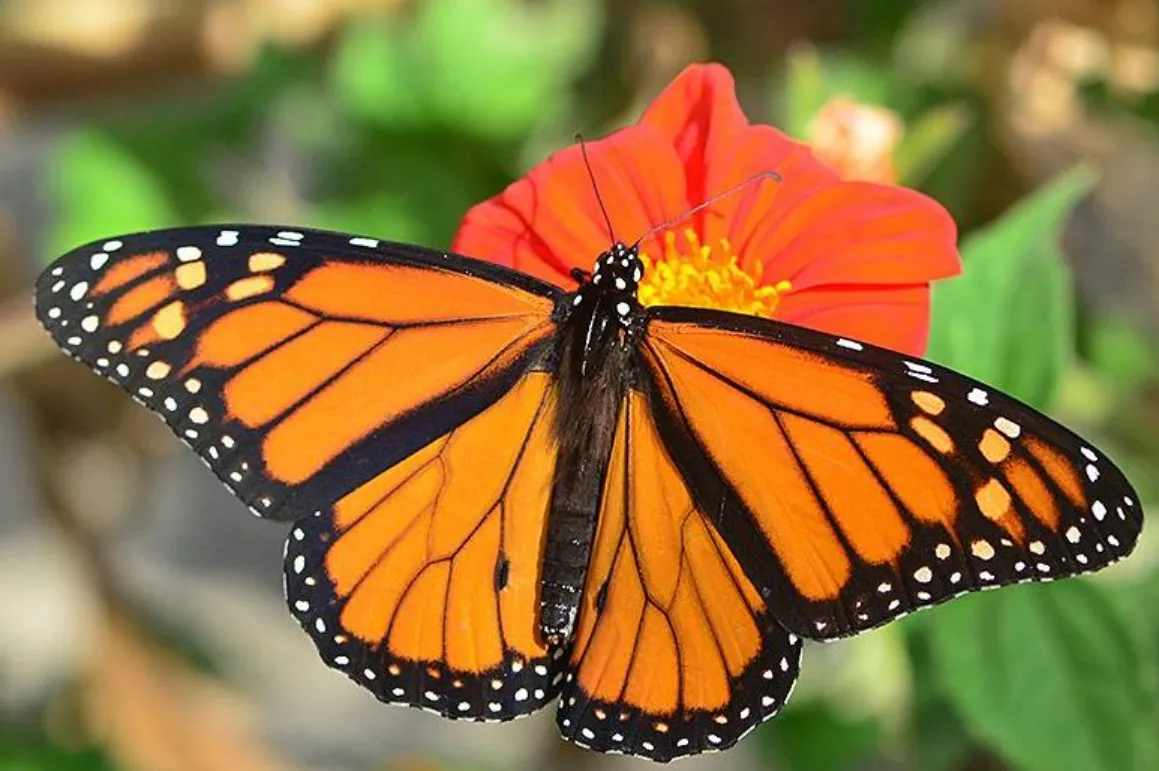
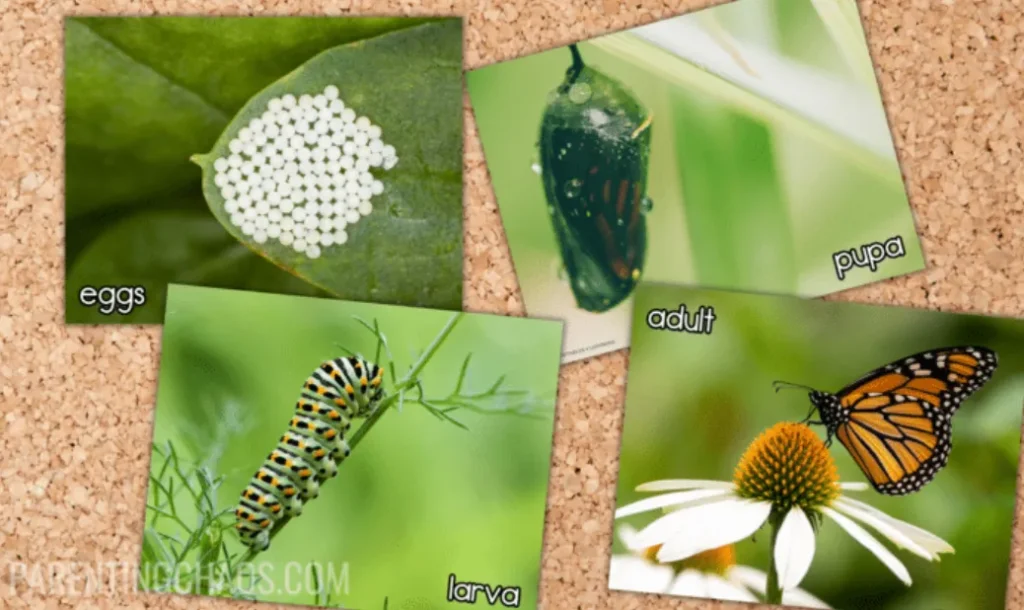
The life cycle of a butterfly is one of the most beautiful examples of transformation in nature. A butterfly does not begin life with colorful wings. It starts as a tiny egg, becomes a hungry caterpillar, changes into a chrysalis, and finally emerges as an adult butterfly. This complete change is called complete metamorphosis, and it is the main reason butterflies are so interesting to students, gardeners, nature lovers, and researchers.
Butterflies are also important for the environment. They visit flowers for nectar, help with pollination, and serve as food for birds, spiders, lizards, and other animals. Their presence often indicates that an area has healthy plants, a clean habitat, and a good ecological balance. Because butterflies are sensitive to changes in weather, pesticides, and habitat loss, scientists also use them as natural indicators of environmental health.
Understanding the butterfly life cycle helps us protect gardens, farms, forests, and wild spaces. From a simple butterfly drawing in a classroom to a real butterfly garden in a home or park, learning about their growth can inspire people to protect them.
Q: What are the four stages of the butterfly life cycle?
A: The four stages are egg, caterpillar larva, pupa chrysalis, and adult butterfly.
Q: How long does a butterfly’s life cycle take?
A: It depends on the species, climate, food, and season. Some butterflies complete the cycle in a few weeks, while others may take several months.
Q: Why is the butterfly life cycle important?
A: It shows how insects grow, survive, reproduce, and support the Ecosystem through pollination, food chains, and biodiversity.
Quick Life Cycle Table
| Stage | Common Name | What Happens | Main Need | Survival Challenge |
| Stage 1 | Egg | Female butterfly lays eggs on or near host plants | Safe leaf surface and correct plant | Heat, rain, predators, and parasites |
| Stage 2 | Larva | Caterpillar hatches and eats leaves | Fresh host plant leaves | Birds, wasps, disease, and lack of food |
| Stage 3 | Pupa | A caterpillar forms a chrysalis and transforms | Hidden, stable place | Weather, ants, birds, and disturbance |
| Stage 4 | Adult | Butterfly emerges, dries wings, flies, feeds, and mates | Nectar, sunlight, and mates | Pesticides, habitat loss, storms, and predators |
Important Things That You Need To Know
The word butterfly is connected with many topics in daily life, education, art, gardening, and even fashion. For example, a butterfly drawing is often used in schools to teach children about symmetry, color, wings, and the stages of metamorphosis. It is also a simple way to introduce science through art.
The butterfly pea flower is another popular term, but it is not a butterfly. It is a plant known for its blue-purple flowers, herbal tea use, and natural color. However, plants like this can still support garden biodiversity when grown with other nectar-rich flowers.
A butterfly tattoo usually represents transformation, freedom, beauty, hope, and personal growth. This meaning comes from the real butterfly life cycle, in which a crawling caterpillar becomes a flying adult.
The term “blue butterfly” may refer to many real butterfly species with blue wings. Blue butterflies are admired for their wing scales, which reflect light and create brilliant color effects.
A butterfly garden is one of the best practical ways to protect butterflies. It includes nectar flowers for adults, host plants for caterpillars, clean water sources, and safe places away from heavy pesticide use.
The phrase “Bugaboo Butterfly” is mostly associated with a stroller product name, not a living butterfly species. Still, the word “butterfly” is widely used in branding because it suggests lightness, beauty, movement, and elegance.
The History of Their Scientific Naming
The scientific naming of butterflies is based on taxonomy, the system scientists use to classify living organisms. Butterflies belong to the class Insecta and the order Lepidoptera. The name Lepidoptera comes from Greek roots meaning scaly wings, because butterfly and moth wings are covered with tiny scales.
Important points about their naming:
- Kingdom: Animalia
- Phylum: Arthropoda
- Class: Insecta
- Order: Lepidoptera
- Main butterfly group: Papilionoidea
- Common broader term: Rhopalocera
Butterflies are closely related to moths, but they are usually day-flying insects with club-shaped antennae and colorful wings. Scientific naming helps researchers identify different species clearly, because common names can change from place to place.
For example, the name “blue butterfly” can describe many species, but scientific names identify the exact species. This prevents confusion in research, conservation, farming, and education.
Their Evolution And Their Origin
The origin of butterflies is linked with the long history of flowering plants, climate changes, and insect adaptation. Butterflies are part of Lepidoptera, the insect order that also includes moths. Scientific studies suggest that butterflies evolved from moth-like ancestors and became highly successful by adapting to flowers, host plants, and diurnal activity.
A large global study on butterfly evolution reported that butterflies likely originated in what is now the Americas and that many early butterfly lineages used plants from the Fabaceae family as host plants. The study also found that butterflies later spread and diversified across different regions of the world.
Their evolution is strongly connected to two main food relationships. Adult butterflies usually feed on flower nectar, while caterpillars feed on specific host plants. This two-part feeding system helped butterflies occupy many ecological niches.
Over millions of years, butterflies developed special survival features. Their wing colors help with camouflage, signaling, mate attraction, and temperature regulation. Their long proboscis helps them drink nectar from flowers. Their caterpillars developed chewing mouthparts, defensive hairs, warning colors, and chemical protection in some species.
Butterflies are now found in many habitats, including forests, grasslands, wetlands, mountains, farms, gardens, and urban green spaces. They are almost worldwide in distribution, although they are especially diverse in warm tropical regions. Their success shows how powerful adaptation can be when insects and plants evolve together.
Their main food and its collection process
Butterflies eat different foods at different stages of life. The caterpillar and the adult butterfly do not eat the same way. This is one reason the butterfly life cycle is so unique.
Main food and collection process:
- Egg stage:
- The egg does not collect food on its own. It contains enough nutrients for the developing embryo. The female butterfly carefully lays eggs on or near the correct host plant so that the young caterpillar can eat immediately after hatching.
- Caterpillar stage:
- The caterpillar’s main food is leaves. It uses strong chewing mouthparts to eat host plant leaves. Some caterpillars are very selective and can survive only on one type or one family of plants. Monarch caterpillars, for example, depend on milkweed plants.
- Pupa stage:
- The pupa or chrysalis does not actively eat. Inside the chrysalis, the body changes completely. Stored energy from the caterpillar stage supports this transformation.
- Adult butterfly stage:
- Adult butterflies mainly drink nectar from flowers using a long tube-like mouthpart called a proboscis. They may also take minerals from wet soil, mud, rotting fruit, tree sap, or animal droppings.
The food collection process depends on smell, color, sunlight, and plant availability. Butterflies are attracted to bright flowers and sweet nectar. They land on flowers, unroll their proboscises, and suck up liquid food.
This feeding process also helps the Ecosystem. When butterflies move from flower to flower, pollen may stick to their bodies and transfer to other flowers, supporting plant reproduction.
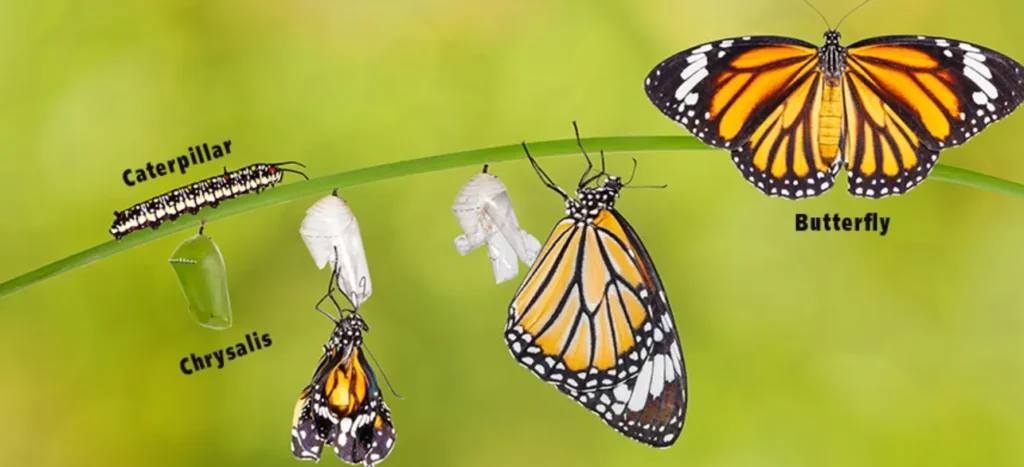
Their life cycle and ability to survive in nature
Egg Stage: The Beginning of Life
The butterfly life cycle begins when a female lays tiny eggs on leaves, stems, or near host plants. The shape and color of eggs depend on the species. Some are round, oval, ribbed, or dome-shaped.
This stage is delicate. Ants, spiders, beetles, and other insects may eat eggs. Heavy rain, extreme heat, and dry weather can also reduce survival.
Caterpillar Stage: Growth and Feeding
After hatching, the larva becomes a caterpillar. This stage is mainly for eating and growing. Caterpillars often shed their skin several times because their bodies grow quickly.
Many caterpillars use camouflage to look like leaves, twigs, or bird droppings. Some have bright warning colors to signal to predators that they may taste bad or contain toxins.
Chrysalis Stage: Hidden Transformation
When the caterpillar is fully grown, it forms a pupa, often called a chrysalis. Inside this protective case, the insect reorganizes its body.
This is not only a resting stage. It is an active biological process in which wings, legs, antennae, eyes, and adult body structures develop.
Adult Stage: Flight, Feeding, and Reproduction
The adult butterfly emerges with its wings folded. It pumps fluid into the wings, waits for them to dry, and then begins flying.
Adult butterflies survive by finding nectar, avoiding predators, locating mates, and laying eggs. Their survival depends on sunlight, host plants, nectar-producing flowers, and safe habitats.
Recent conservation data show why survival is becoming harder. A major U.S. analysis reported that butterfly populations declined by about 22% from 2000 to 2020, with habitat loss, pesticides, and climate change among the major pressures.
Their Reproductive Process and raising their children
Butterflies reproduce through mating, egg-laying, and careful host plant selection. They do not raise their young like birds or mammals, but female butterflies still make important choices that affect the survival of the next generation.
Key points of their reproductive process:
- Mate attraction:
- Adult butterflies find mates using wing colors, movement, sunlight, smell, and chemical signals called pheromones.
- Courtship behavior:
- Males may fly around females, display wing patterns, or release scent chemicals. In many species, courtship helps females choose a healthy mate.
- Mating:
- During mating, the male transfers sperm to the female. The female stores it and later uses it to fertilize eggs.
- Host plant selection:
- The female searches for the correct host plant. This is one of the most important steps because caterpillars often cannot eat random leaves.
- Egg-laying:
- Eggs are usually laid singly or in groups, depending on the species. A female may lay many eggs because only some will survive.
- No direct parenting:
- Most butterflies do not guard eggs or feed caterpillars after hatching. Their “parental care” mainly happens before birth through proper plant selection.
This system may seem simple, but it is very effective. By placing eggs on the right plant, the female gives her caterpillars the best chance to survive. The future generation depends on the availability of host plants, clean habitat, and safe weather conditions.
The importance of them in this Ecosystem
Butterflies Help in Pollination
Butterflies are not the only pollinators, but they are important flower visitors. While feeding on nectar, they can carry pollen from one flower to another. This supports plant reproduction and helps maintain flowering plant diversity.
Animal pollinators, including butterflies, moths, bees, birds, bats, and beetles, are linked with the reproduction of many flowering plants and food crops. USDA notes that around three-fourths of the world’s flowering plants and about 35% of food crops depend on animal pollinators to some degree.
Butterflies Support the Food Chain
Butterflies are food for many animals. Birds, reptiles, spiders, wasps, ants, frogs, and small mammals eat eggs, caterpillars, pupae, and adults.
This makes butterflies an important part of the natural food web. If butterfly numbers fall, other animals may also lose a food source.
Butterflies Indicate Environmental Health
Butterflies are sensitive to pollution, pesticides, temperature changes, and habitat destruction. As a result, a healthy butterfly population often indicates a healthier environment.
Butterfly Conservation notes that butterflies and moths are useful indicators of healthy ecosystems and also reflect the presence of many other invertebrates.
Butterflies Support Education and Human Well-being
Butterflies are widely used in science education because their life cycle is easy to observe and understand. They also bring beauty to gardens, parks, and natural landscapes.
A butterfly garden can teach children about plants, insects, seasons, food chains, and conservation in a simple, practical way.
What to do to protect them in nature and save the system for the future
Protecting butterflies means protecting the full life cycle, not only the adult stage. A garden with flowers is helpful, but butterflies also need host plants for caterpillars.
- Plant native host plants
- Grow plants that local caterpillars can eat. Different butterfly species need different host plants.
- Grow nectar-rich flowers
- Choose flowers that bloom in different seasons so that adult butterflies can find food for a longer time.
- Avoid chemical pesticides
- Pesticides can kill caterpillars, adults, and other beneficial insects. Use natural pest control where possible.
- Create a butterfly garden.
- Add sunny spaces, flowering plants, host plants, shrubs, and small water sources.
- Leave some wild areas.
- Do not over-clean every corner of the garden. Some butterflies need grasses, weeds, fallen leaves, or sheltered spots.
- Protect local habitats
- Forest edges, wetlands, grasslands, and roadside wildflowers can support butterfly populations.
- Reduce light and air pollution.
- Although butterflies are mostly active during the day, overall pollution affects insect habitats and plant health.
- Support climate-friendly actions
- Climate change affects flowering time, migration, breeding, and survival. Planting trees and reducing waste can help.
- Teach children about butterflies.
- A simple butterfly drawing, school project, or garden activity can build long-term awareness.
- Do not collect wild butterflies unnecessarily.
- Observe, photograph, and protect them instead of removing them from nature.
Current European assessments also show increasing concern: the number of threatened European butterfly species has risen significantly over the last decade, showing the need for stronger habitat protection and conservation action.
Frequently Asked Questions (FAQs)
Q1: What is the life cycle of a butterfly?
A: The life of a butterfly cycle means the full growth process of a butterfly from egg to caterpillar, then chrysalis, and finally adult butterfly.
Q2: What are the four stages of a butterfly’s life cycle?
A: The four stages are egg, larva, caterpillar, pupa, chrysalis, and adult butterfly.
Q3: What does a caterpillar eat?
A: A caterpillar usually eats leaves from its specific host plant. Some caterpillars are very selective and cannot survive on the wrong plant.
Q4: What does an adult butterfly eat?
A: Adult butterflies mostly drink flower nectar. They may also take minerals from mud, wet soil, fruit, tree sap, or other natural liquids.
Q5: How long does a butterfly live?
A: It depends on the species. Some adult butterflies live only a few days or weeks, while others can live longer, especially species that migrate or overwinter.
Q6: Is a chrysalis the same as a cocoon?
A: No. A chrysalis is the pupa stage of a butterfly. A cocoon is usually a silk covering made by many moth caterpillars.
Q7: How can I make a butterfly garden?
A: Plant native flowers, add host plants, avoid pesticides, keep sunny areas, and provide safe shelter. A good butterfly garden supports both caterpillars and adults.
Q8: Why are butterflies important to humans?
A: Butterflies support pollination, biodiversity, education, research, and ecosystem health. They also make gardens and natural spaces more beautiful.
Conclusion
The life cycle of a butterfly is a powerful story of growth, change, and survival. From a tiny egg to a leaf-eating caterpillar, from a quiet chrysalis to a colorful flying butterfly, every stage has a clear purpose in nature. Butterflies are not only beautiful insects; they are also pollinators, food sources, ecological indicators, and symbols of transformation.
To protect butterflies, we must protect their complete habitat. Flowers alone are not enough. They need host plants, clean air, safe gardens, less pesticide use, and healthy natural spaces. A small butterfly garden at home, school, or community area can make a real difference.
By learning about the butterfly life cycle, people can better understand nature and take better care of the Ecosystem for the future. No raw source URLs included.
Also Read: life cycle of ticks