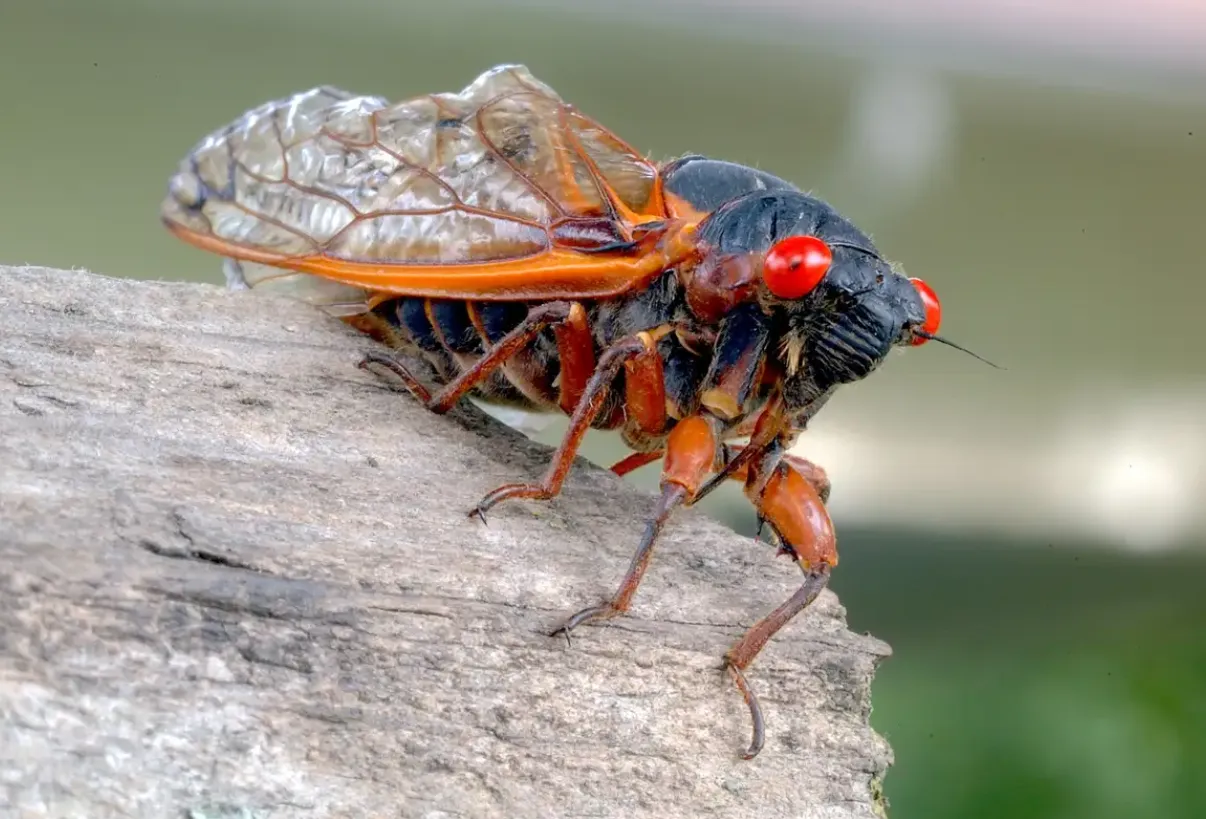
The life cycle of a cicada is one of the most unusual life cycles in the insect world. A cicada spends most of its life hidden underground as a nymph, feeding slowly from plant roots. Then, after years of underground development, it comes above the soil, sheds its outer shell, becomes a winged adult, mates, lays eggs, and dies within a short time.
Cicadas belong to the insect order Hemiptera, the same broad group as true bugs, aphids, and leafhoppers. The family Cicadidae includes more than 3,000 species found worldwide in tropical and temperate regions. Some cicadas appear every summer, while famous periodical cicadas emerge in large synchronized groups after 13 or 17 years underground.
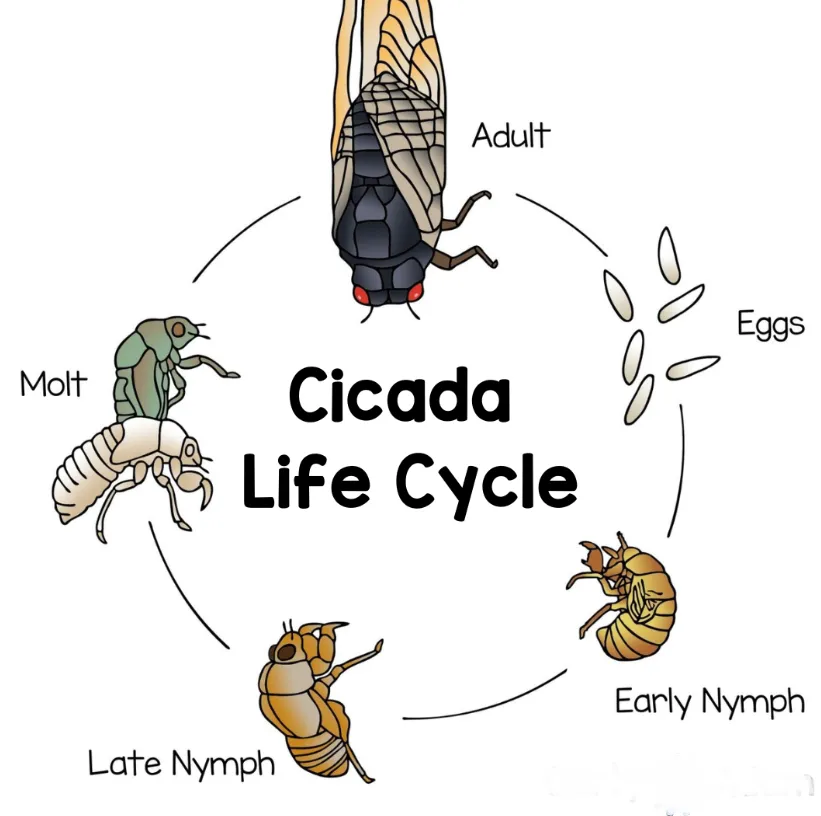
In simple terms, the cicada life cycle includes egg, nymph, molting, and adult reproductive stage. Scientists often describe the cycle as three main stages—egg, nymph, and adult—but for easy understanding, molting is commonly discussed as a separate visible stage because it is the dramatic moment when the underground nymph becomes a winged adult.
Q: How many stages are in the life cycle of a cicada?
A: Scientifically, cicadas have three main life stages: egg, nymph, and adult. For learning purposes, the cycle is often explained in four practical stages: egg, nymph, molting, and adult.
Q: How long do cicadas live underground?
A: Many annual cicadas live underground for 2–5 years, while periodical cicadas live underground for 13 or 17 years, depending on the species and brood.
Q: Do cicadas bite or sting humans?
A: Cicadas do not sting and are not aggressive. They have sap-sucking mouthparts, not biting jaws. Very rarely, a cicada may accidentally pierce the skin if it mistakes a person for a plant, but this is neither defensive nor dangerous.
Quick Life Cycle Table
| Stage | What Happens | Time Period | Key Point |
| Egg | Females lay eggs in small slits in tree twigs | Around 6–10 weeks before hatching | Eggs stay above ground in woody tissue |
| Nymph | Young cicada drops to the soil and feeds on root sap | 2–5 years in many annual cicadas; 13 or 17 years in periodical cicadas | Longest stage of life |
| Molting | Mature nymph climbs up and sheds old shell | Usually, a few hours | Winged adult emerges |
| Adult | Adults sing, mate, lay eggs, and die | Usually 3–6 weeks | The main purpose is reproduction |
Important Things That You Need To Know
When people search for the life cycle of a cicada, they often also search related terms such as cicada, cicada killer, cicada killer wasp, COVID-19 cicada variant, and cicada 3301. These words are not all directly related to cicada biology, so it is important to understand them correctly.
A cicada is a real insect known for its loud sound, underground nymph stage, and short adult life. A cicada killer usually means the cicada killer wasp, a large, solitary wasp that hunts cicadas. It paralyzes cicadas and places them in underground nests as food for its larvae. This wasp is part of the natural predator system, but it is not the same animal as a cicada.
Search phrases like COVID-19 cicada variant or cicada covid variant BA 3.2 are not recognized biological terms for cicadas. They appear to mix virus-related wording with insect keywords and should not be treated as scientific cicada information.
The term cicada 3301 is also unrelated to insect life cycles. It refers to a famous internet puzzle/mystery, not to a cicada species, cicada disease, or cicada evolution.
So, when learning about the cicada life cycle, focus on real biological terms: eggs, nymphs, molting, adult cicadas, tree sap, broods, and periodical cicadas.
The History of Their Scientific Naming, Evolution, and Origin
Scientific Naming of Cicadas
The word cicada comes from Latin and has long been used for sound-producing insects. Scientifically, cicadas are classified in the family Cicadidae, order Hemiptera, class Insecta, phylum Arthropoda, and kingdom Animalia. Their classification reflects their segmented body, jointed legs, piercing-sucking mouthparts, and insect anatomy.
Evolutionary Background
Cicadas are ancient insects with a long evolutionary history. Modern research on fossil cicadas suggests that major cicada lineages, including Cicadidae and Tettigarctidae, may have separated by the Middle Jurassic period. Fossil evidence also suggests that important cicada traits—such as root-feeding nymphs and sound-related structures—developed deep in the Mesozoic era.
Origin and Global Spread
Today, cicadas occur in many warm- and temperate-habitat types, including forests, grasslands, deserts, and urban tree areas. Their success is linked to their hidden underground nymph stage, plant-sap feeding, strong reproductive strategy, and ability to emerge in large numbers.
Their Reproductive Process, Giving Birth And Rising Their Children
Cicadas Do Not Give Live Birth
Cicadas do not give birth like mammals. They reproduce by laying eggs. After mating, the female uses a sharp egg-laying structure called an ovipositor to cut small slits into tender tree branches or twigs. She places eggs inside these protected slits.
Mating Begins with Male Songs
Adult male cicadas produce loud songs using special sound organs called tymbals. These sounds attract females of the same species. In large periodical cicada broods, thousands or even millions of males may sing together, creating a powerful chorus. The sound is not random noise; it is mainly a reproductive signal.
Egg Laying in Tree Branches
After mating, the female deposits eggs into the plant’s woody tissue. The eggs usually hatch after about 6 to 10 weeks, depending on the species and environmental conditions. The young nymphs then fall from the tree to the ground and immediately burrow into the soil.
No Parental Care
Cicadas do not raise their children. Once the eggs are laid, the adults die within a few weeks. The newly hatched nymphs survive independently by finding rootlets underground and feeding on plant sap. This makes the cicada life cycle very different from animals that protect or feed their young.
Stages of the Life Cycle of a Cicada
Stage 1: Egg Stage
The egg stage begins after the female cicada lays eggs in small branches. The eggs are protected inside narrow slits in woody tissue. This stage is shorter than the underground nymph stage, but it is essential because egg placement affects survival.
Eggs usually hatch in about six to ten weeks. If branches dry out, break too early, or are damaged, egg survival may decrease. This is why healthy trees and shrubs are important for cicada reproduction.
Stage 2: Nymph Stage
The nymph stage is the longest and most important part of the cicada life cycle. After hatching, tiny pale nymphs drop to the ground and dig into the soil. They use their specialized front legs to move underground and search for plant roots.
Nymphs feed on xylem sap, a watery fluid from roots. This food is low in nutrients, so cicadas develop slowly. Many annual cicadas spend several years underground, while periodical cicadas remain hidden for 13 or 17 years.
Stage 3: Molting Stage
When the nymph is mature, it digs upward and comes out of the soil, often at night or after warm weather. Periodical cicadas commonly emerge when soil temperature reaches about 64°F around 8 inches below the surface.
The nymph climbs a tree trunk, plant stem, wall, or other vertical surface. Then its outer shell splits open, and the soft adult cicada slowly pulls itself out. The empty shell left behind is called an exuvia.
Stage 4: Adult Stage
The adult cicada has wings, large eyes, and reproductive organs. At first, it is soft and pale, but its body darkens and hardens after molting. Adult cicadas live only a few weeks.
During this short stage, males sing, females choose mates, mating occurs, eggs are laid, and the cycle begins again. The adult stage is brief, but it is the stage most people notice because cicadas become loud, visible, and abundant.
Their main diet, food sources, and collection process are explained
Cicadas are plant-fluid feeders. They do not chew leaves like caterpillars or hunt prey like spiders or mantises. Their mouthparts are shaped like a sharp straw, designed to pierce plant tissue and draw liquid food.
Main Diet
The main diet of cicadas is xylem sap, especially during the nymph stage. Xylem is the watery fluid that moves through plants from the roots upward. It contains water and dissolved minerals, but it is not very rich in sugar or protein.
Food Sources
Cicada nymphs feed from the roots of trees and other perennial plants. Adults may also sip plant fluids from aboveground plant tissues, but they feed less actively because their short adult life is mostly focused on reproduction.
Collection Process
The feeding process is simple but highly specialized. A cicada inserts its piercing-sucking mouthpart into plant tissue and pulls sap through it. Underground nymphs stay close to roots and slowly feed for years. This slow feeding explains why cicadas need a long development period.
Cicadas are not considered major plant destroyers in most mature landscapes. However, heavy egg-laying by many females can damage young twigs, especially on newly planted or weak trees.
How Long Does A Cicada Live
The answer depends on the type of cicada. A cicada’s total lifespan can be surprisingly long, but most of that life is spent underground, where humans rarely see it.
- Annual cicadas do not always live only one year.
- The term “annual cicada” means adults are seen every year, not that each individual completes its life cycle in one year. Many annual cicadas may spend 2–5 years underground before emerging.
- Periodical cicadas live much longer.
- Periodical cicadas of the genus Magicicada are famous for their 13-year or 17-year life cycles. They spend almost all that time as underground nymphs feeding from tree roots.
- The adult stage is short.
- Adult periodical cicadas usually live only about three to four weeks, while many adult cicadas in general live only a few weeks above ground. Their adult lives are short because they are designed mainly for mating and egg-laying.
- Most of their lives are hidden.
- A 17-year cicada may spend more than 99% of its life underground. The loud, winged insect people see is only the final reproductive stage.
- Weather affects emergence timing.
- Warm soil, rain, tree growth, and seasonal signals all influence when mature nymphs come above ground. Periodical cicadas often emerge in late spring or early summer.
- Real-time brood note:
- As of current cicada tracking information, no major periodical cicada emergence is expected in 2026, although off-cycle or “straggler” cicadas may appear in some places.
Cicada Lifespan in the Wild vs. in Captivity
Cicada Lifespan in the Wild
In the wild, cicadas are adapted to a long underground life and a short adult life above ground. Wild nymphs can remain in soil for years, feeding from living roots and responding to seasonal plant and temperature cues.
For periodical cicadas, the wild lifespan is usually 13 or 17 years, depending on the brood. For many annual cicadas, the lifespan is often several years, although adults appear every summer because different individuals mature in different years.
Cicada Lifespan in Captivity
Cicadas are difficult to keep in captivity for their full life cycle. Adult cicadas may survive only a short time because they need proper temperature, plant fluids, space, and mating conditions. Nymphs are even harder to raise because they require living plant roots and stable soil conditions for years.
Key Difference
The wild environment gives cicadas their natural root systems, soil moisture, seasonal signals, and mating opportunities. Captivity usually cannot reproduce these conditions well. For this reason, cicadas are best observed in nature rather than kept as pets.
Importance of Cicada in this Ecosystem
Food for Many Animals
Cicadas are an important food source for birds, mammals, reptiles, amphibians, fish, and other insects. During mass emergencies, predators receive a temporary but rich food supply. This sudden abundance helps many animals feed successfully without eliminating the cicada population.
Soil Aeration and Water Movement
When cicada nymphs dig tunnels underground, they help loosen soil. These tunnels can improve air movement and water infiltration. The U.S. EPA notes that cicadas can help aerate lawns and improve water filtration into the ground.
Nutrient Recycling
After adult cicadas die, their bodies decompose, returning nutrients to the soil. This natural recycling supports soil organisms and plant growth. Large emergences can add a noticeable nutrient pulse to forest ecosystems.
Natural Pruning
Female egg-laying can weaken small twigs, sometimes causing twig tips to break. In mature trees, this may act like natural pruning. However, young trees can be damaged if many females lay eggs in them at the same time.
What to do to protect them in nature and save the system for the future
Protect Mature Trees and Native Plants
- Keep healthy trees in landscapes, parks, and forests.
- Cicada nymphs depend on living roots for years so that that tree loss can destroy local populations.
- Avoid unnecessary removal of old trees in areas known for periodical cicadas.
Avoid Heavy Pesticide Use
- Do not spray pesticides just because cicadas appear.
- Pesticides are generally ineffective during large cicada emergences and may harm birds, pollinators, pets, and beneficial insects.
Protect Young Trees with Netting
- Young saplings can be damaged by heavy egg-laying.
- Use fine netting around small trees during cicada emergence.
- Avoid loose netting that can trap birds or wildlife.
Preserve Soil Habitat
- Avoid paving, bulldozing, or compacting soil in forested cicada areas.
- Underground nymphs need stable soil and root systems for many years.
Support Citizen Science
- Report unusual cicada sightings to local nature groups or cicada-tracking projects.
- Off-cycle cicadas, also called stragglers, can help researchers understand changes in brood timing and distribution.
Fun & Interesting Facts About Cicada
- Cicadas are not locusts.
- Periodical cicadas are often wrongly called “17-year locusts,” but locusts are grasshoppers. Cicadas are true bugs in the order Hemiptera.
- Only males make the famous loud song.
- Male cicadas use tymbals to produce their calls. Females usually respond with movement or wing signals.
- They spend most of their lives underground.
- The loud adult stage is only a small part of the cicada’s lifespan.
- Their empty shells are not dead cicadas.
- The brown shell found on trees is the old nymph exoskeleton, called an exuvia.
- Periodical cicadas use predator overload.
- By emerging in huge numbers, they overwhelm predators. Even if many are eaten, enough survive to reproduce.
- They help soil health.
- Their tunnels can improve aeration, and their dead bodies return nutrients to the soil.
- Cicadas do not attack people.
- They may land on humans by mistake, but they do not sting or chase people.
- Some cicadas are very loud.
- Cicada choruses can become one of the loudest natural insect sounds in a landscape.
Frequently Asked Questions (FAQs)
Q: What is the life cycle of a cicada?
A: The life cycle of a cicada includes egg, nymph, molting, and adult stages. The nymph stage is the longest, while the adult stage is short and focused on mating.
Q: How long do cicadas stay underground?
A: Many annual cicadas stay underground for 2–5 years, while periodical cicadas stay underground for 13 or 17 years, depending on the species and brood.
Q: What do cicadas eat?
A: Cicadas feed on plant fluids. Nymphs drink sap from roots underground, while adults may sip plant fluids from aboveground tissues.
Q: Are cicadas harmful to humans or pets?
A: Cicadas are generally harmless. They do not sting, do not spread disease, and are not aggressive. Pets may get an upset stomach if they eat too many, but cicadas are not venomous.
Q: Why do cicadas come out in large numbers?
A: Periodical cicadas emerge in huge numbers as a survival strategy. This overwhelms predators, allowing enough cicadas to mate and lay eggs before dying.
Conclusion
The life cycle of a cicada is a powerful example of patience, survival, and ecological balance. From tiny eggs hidden in tree branches to underground nymphs feeding for years, cicadas live most of their lives out of sight. Their sudden adult emergence, loud songs, mating behavior, and short aboveground life make them one of nature’s most fascinating insects.
Cicadas are not just noisy summer visitors. They feed wildlife, aerate soil, recycle nutrients, and show how deeply insects are connected to trees, soil, climate, and ecosystems. Protecting cicadas means protecting healthy trees, undisturbed soil, and balanced habitats. Whether it is an annual cicada appearing in summer or a periodical cicada returning after 13 or 17 years, each cicada plays a meaningful role in nature’s long-running cycle.
Also Read: life cycle of a sunflower