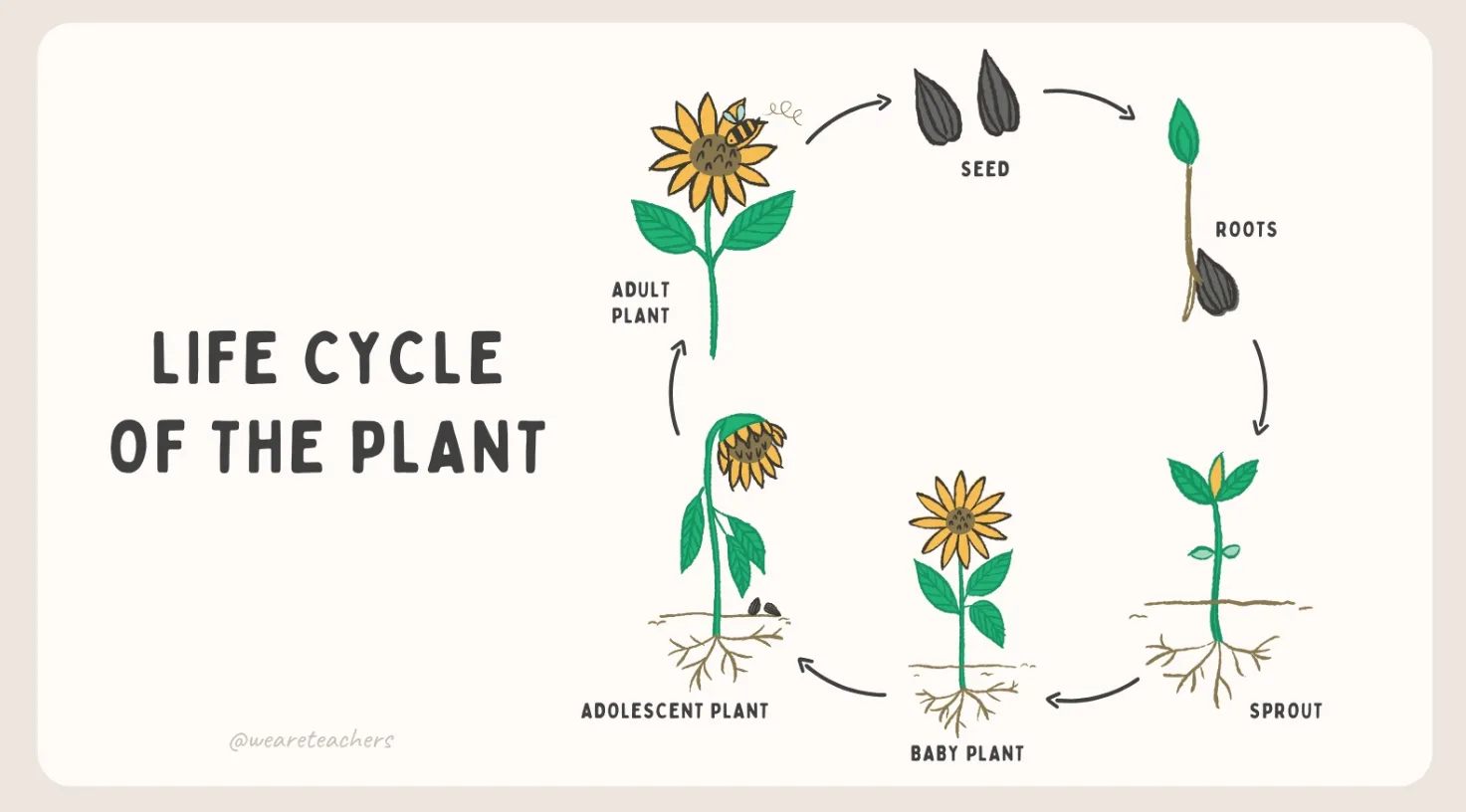
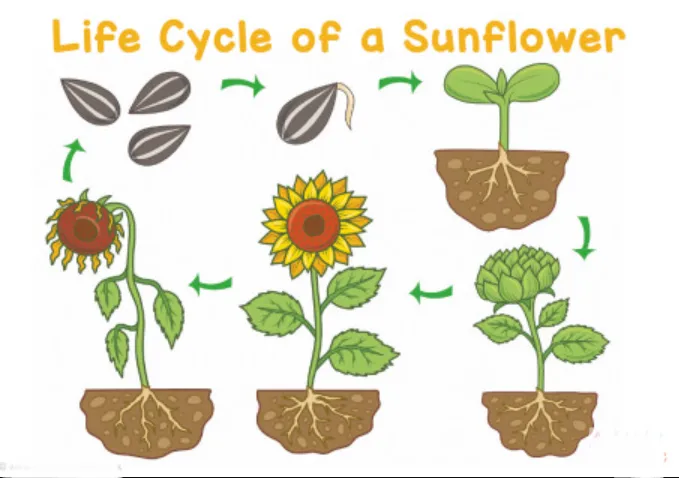
The life cycle of a sunflower is the complete journey of a sunflower plant from a dry seed to a tall flowering plant that produces new sunflower seeds. The common sunflower, Helianthus annuus, is an annual flowering plant in the Asteraceae family. “Annual” means it usually completes its full life cycle in one growing season, then dies after seed production.
A sunflower begins as a seed planted in warm, well-drained soil. Once it receives enough moisture and warmth, the seed germinates, sends a root downward, and pushes a young shoot upward. After that, the plant grows leaves, strengthens its stem, forms a flower bud, blooms, attracts pollinators, develops seeds, and finally dries out.
Most cultivated sunflower hybrids may mature in around 80 to 100 days, although timing changes with variety, temperature, soil, sunlight, and water. Sunflowers need warm soil to germinate, and South Dakota State University Extension notes that sunflower germination generally requires soil temperatures around 50°F.
Quick Answers:
Q: What are the main stages in the life cycle of a sunflower?
A: The main stages are seed, germination, and seedling, vegetative growth, flowering and pollination, and seed maturity.
Q: How long does a sunflower take to grow?
A: Many sunflower varieties take about 80–100 days to reach maturity, though some garden types may bloom earlier or later depending on variety and climate.
Q: Does a sunflower die after producing seeds?
A: Yes, the common sunflower is usually an annual plant, so it completes its life cycle and dies after flowering and seed production.
Quick Life Cycle Table
| Stage | What Happens | Approx. Time |
| Seed | Dormant seed waits for warmth, moisture, and soil contact | Before planting |
| Germination | Root emerges first, then the shoot rises above the soil | A few days to 1–2 weeks |
| Seedling | Cotyledons and first true leaves develop | Early growth phase |
| Vegetative Growth | Stem thickens, leaves expand, plant gains height | Several weeks |
| Bud Formation | Flower bud forms at the top of the stem | Before blooming |
| Flowering | Yellow ray petals open; disc flowers bloom | Mid to late cycle |
| Pollination | Bees and insects transfer pollen, helping seed formation | During bloom |
| Seed Maturity | Flower head dries; seeds harden and mature | Final stage |
Important Things That You Need To Know
When people search for the life cycle of a sunflower, they often also search for related topics such as sunflower seeds, sunflower oil, sunflower lecithin, sunflower drawing, and even snack-related terms like Smackin sunflower seeds. These keywords show that sunflowers are not only garden plants but also subjects in food, art, agriculture, and lifestyle.
Sunflower seeds are the final product of the plant’s life cycle. They can be eaten as snacks, used in baking, pressed for oil, fed to birds, or saved for the next planting season. NCSU Extension notes that sunflower seeds are used for cooking oil, livestock feed, snack food, and garnish.
Sunflower oil comes from pressed sunflower seeds. It is widely used in cooking, but the question “Is sunflower oil bad for you?” depends on context. Health organizations generally focus on replacing saturated and trans fats with unsaturated fats; sunflower oil is a plant oil and can fit into a balanced diet when used moderately and not repeatedly overheated.
Sunflower lecithin is commonly derived from sunflower seeds and is used as an emulsifier in some foods and supplements. Meanwhile, sunflower drawings are popular because the plant’s bold stem, large flower head, and bright petals make it easy for students, artists, and gardeners to observe its structure.
So, the sunflower is more than a flower. It is a food crop, pollinator plant, bird feeder, oilseed crop, garden icon, and educational model for understanding plant life cycles.
The History Of Their Scientific Naming, Evolution, and Their Origin
Scientific Name: Helianthus annuus
The common sunflower’s scientific name is Helianthus annuus. The genus name Helianthus comes from Greek roots: helios, meaning sun, and anthos, meaning flower. The species name annuus refers to its annual life cycle.
Origin in North America
The sunflower is native to North America. Historical records show that Indigenous peoples cultivated and used sunflowers long before modern commercial agriculture. The plant was valued for its seeds, oil, dyes, food, and cultural uses.
Domestication and Global Spread
Evidence suggests sunflowers were cultivated by American Indian communities in areas such as present-day Arizona and New Mexico around 3000 BC. Later, Spanish explorers took sunflower seeds to Europe around the 1500s, where the plant first became ornamental and later became important for oil production.
Evolutionary Family Background
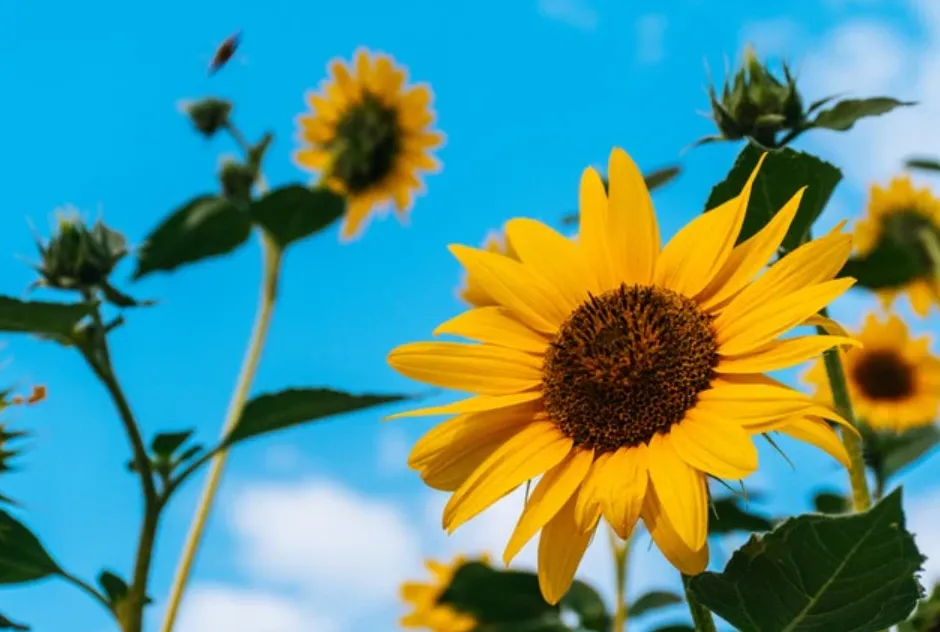
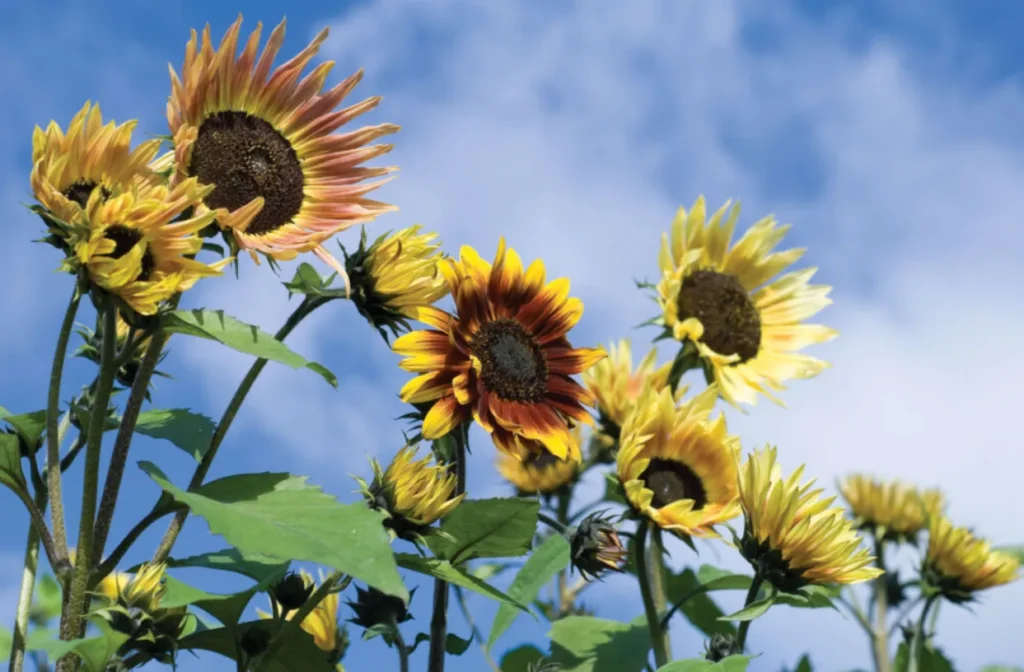
Sunflowers belong to the Asteraceae family, also known as the daisy family. Their “flower” is actually a flower head made of many smaller flowers: outer ray florets and inner disc florets. This structure helps attract pollinators and enables many seeds to be produced from one flower head.
Their Reproductive Process, Giving Birth, And Rising Their Children
Sunflowers Do Not Give Birth Like Animals
A sunflower does not give birth or raise children in the animal sense. Instead, it reproduces by forming seeds. Each seed contains a tiny embryo plant that can grow into a new sunflower when conditions are right.
Flower Head and Disc Florets
The large sunflower head is not one single flower. It contains many tiny disc flowers in the center and bright ray petals around the outside. The yellow ray petals attract pollinators, while the central disc flowers are responsible for seed formation.
Pollination Process
During flowering, pollen must be transferred to the receptive parts of the flower. This can happen through bees, other insects, or self-pollination, depending on the variety. The U.S. Forest Service explains that successful pollination supports fertilization, seed development, and plant reproduction.
Seed Development
After pollination, fertilized disc flowers develop into sunflower seeds. The flower head slowly becomes heavier, bends downward, and begins to dry. The back of the head turns yellow to brown as the plant approaches maturity.
“Raising” the Next Generation
Sunflowers “raise” their next generation by storing energy inside seeds. Those seeds may fall naturally, be eaten and dispersed by birds, or be collected by humans for planting. In nature, only seeds that land in suitable soil with enough sunlight, moisture, and warmth will survive.
Stages of Life Cycle of a Sunflower
1. Seed Stage
The seed stage is the beginning of the sunflower life cycle. A sunflower seed has a protective outer shell and an embryo inside. It stays dormant until it receives the right mix of moisture, warmth, oxygen, and soil contact.
Seeds can survive for a period in dry storage, but they cannot grow until conditions trigger germination. Gardeners usually plant sunflower seeds directly into the soil after the danger of frost has passed.
2. Germination and Seedling Stage
During germination, the seed absorbs water and swells. The seed coat cracks, and the first root begins to grow downward. This root anchors the young plant and begins absorbing water and minerals.
Soon after, the shoot grows upward and pushes above the soil surface. The first leaves, called cotyledons, appear. Then the first true leaves develop. SDSU Extension explains that sunflower vegetative stages are counted by true leaves, beginning when the first true leaf reaches a measurable size.
3. Vegetative Growth Stage
In the vegetative stage, the sunflower grows quickly. The stem becomes stronger, leaves expand, and the plant captures sunlight for photosynthesis. This stage is important because the plant is building the energy needed for flowering and seed production.
A healthy sunflower needs full sun, good drainage, and enough water. NCSU Extension describes sunflowers as full-sun plants that grow rapidly and can reach heights from small garden sizes to very tall forms.
4. Flowering, Pollination, and Seed Maturity Stage
The reproductive stage begins when the flower bud forms at the top of the stem. In sunflower growth terminology, this starts around the R1 stage. Flowering begins when the yellow ray petals open, known as the R5 stage.
Pollinators visit the flower head for nectar and pollen. After pollination, seeds begin to form in the central disc. When flowering is complete, the petals wilt, the back of the head turns yellow, and the bracts become yellow to brown. At R9, the sunflower reaches physiological maturity.
Their Main Diet, Food Sources, and Collection Process Explained
Sunflowers Make Their Own Food
A sunflower does not eat insects, meat, or prepared food. Like most green plants, it produces its own food through photosynthesis. This process happens mainly in the leaves.
Using sunlight, air carbon dioxide, and soil water, the plant produces sugars. These sugars fuel growth, flowering, and seed development.
Main Food Sources
The sunflower’s “food sources” are natural plant-growth inputs:
- Sunlight: Sunflowers need full sun for strong growth and better blooming.
- Water: Roots absorb water from the soil.
- Carbon dioxide: Leaves take in carbon dioxide from the air.
- Minerals: Roots collect nutrients such as nitrogen, phosphorus, potassium, calcium, and magnesium.
- Soil organic matter: Healthy soil supports root growth and nutrient availability.
Collection Process
The roots collect water and dissolved minerals from the soil. The leaves collect sunlight and carbon dioxide. The stem transports water upward and sugars throughout the plant.
The plant then uses this energy to form leaves, stems, flower buds, pollen, nectar, and finally sunflower seeds. In simple words, the sunflower’s feeding system is a natural partnership between sunlight, soil, water, air, and living plant tissues.
How Long Does A Sunflower Live
The lifespan of a sunflower depends on the variety, climate, soil, planting time, and whether it is grown in the wild, garden, or farm field. The common sunflower, Helianthus annuus, is normally an annual, meaning it completes its life cycle in one season.
- Typical full life cycle: Many cultivated sunflower hybrids mature in about 80–100 days, although some varieties may be quicker and some giant or seed-producing types may take longer.
- Germination period: If the soil is warm and moist, the seed may germinate within days. SDSU Extension notes that sunflowers require about 50°F soil temperature for germination and can raise cotyledon leaves above ground within a few days.
- Vegetative growth: This stage may last several weeks. The plant grows leaves, expands its root system, and builds a strong stem.
- Flowering period: Flowering begins when the yellow ray petals open. In growth-stage terms, this is called R5, and disc flowers open progressively across the flower head.
- Seed maturity: After flowering, the seed head continues to develop. At maturity, the back of the head and bracts turn yellow to brown, known as R9 physiological maturity.
- End of life: After seed production, the plant dries and dies. However, its seeds continue the next generation.
- Garden lifespan: In home gardens, sunflowers may look attractive for several weeks, especially if different varieties are planted at different times.
- Wild lifespan: Wild sunflowers may face stronger pressure from drought, insects, competition, birds, and poor soil. Some may not reach flowering, while others complete the full cycle and reseed naturally.
Sunflower Lifespan in the Wild vs. in Captivity
Sunflower Lifespan in the Wild
In the wild, a sunflower grows under natural conditions without regular care. It depends completely on rainfall, sunlight, soil quality, seed dispersal, and competition with other plants. Wild sunflowers may grow well in open sunny areas, but many seedlings die before maturity because of drought, grazing, disease, or poor soil.
Wild forms may also have multiple flower heads and can self-seed if seeds fall into suitable soil. Birds and small animals may eat many seeds, but this is also part of the natural ecosystem.
Sunflower Lifespan in Cultivation or Protected Gardens
Plants are not kept in “captivity” like animals, so the better term is cultivation. In gardens or on farms, sunflowers often thrive better because humans provide better spacing, water, soil preparation, and pest management.
Cultivated sunflowers may reach full maturity more reliably. Gardeners can protect seed heads from birds, support tall stems, and harvest seeds at the right time.
Key Difference
The wild sunflower depends on survival. The cultivated sunflower benefits from care. But in both cases, the common sunflower remains an annual plant, completing its life cycle after seed production.
Importance of Sunflowers in this Ecosystem
Supports Pollinators
Sunflowers are valuable for bees, butterflies, and other pollinators. NCSU Extension describes the common sunflower as a nectar plant, pollinator plant, butterfly-friendly plant, and bee-friendly plant.
Helps Seed-Eating Birds
After flowering, mature sunflower heads produce seeds that attract birds. NCSU Extension recommends leaving standing dead flowers into winter because birds are attracted to the seeds.
Improves Biodiversity
A sunflower patch can support insects, birds, and soil organisms. Native bees may visit the flowers, and some beneficial insects use sunflower plants as habitat. The genus Helianthus also supports specialized bees.
Supports Crop Pollination Value
Research summarized by USDA ARS found that insect pollination increased confection sunflower yields by 45% across studied locations and hybrids in the northern Great Plains, showing the strong link between sunflowers and pollinator services.
Provides Human and Agricultural Value
Sunflowers provide sunflower seeds, sunflower oil, livestock feed, garden beauty, cut flowers, and educational value. Their ecological and economic importance make them one of the most recognizable annual plants in the world.
What to Do to Protect Them in Nature and Save the System for the Future
1. Protect Pollinators
- Avoid unnecessary pesticide use, especially during flowering.
- Plant other nectar-rich flowers near sunflowers.
- Allow bees, butterflies, and beneficial insects to visit safely.
2. Leave Some Seed Heads for Birds
- Do not harvest every flower head.
- Leave some dry heads standing through fall and winter.
- This provides natural food for finches, sparrows, and other seed-eating birds.
3. Grow Sunflowers in Sunny, Healthy Soil
- Choose open areas with full sun.
- Improve soil with compost or organic matter.
- Avoid waterlogged soil because sunflowers prefer good drainage.
4. Save and Replant Seeds Responsibly
- Collect seeds from healthy plants.
- Dry them properly before storage.
- Replant locally adapted seeds when suitable.
5. Support Native Plant Diversity
- Grow sunflowers with other native or pollinator-friendly plants.
- Avoid creating a one-plant garden.
- A mixed habitat supports more insects, birds, and soil life.
Fun & Interesting Facts About Sunflowers
- Sunflowers are not single flowers. The large head is made of many smaller flowers called florets.
- The name Helianthus means “sunflower.” It comes from Greek words linked to the sun and the flower.
- Common sunflower is an annual plant. It usually grows, flowers, produces seeds, and dies in one season.
- Sunflower seeds are useful for humans and wildlife. People eat them as snacks, birds feed on them, and they can be pressed for oil.
- Sunflowers can help pollinators. Bees and other insects visit sunflower heads for pollen and nectar.
- Some sunflowers grow very tall. Depending on the variety, sunflowers may stay small or grow several feet high.
- Young sunflowers are famous for facing the sun. This movement is called heliotropism, though mature flower heads often become more fixed in position.
- Sunflowers have a cultural history. Indigenous peoples used sunflower seeds for food, oil, flour, dye, and ceremonies.
- Sunflower drawings are popular for learning plant parts. Their large flower head, strong stems, leaves, and seeds make them easy to study.
- Sunflower oil comes from seeds. This means the oil is directly connected to the final stage of the sunflower life cycle.
Frequently Asked Questions (FAQs)
Q: What is the life cycle of a sunflower?
A: The life cycle of a sunflower is the process from seed to germination, seedling growth, mature plant, flowering, pollination, seed formation, and plant death.
Q: How long does it take a sunflower to bloom?
A: Many sunflower types bloom within a few months. Some crop hybrids mature in around 80–100 days, but blooming time varies by variety and growing conditions.
Q: What happens after a sunflower blooms?
A: After blooming, pollinated disc flowers develop into seeds. The petals wilt, the flower head bends, the back of the head turns yellow to brown, and the seeds mature.
Q: Can sunflower seeds grow into new sunflowers?
A: Yes. Mature, viable sunflower seeds can grow into new plants when planted in warm, moist, well-drained soil with enough sunlight.
Q: Is a sunflower an annual or perennial plant?
A: The common sunflower, Helianthus annuus, is an annual. However, the broader Helianthus genus includes both annual and perennial species.
Conclusion
The life cycle of a sunflower is a simple but powerful example of how nature renews itself. A small sunflower seed grows into a strong green plant, forms a bright flower head, attracts pollinators, produces seeds, and then completes its annual life. Even after the plant dies, its seeds continue the story by feeding birds, supporting humans, producing sunflower oil, or growing into new plants.
Sunflowers are important because they connect gardening, farming, wildlife, food, and education. They support pollinators, provide seeds for birds, improve garden beauty, and help people understand plant reproduction clearly. By growing sunflowers responsibly, protecting pollinators, saving seeds, and leaving some flower heads for wildlife, we can help preserve both the plants and the ecosystems around them. A sunflower’s life may be short, but its value lasts far beyond one season.
Also Read: life cycle of a salmon