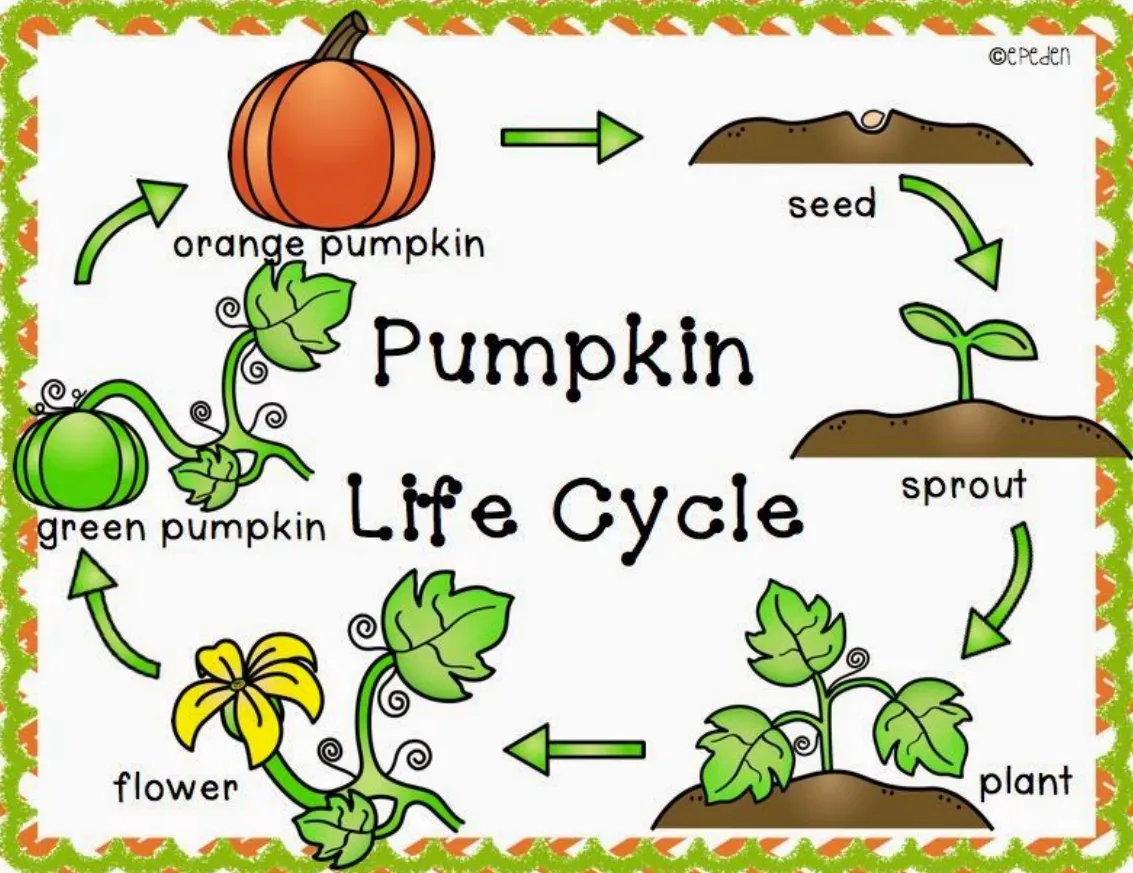
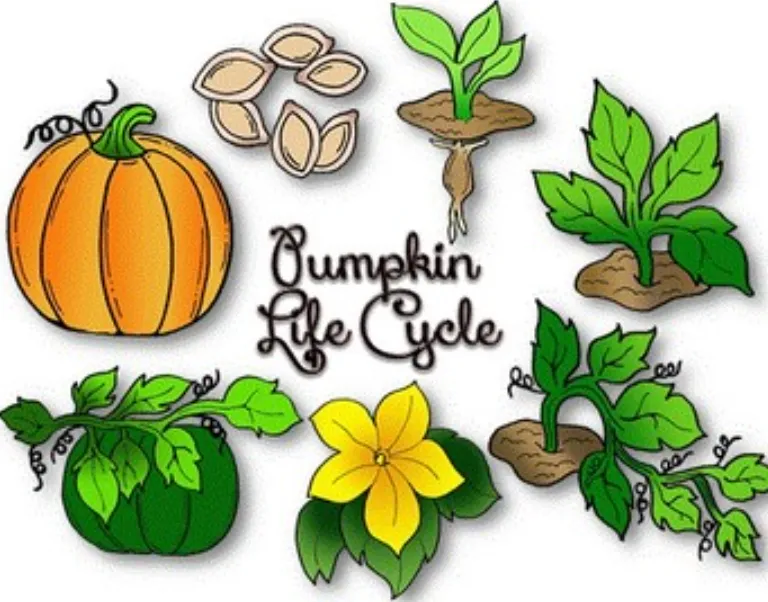
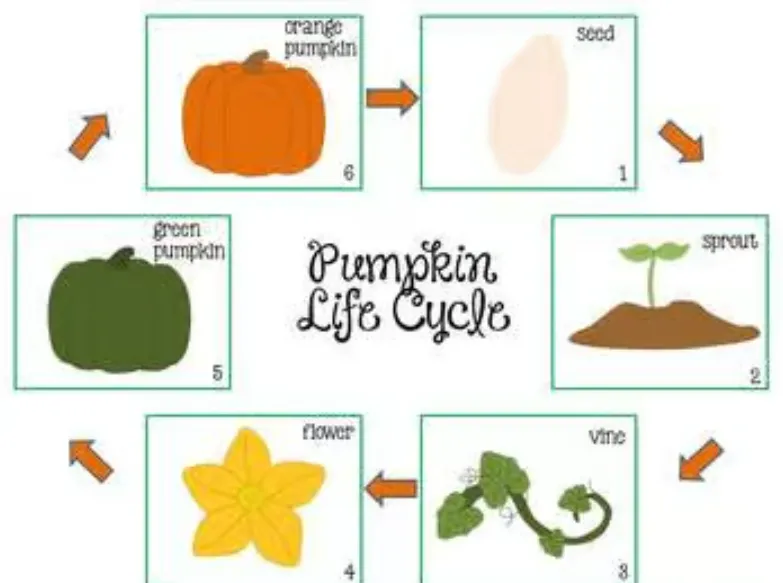
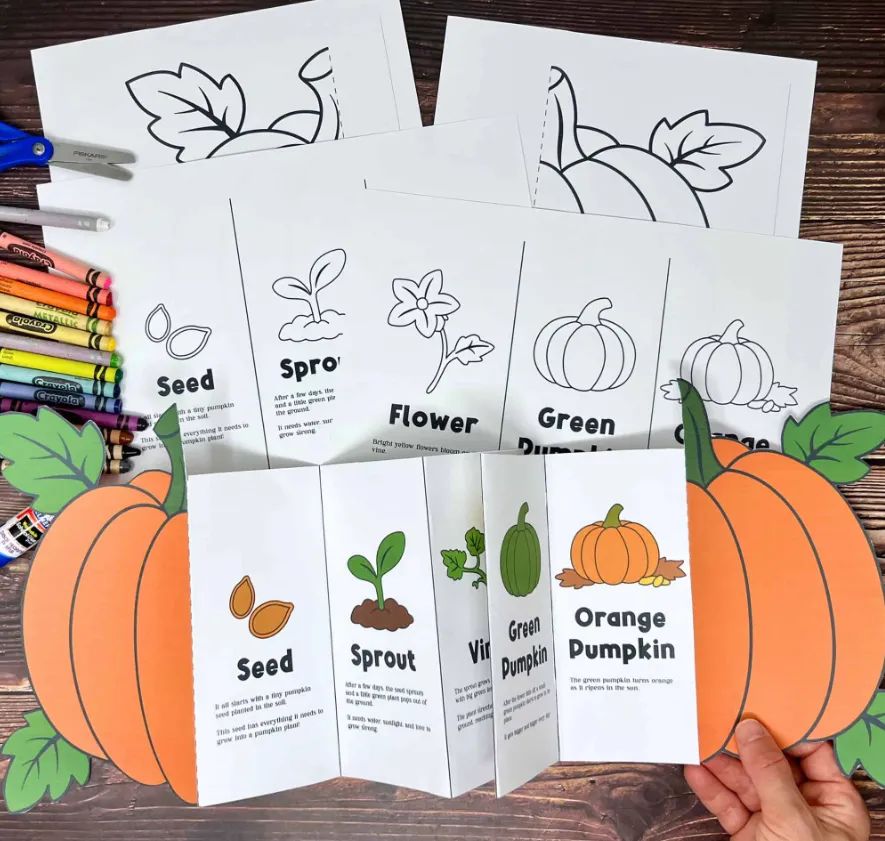
The life cycle of a pumpkin is one of the most interesting examples of how a small seed can grow into a large, colorful, and useful fruit. A pumpkin starts its journey as a seed, then grows into a seedling, develops vines, produces flowers, forms fruit, and finally becomes mature enough for harvest.
Pumpkins are warm-season plants that grow best in sunny locations, fertile soil, and moderate moisture. They are commonly grown in gardens, farms, and every pumpkin patch where people visit during autumn for picking, decorating, and seasonal activities.
Understanding the life cycle of a pumpkin is useful for students, gardeners, farmers, and nature lovers. It helps explain plant growth, pollination, fruit development, seed production, and the connection between plants, insects, soil, and humans.
Pumpkins are also important in daily life. They are used for food, decorations, animal feed, compost, and in traditional recipes such as pumpkin pie and pumpkin bread. Beyond food, pumpkins are popular for carving and painting, especially during fall festivals.
Quick Answers: Most Common Questions
Q: How long does the life cycle of a pumpkin take?
A: The complete life cycle of a pumpkin usually takes about 90 to 120 days, depending on the pumpkin variety, weather, soil quality, and care.
Q: What are the main stages of a pumpkin’s life cycle?
A: The main stages are seed, germination, seedling, vine growth, flowering, pollination, fruit development, maturity, and seed dispersal.
Q: Do pumpkins need pollination to grow fruit?
A: Yes. Pumpkins need pollination between male flowers and female flowers. Bees and other insects help transfer pollen, allowing the fruit to develop.
Important Things That You Need To Know
When learning about the life cycle of a pumpkin, it is also helpful to understand related topics that people often search for. A pumpkin is not only a plant in a garden; it is also connected with food, farming, decoration, and seasonal culture.
A pumpkin patch is a field or garden area where pumpkins are grown. Many people visit a pumpkin patch during autumn to choose fresh pumpkins, take photos, and enjoy family activities. For gardeners, a pumpkin patch needs enough space because pumpkin vines can spread widely.
Pumpkins are also famous in cooking. A classic pumpkin pie recipe uses pumpkin flesh, spices, sugar, milk, and eggs to make a sweet dessert. Similarly, a pumpkin bread recipe uses pumpkin puree to create soft, moist, and flavorful bread. These foods show how pumpkins move from plant life to human nutrition.
Pumpkins are also popular for creativity. People search for pumpkin carving ideas to make lanterns, faces, patterns, and festival decorations. Others prefer pumpkin painting ideas, which are safer for children and allow colorful designs without cutting the pumpkin.
Another common search is pumpkin patch near me, especially during fall. This shows the cultural and economic value of pumpkins. They support local farms, seasonal tourism, food markets, and family traditions.
So, pumpkins are more than just fruits. They are part of agriculture, food culture, ecosystems, and seasonal celebrations.
Quick Life Cycle Table
| Stage | What Happens | Approximate Time |
| Seed Stage | A pumpkin begins as a dry seed with stored food inside. | Day 0 |
| Germination | The seed absorbs water and sends out a small root. | 5–10 days |
| Seedling Stage | Small leaves appear above the soil. | 1–2 weeks |
| Vine Growth | Long vines, large leaves, and tendrils develop. | 3–6 weeks |
| Flowering Stage | Male and female flowers bloom on the vine. | 6–8 weeks |
| Pollination | Bees transfer pollen from male flowers to female flowers. | During flowering |
| Fruit Formation | A small pumpkin starts growing below the female flower. | 8–10 weeks |
| Fruit Maturity | Pumpkin becomes larger, harder, and changes color. | 90–120 days |
| Seed Production | Mature pumpkin contains seeds for the next generation. | At harvest |
The History of Their Scientific Naming
The pumpkin belongs to the plant family Cucurbitaceae, which also includes cucumbers, melons, gourds, and squash. Most pumpkins are scientifically classified under the genus Cucurbita.
The word Cucurbita comes from Latin and has been used historically to describe gourd-like plants. Pumpkins are often associated with species such as Cucurbita pepo, Cucurbita maxima, and Cucurbita moschata.
Important points about pumpkin scientific naming:
- Cucurbita pepo includes many common field pumpkins, summer squash, and ornamental gourds.
- Cucurbita maxima includes some of the largest pumpkin varieties, including giant pumpkins.
- Cucurbita moschata includes pumpkins and squash types known for sweet flesh and good storage quality.
- The family name Cucurbitaceae helps scientists group pumpkins with related vine-growing plants.
- The scientific naming system allows researchers, farmers, and students to identify pumpkin types accurately.
The common name “pumpkin” is widely used in English, but, botanically, pumpkins are a type of squash. Their scientific names help remove confusion because different regions may use different local names for similar plants.
Their Evolution And Their Origin
The pumpkin has a long history in both natural and agricultural contexts. Pumpkins are believed to have originated in the Americas, where wild relatives of Cucurbita plants grew naturally. Over thousands of years, humans selected and cultivated pumpkins for larger fruit, better taste, thicker flesh, and useful seeds.
Early pumpkins were not exactly like the smooth, round orange pumpkins seen today. Many wild forms had hard shells, bitter flesh, and smaller fruits. Through domestication, people gradually developed pumpkins that were easier to eat, store, cook, and grow.
Pumpkins became important because they were useful in many ways. The fruit could be eaten fresh, dried, or stored. The seeds were nutritious. The hard outer shell could also be used in practical ways by some early communities.
As agriculture spread, pumpkins became part of farming systems. They were often grown with other crops because their broad leaves helped cover the soil. This reduced weed growth and protected soil moisture.
The evolution of pumpkins also shows the relationship between plants and pollinators. Pumpkin flowers depend heavily on insects such as bees for pollination. Over time, the plant’s bright yellow flowers, nectar, and pollen attracted insects that helped with reproduction.
Today, pumpkins are grown worldwide. They are used for food, animal feed, decoration, festivals, and research. Their journey from wild vines to modern garden and farm crops shows how nature and human selection work together over time.
Their main food and its collection process
Pumpkins are plants, so they do not eat food like animals. Instead, they make their own food through photosynthesis. This process allows the plant to use sunlight, carbon dioxide, and water to produce sugar, which becomes energy for growth.
The main food of a pumpkin plant is the sugar it produces in its leaves. The large green leaves act like natural food factories. They absorb sunlight and help the plant grow vines, flowers, roots, and fruits.
Important parts of the pumpkin food process:
- Sunlight: Pumpkin leaves capture sunlight to start photosynthesis.
- Water: Roots absorb water from the soil and send it through the plant.
- Carbon dioxide: Leaves take carbon dioxide from the air through tiny openings called stomata.
- Minerals: Roots collect nutrients such as nitrogen, phosphorus, and potassium from the soil.
- Sugar production: The plant combines sunlight, water, and carbon dioxide to make glucose.
- Energy storage: Some of this energy is stored in the fruit, seeds, vines, and roots.
A healthy pumpkin plant needs rich soil with organic matter. Compost, aged manure, and natural mulch can improve soil quality. The roots spread through the soil to collect water and nutrients.
Pumpkins are heavy feeders. This means they need a good amount of nutrition to produce large leaves, long vines, and big fruits. If the soil is weak, the plant may grow slowly, produce fewer flowers, or develop smaller pumpkins.
The food-making process continues throughout the plant’s life. During early growth, energy supports leaves and vines. During flowering and fruiting, much of the energy moves toward the developing pumpkin fruit.
Their life cycle and ability to survive in nature
Seed Stage
The life cycle of a pumpkin begins with a seed. A pumpkin seed contains a tiny plant embryo and stored food. When the seed gets warmth, oxygen, and moisture, it becomes ready to germinate.
The hard seed coat protects the inside embryo from damage. This protection helps seeds survive until the environment becomes suitable.
Germination Stage
During germination, the seed absorbs water and swells. A small root comes out first and grows downward into the soil. Then a shoot grows upward toward the sunlight.
This stage is very important because weak soil, cold temperatures, or a lack of water can prevent the seed from growing properly.
Seedling Stage
The seedling develops small leaves called cotyledons. After that, true leaves begin to appear. These leaves help the young plant make food through photosynthesis.
At this stage, the plant is still delicate. It needs sunlight, moisture, and protection from pests.
Vine Growth Stage
Pumpkins grow long vines that spread across the ground. These vines have large leaves and curling tendrils. The leaves collect sunlight, while the tendrils help the plant hold onto nearby surfaces.
The spreading habit helps pumpkins survive by covering the soil, reducing weed competition, and protecting moisture.
Flowering and Fruiting Stage
The pumpkin plant produces male flowers first, followed by female flowers. Female flowers have a small, swollen base that can become a pumpkin after pollination.
After successful pollination, the fruit begins to grow. The pumpkin slowly becomes larger, harder, and more colorful.
Their Reproductive Process and raising their children
Pumpkins reproduce through flowers, pollination, fruit formation, and seed production. Although plants do not raise children like animals, pumpkins protect and support their next generation through seeds inside the fruit.
Important points about pumpkin reproduction:
- Male flowers appear first: These flowers produce pollen but do not become pumpkins.
- Female flowers appear later: Female flowers have a small baby pumpkin shape at their base.
- Pollination is necessary: Pollen must move from the male flower to the female flower.
- Bees are major helpers: Bees visit flowers for nectar and carry pollen from flower to flower.
- Fruit begins after fertilization: Once pollination is successful, the small fruit begins to grow.
- Seeds develop inside the fruit: The pumpkin protects many seeds inside its thick flesh.
- Mature fruit supports seed survival: The hard outer skin protects the seeds from damage.
- Seeds create the next generation: When seeds are planted or naturally dispersed, a new life cycle begins.
The pumpkin fruit works like a natural protective home for seeds. It keeps the seeds safe while they mature. Inside the pumpkin, the seeds receive nutrients and protection.
When the pumpkin becomes mature, the seeds are ready for the future. Humans may collect and plant them. In nature, animals may eat the fruit and spread the seeds. Some pumpkins may decay in the soil, allowing seeds to germinate when conditions become suitable.
The importance of them in this Ecosystem
Food for Humans and Animals
Pumpkins are an important source of food. The flesh can be cooked, roasted, boiled, baked, or used in soups, desserts, and bread. Pumpkin seeds are also edible and rich in nutrients.
Animals such as birds, rodents, insects, livestock, and wildlife may feed on pumpkin flesh, seeds, flowers, or leaves.
Support for Pollinators
Pumpkin flowers provide nectar and pollen. Bees and other insects visit the flowers and help with pollination. This makes pumpkins valuable for supporting local pollinator populations.
Healthy pollinators are important for many crops and wild plants. So, pumpkins indirectly support wider plant reproduction.
Soil Protection
Pumpkin vines spread across the ground, forming a leafy canopy. This helps protect soil from direct sunlight, erosion, and moisture loss.
The leaves also reduce weed growth by blocking sunlight from reaching weed seedlings.
Organic Matter and Compost
After harvest, pumpkin vines, leaves, and old fruits can decompose, returning nutrients to the soil. This natural recycling improves soil structure and supports microorganisms.
Pumpkin waste can also be added to compost piles. It breaks down and becomes useful organic fertilizer.
Cultural and Economic Value
Pumpkins support farmers, markets, food businesses, and seasonal activities. A pumpkin patch can attract visitors and support local agriculture.
What to do to protect them in nature and save the system for the future
Protecting pumpkins in nature and farming systems means protecting soil, pollinators, water, and biodiversity. Healthy pumpkin plants depend on a balanced environment.
- Protect pollinators: Avoid unnecessary chemical pesticides, especially during flowering time. Bees are essential for pumpkin fruit production.
- Use organic compost: Add compost or natural manure to improve soil fertility and support healthy root growth.
- Rotate crops: Do not grow pumpkins in the same soil year after year. Crop rotation helps reduce disease and pest buildup.
- Save healthy seeds: Collect seeds from strong, disease-free pumpkins for future planting.
- Maintain soil moisture: Use mulch to reduce water loss and protect roots from heat stress.
- Avoid overwatering: Excessive watering can cause root rot and fungal diseases. Water deeply but carefully.
- Control pests naturally: Use handpicking, neem-based solutions, companion planting, and biological control when possible.
- Support biodiversity: Grow flowers near pumpkin plants to attract bees and beneficial insects.
- Reduce food waste: Use pumpkin flesh, seeds, and leftovers in cooking, animal feed, or compost.
- Choose local varieties: Local pumpkins often perform better in regional soil and climate conditions.
- Keep the garden clean: Remove diseased leaves and rotten fruits to reduce the spread of infection.
- Teach children about plant life: A pumpkin garden is a great way to teach the importance of plants, food systems, and nature conservation.
By protecting pumpkins, we also protect pollinators, soil organisms, farm productivity, and future food security.
Frequently Asked Questions FAQs
Q1: What is the life cycle of a pumpkin?
A: The life cycle of a pumpkin is the complete growth process from seed to mature fruit. It includes seed germination, seedling growth, vine development, flowering, pollination, fruit formation, maturity, and seed production.
Q2: How many days does a pumpkin take to grow?
A: Most pumpkins take about 90 to 120 days to grow from seed to harvest. Small pumpkin varieties may mature faster, while giant pumpkins may take longer.
Q3: What is the first stage of a pumpkin’s life cycle?
A: The first stage is the seed stage. A pumpkin begins as a seed that contains a tiny plant embryo and stored food for early growth.
Q4: Why are pumpkin flowers important?
A: Pumpkin flowers are important because they support reproduction. Male flowers provide pollen, and female flowers develop into pumpkins after successful pollination.
Q5: Can pumpkins grow without bees?
A: Pumpkins can grow without bees only if they are hand-pollinated by humans or pollinated by other insects. However, bees are the most common and effective pollinators for pumpkins.
Q6: Why is my pumpkin plant producing flowers but no fruit?
A: This may happen because only male flowers are blooming, pollination is poor, bees are absent, the weather is too hot or rainy, or the plant is under stress. Female flowers are needed for fruit production.
Q7: What does a mature pumpkin look like?
A: A mature pumpkin usually has a hard outer skin, deep color, dry stem, and firm body. The exact color and size depend on the variety.
Q8: Are pumpkin seeds part of the life cycle?
A: Yes. Pumpkin seeds mark the end of the cycle and the beginning of the next generation. When planted, the seeds can grow into new pumpkin plants.
Conclusion
The life cycle of a pumpkin is a beautiful natural process that shows how plants grow, reproduce, and support ecosystems. From a small seed, the pumpkin plant develops roots, leaves, vines, flowers, fruit, and seeds. Each stage has a special role in survival and reproduction.
Pumpkins are valuable for food, farming, culture, decoration, and the environment. They support pollinators, protect soil, provide nutrition, and create seasonal joy through pumpkin patches, recipes, carving, and painting.
Learning about the pumpkin life cycle helps us understand the connection between plants, insects, soil, sunlight, water, and people. It also teaches the importance of protecting nature for future generations.
By growing pumpkins responsibly, saving seeds, caring for pollinators, and reducing waste, we can help maintain a healthy natural system. The journey of a pumpkin is simple, but its value in nature and human life is truly powerful.
Also Read: life cycle penguins