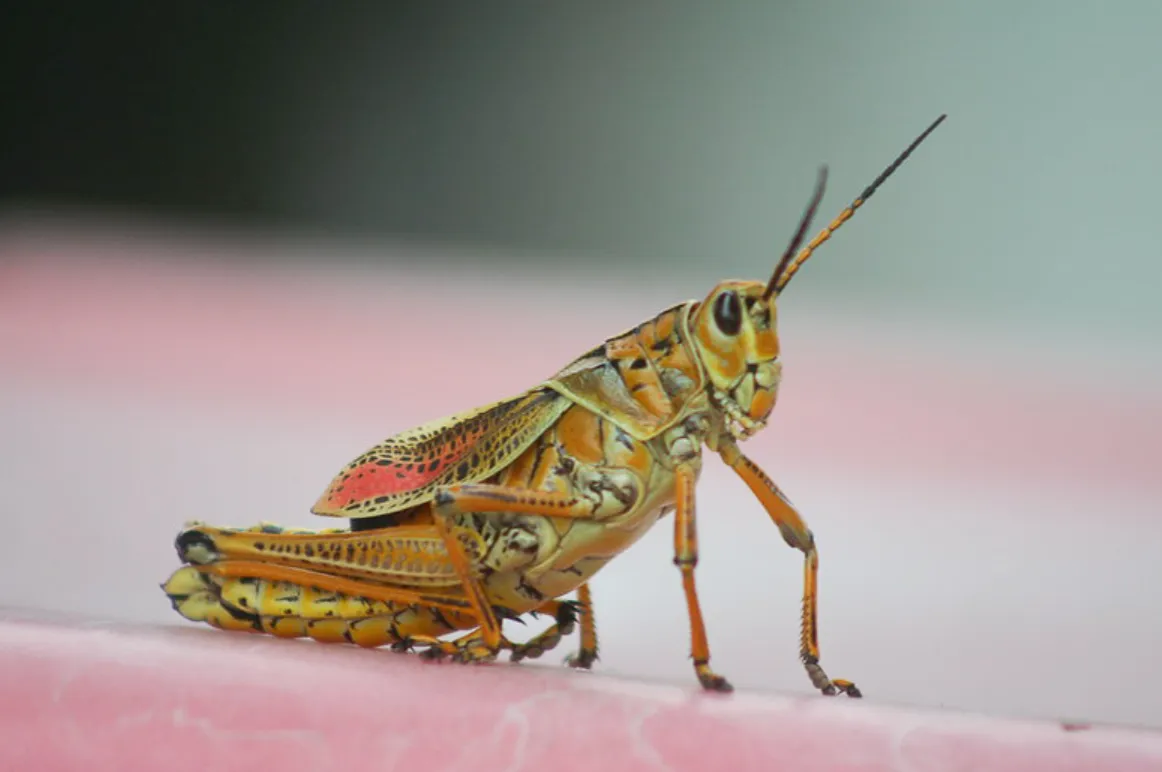
The life cycle of a grasshopper is one of the clearest examples of incomplete metamorphosis in insects. Unlike butterflies or flies, a grasshopper does not pass through a pupal stage. Instead, it develops through three main stages: egg, nymph, and adult grasshopper.
Grasshoppers belong to the insect order Orthoptera, a group that also includes crickets, katydids, and locusts. Most familiar short-horned grasshoppers are placed in the family Acrididae, which includes many of the common grasshoppers seen in fields, grasslands, gardens, and agricultural areas. Britannica notes that Acrididae contains around 10,000 species, making it the largest and best-known grasshopper family.
In nature, grasshoppers are both helpful and harmful depending on their number. In balanced populations, they help move energy through the food chain, recycle nutrients, and provide food for birds, reptiles, mammals, spiders, and other insects. However, when populations become too large, they can damage crops, pastures, and garden plants.
Q: What are the main stages in the life cycle of a grasshopper?
A: The main stages are egg, nymph, and adult.
Q: Does a grasshopper have a pupal stage?
A: No. A grasshopper has incomplete metamorphosis, so it does not form a pupa.
Q: How long does a grasshopper live?
A: Many grasshoppers complete one generation in a year, but the exact lifespan depends on species, temperature, food, and habitat. USDA materials note that many rangeland grasshoppers have a single generation per year.
Quick Life Cycle Table
| Stage | What Happens | Main Features | Survival Need |
| Egg | A female lays eggs in soil inside an egg pod | Hidden underground, protected by soil | Moist soil, safe temperature, protection from predators |
| Nymph | Young grasshopper hatches and grows | Looks like a small adult but has no full wings | Fresh plants, warmth, hiding places |
| Molting | A nymph sheds its old skin several times | The body grows after each molt | Safe shelter during the soft-body stage |
| Adult Grasshopper | A fully developed grasshopper can mate and lay eggs | Strong jumping legs, wings in many species, and a mature body | Food, mate, suitable egg-laying ground |
| Next Generation | Eggs remain in the soil until hatching conditions are right | The cycle begins again | Seasonal temperature and habitat balance |
The History of Their Scientific Naming
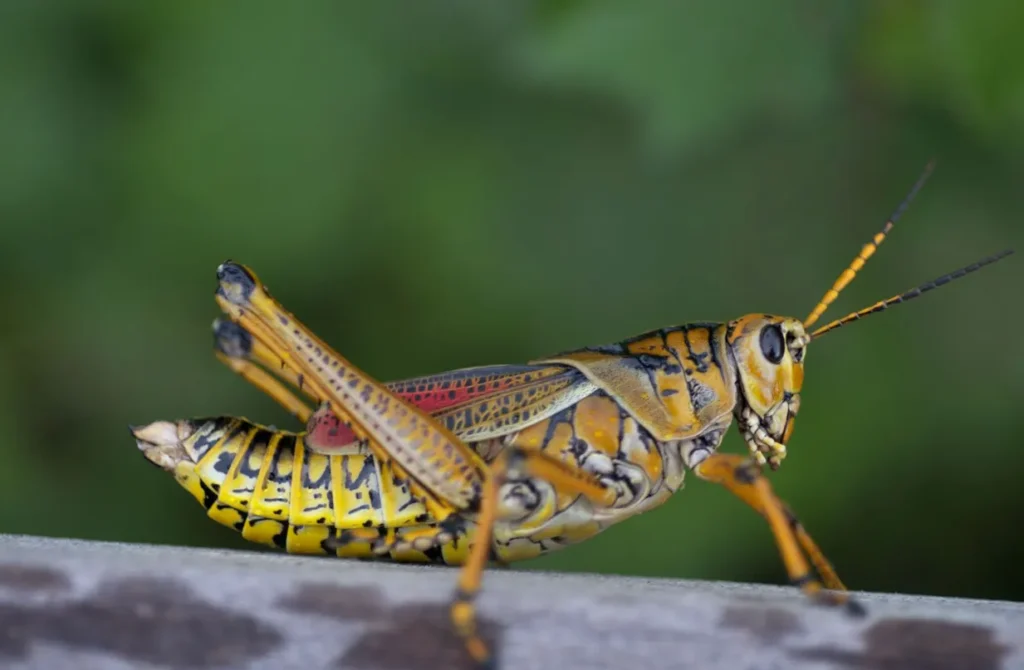
The scientific naming of the grasshopper is connected to its place in insect classification. Grasshoppers are insects in the order Orthoptera. The name Orthoptera comes from Greek roots meaning “straight wing,” referring to the structure of the front wings in many members of this group. North Carolina State University’s entomology resource explains that ortho means straight and ptera means wing.
Important naming points:
- Kingdom: Animalia
- Phylum: Arthropoda
- Class: Insecta
- Order: Orthoptera
- Suborder: Caelifera
- Common family: Acrididae
The word “grasshopper” is a common name, not the name of a single species. It refers to many short-horned jumping insects that usually live in grasses, fields, dry lands, and open habitats.
The family Acrididae is especially important because it includes many common short-horned grasshoppers and locust-type species. Locusts are not a completely separate insect group; they are certain grasshoppers that can change behavior and form swarms under specific environmental conditions.
So, the scientific naming history of grasshoppers reflects their body structure, wing type, jumping ability, and evolutionary relationships with other Orthoptera, such as crickets and katydids.
Their Evolution And Their Origin
The origin of the grasshopper goes deep into insect evolution. Grasshoppers are part of Orthoptera, one of the older groups of winged insects. Modern grasshoppers belong mainly to the suborder Caelifera, which includes short-horned grasshoppers and locusts.
Grasshoppers are successful because their bodies are highly adapted for survival in open habitats. Their strong hind legs help them jump quickly away from predators. Their chewing mouthparts allow them to feed on grasses, leaves, crops, herbs, and many wild plants. Their body color often matches soil, dry grass, or green vegetation, helping them blend in with their surroundings.
Research on Acrididae evolution suggests that this family diversified millions of years ago. A published evolutionary study reported that Acrididae likely originated during the Paleocene, around 59.3 million years ago, and later spread widely across the world.
This long evolutionary history explains why grasshoppers are found in many environments today. They live in grasslands, farms, savannas, deserts, roadsides, forest edges, wetlands, and mountain meadows. Their life cycle is flexible enough to match seasonal changes in temperature, rainfall, and food availability.
The grasshopper’s incomplete metamorphosis is also an evolutionary advantage. Because the nymph resembles the adult and starts feeding soon after hatching, it does not need a long, helpless pupal stage. This allows young grasshoppers to grow quickly when the weather and food are favorable.
Over time, grasshoppers have become important members of terrestrial ecosystems. They are herbivores, prey animals, nutrient recyclers, and sometimes agricultural pests. Their evolutionary success stems from their simple yet effective body design, rapid growth, strong mobility, and ability to reproduce in large numbers when conditions are right.
Their main food and its collection process
Grasshoppers are mostly plant feeders, but their diets can vary by species, habitat, and season. Many grasshoppers prefer grasses, grains, weeds, leaves, flowers, tender shoots, and crop plants. Some species are more selective, while others feed on a wide range of vegetation.
The British Ecological Society notes that there are around 11,000 known grasshopper species, and not all of them eat grass. Some have different feeding roles, and a few may even show more unusual feeding behavior depending on species and environment.
Their food collection process includes:
- Finding food by movement: A grasshopper moves through grass, crop fields, or wild plants using walking, jumping, and flying.
- Testing plants: It may use its antennae and mouthparts to sense suitable food.
- Chewing leaves: Grasshoppers have strong mandibles, or chewing mouthparts, that cut plant tissue into small pieces.
- Feeding during warm periods: They are usually more active in warm daylight, when their body temperature allows better movement.
- Choosing soft plant parts: Young nymphs often prefer tender leaves because their bodies and mouthparts are still developing.
- Moving to new plants: When local food becomes dry, crowded, or damaged, adult grasshoppers may move to nearby vegetation.
Grasshoppers do not “collect” food like bees collect nectar or ants carry food to nests. Instead, they usually eat directly from living plants. In large numbers, this direct feeding can remove leaves, reduce crop growth, and damage pasture land.
However, moderate feeding by grasshoppers can be part of natural plant renewal. Their waste returns nutrients to the soil, and damaged plant material decomposes. This makes their feeding process important in both food chains and nutrient cycling.
Important Things That You Need To Know
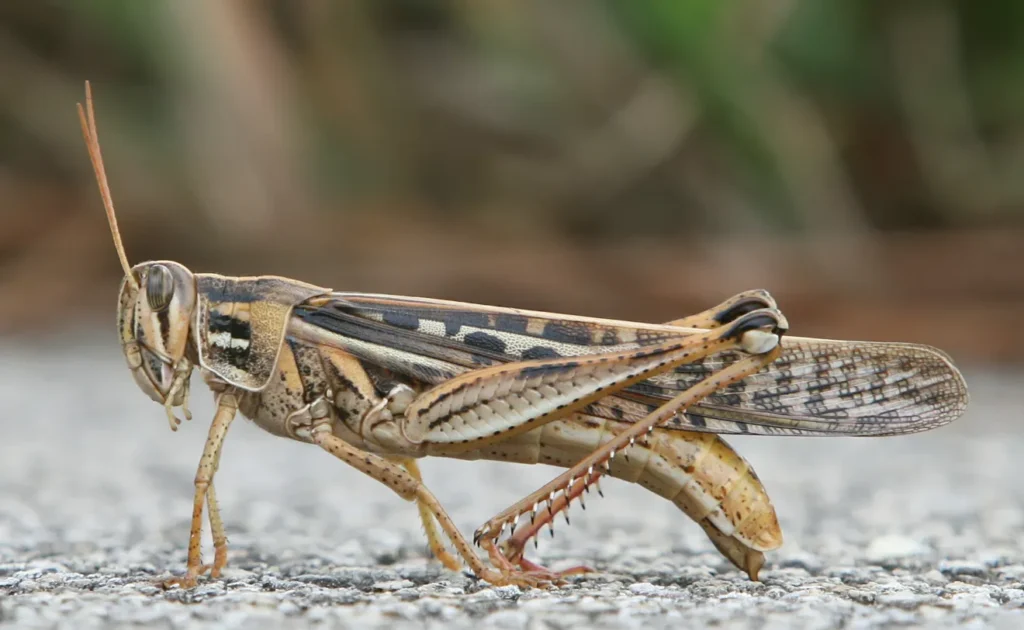
The word grasshopper is often used as if it refers to a single insect, but it actually encompasses a large group of related jumping insects. A grasshopper is usually recognized by its strong hind legs, short antennae, chewing mouthparts, and ability to jump long distances compared with its body size.
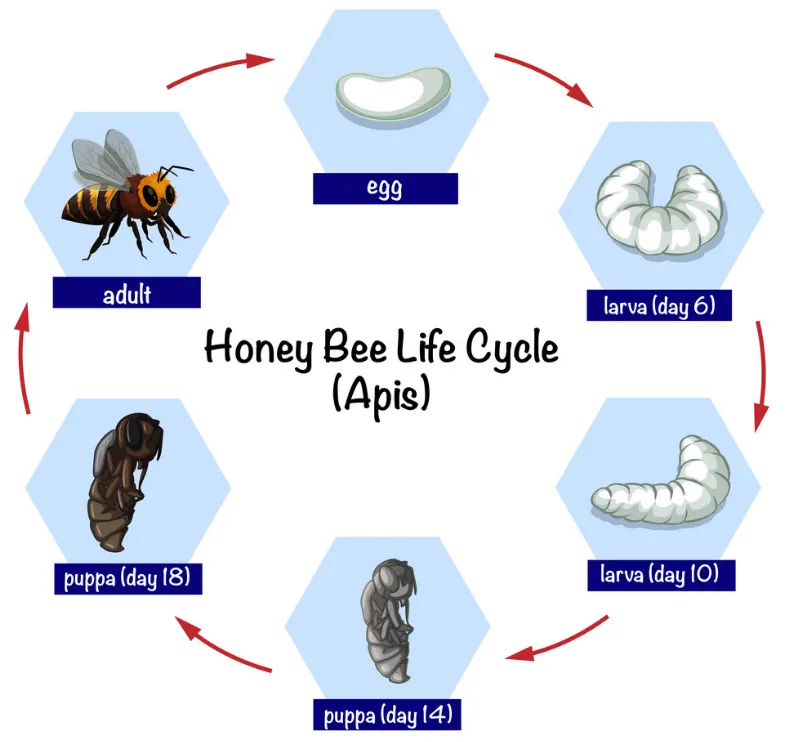
A grasshopper’s life cycle is different from the life cycle of a butterfly. Butterflies have egg, larva, pupa, and adult stages. Grasshoppers have only egg, nymph, and adult stages. This is called incomplete metamorphosis.
The grasshopper nymph looks like a tiny adult but lacks fully developed wings and reproductive organs. As it grows, it molts several times. After each molt, it becomes larger and more like an adult.
Another important point is that grasshoppers can be both beneficial and destructive. In a balanced ecosystem, the grasshopper supports birds, reptiles, spiders, and other predators. It also helps move plant energy into the food web. But when weather, food, and egg survival create high populations, grasshoppers may become serious crop pests.
Grasshoppers are also sensitive to habitat change. Too much pesticide use, loss of native grasslands, and poor land management can disturb their natural balance. Protecting grasshoppers does not mean allowing destructive outbreaks; it means supporting healthy ecosystems where predators, plants, soil, and insects stay in balance.
Their life cycle and ability to survive in nature
Egg Stage
The life cycle begins when the female lays eggs in the soil. USDA’s grasshopper field guide explains that all grasshoppers begin life as eggs, which are laid in the soil of their habitat.
The female usually places the eggs in a pod-like structure. This protects them from drying, cold, and some predators. Soil temperature and moisture strongly affect egg development.
Nymph Stage
After hatching, the young grasshopper is called a nymph. It looks like a small adult but lacks fully developed wings. The nymph starts feeding soon after it emerges.
As the nymph grows, it sheds its outer skin several times. This process is called molting. Each growth step between molts is called an instar.
Adult Stage
After the final molt, the grasshopper becomes an adult. Many adult grasshoppers have wings and can reproduce. Adults search for food, avoid predators, and find mates.
Survival Ability
Grasshoppers survive through camouflage, fast jumping, quick flight, strong legs, high reproductive output, and seasonal timing. Their eggs are hidden underground, nymphs grow quickly when food is available, and adults can move to better habitats when needed.
Their survival is also linked to the weather. Warm temperatures can speed development, while cold conditions can slow it. USDA notes that soil temperature at egg-pod depth is important for embryo development.
Their Reproductive Process and raising their children
Grasshoppers reproduce through sexual reproduction. Adult males and females must reach maturity before mating. Males often attract females through sound, movement, or body signals, depending on the species.
Important points about reproduction:
- Mate finding: Male grasshoppers may produce sounds by rubbing body parts together, a process called stridulation.
- Mating: The male transfers sperm to the female during mating.
- Egg production: After mating, the female develops fertilized eggs inside her body.
- Egg laying: The female uses her abdomen to dig into soil and lay eggs in a protected pod.
- Egg pod protection: A foamy material may help hold the eggs together and protect them underground.
- No parental care: Grasshoppers do not care for their young as birds or mammals do.
- Independent nymphs: After hatching, the nymphs must find food and avoid predators on their own.
- High egg numbers: Producing many eggs increases the chance that at least some young will survive.
The phrase “raising their children” is different for grasshoppers than for animals with parental care. Grasshoppers do not feed, guard, or teach their young after hatching. Their main parental investment is choosing a suitable egg-laying site and protecting eggs inside the soil.
This strategy works because grasshoppers are small prey animals. Birds, spiders, beetles, rodents, reptiles, and parasitic insects eat many eggs, nymphs, and adults. By laying many eggs, grasshoppers keep their population going even when many young do not survive.
Their reproductive process is closely tied to the climate. If the soil is too dry, too cold, flooded, or disturbed, egg survival can fall. If conditions are warm, food is abundant, and predators are limited, more nymphs survive, and the population can increase quickly.
The importance of them in this Ecosystem
Grasshoppers as Plant Consumers
Grasshoppers are major herbivores in grasslands and open habitats. They eat plant material and convert it into insect biomass. This helps transfer energy from plants to animals higher in the food chain.
The Smithsonian’s Great Plains Science research notes that grasshoppers can be dominant herbivores in grasslands and may consume a larger share of aboveground plant biomass than cattle in some systems.
Grasshoppers as Food for Predators
Grasshoppers are eaten by birds, frogs, lizards, spiders, beetles, praying mantises, rodents, snakes, and other wildlife. This makes them an important food source.
When grasshopper populations decline too sharply, predators that depend on insects may also be affected.
Grasshoppers and Nutrient Cycling
Grasshoppers help break plant material into smaller forms through feeding and waste production. Their droppings return nutrients to the soil.
USDA research notes that selective grasshopper feeding can increase nutrient cycling and plant production at some sites.
Grasshoppers as Ecological Indicators
Because grasshoppers respond to temperature, rainfall, vegetation, and land use, their population changes can show how healthy or stressed a habitat is.
A balanced grasshopper population often indicates a functioning grassland ecosystem. Extreme outbreaks, however, may signal drought, overgrazing, loss of predators, or habitat imbalance.
What to do to protect them in nature and save the system for the future
Protecting grasshoppers means protecting natural balance. The goal is not to create uncontrolled outbreaks, but to maintain healthy populations in healthy ecosystems.
- Protect native grasslands: Natural grasses provide food, shelter, egg-laying sites, and habitat for predators.
- Reduce unnecessary pesticide use: Broad insecticide spraying can harm non-target insects, pollinators, predators, and soil organisms.
- Use targeted pest control: When grasshopper numbers become harmful, choose integrated pest management instead of blanket chemical control.
- Maintain plant diversity: Mixed vegetation supports diverse grasshopper species and prevents a single pest species from dominating.
- Avoid overgrazing: Overgrazed land can create bare soil patches that may favor some outbreak-prone grasshoppers.
- Support natural predators: Birds, spiders, beetles, reptiles, and small mammals help keep grasshopper populations balanced.
- Protect soil health: Grasshopper eggs develop in soil, so soil structure, moisture, and temperature matter.
- Monitor populations early: Checking egg beds and young nymphs helps prevent severe outbreaks before they spread.
- Educate farmers and gardeners: People should understand that not every grasshopper is a pest.
- Encourage ecological farming: Crop rotation, field borders, natural vegetation strips, and biological controls can reduce damage while protecting biodiversity.
The Xerces Society warns that insecticide use in grassland systems can affect more than target pests. At the same time, grasshopper herbivory itself is an important ecosystem function that supports energy flow and nutrient cycling.
Frequently Asked Questions (FAQs)
Q1: What is the life cycle of a grasshopper?
A: The life cycle of a grasshopper has three main stages: egg, nymph, and adult. This is called incomplete metamorphosis.
Q2: Why is there no pupal stage in a grasshopper’s life cycle?
A: Grasshoppers do not go through complete metamorphosis—their young hatch as nymphs, which already look like small adults.
Q3: Where do grasshoppers lay their eggs?
A: Most grasshoppers lay eggs in the soil, often inside protective egg pods. This helps protect the eggs from the weather and predators.
Q4: What does a grasshopper nymph eat?
A: A grasshopper nymph usually eats soft plant parts such as tender grass, young leaves, weeds, and crop seedlings.
Q5: How many times does a grasshopper molt?
A: The number depends on species and conditions, but nymphs usually molt several times before becoming adults.
Q6: Are grasshoppers harmful to crops?
A: They can be harmful when populations become high. Large numbers may damage crops, pastures, vegetables, and garden plants.
Q7: Are grasshoppers useful in nature?
A: Yes. Grasshoppers are important herbivores, prey animals, and nutrient recyclers. They support many food chains.
Q8: What is the difference between a grasshopper and a locust?
A: A locust is a type of grasshopper that can change behavior and form large moving swarms under certain environmental conditions.
Conclusion
The life cycle of a grasshopper is simple, efficient, and well-adapted to its environment. From hidden eggs in the soil to active nymphs and strong adult grasshoppers, each stage helps the insect survive in grasslands, farms, and wild habitats.
Grasshoppers are more than crop-feeding insects. They are important parts of the food web, helping transfer plant energy to birds, reptiles, mammals, spiders, and other predators. They also support nutrient cycling through feeding and waste production.
At the same time, their population must remain balanced. Too many grasshoppers can damage crops, while too few can reduce food for wildlife. The best approach to the future is smart ecosystem management: protect habitats, reduce unnecessary chemical use, support predators, and monitor outbreaks early.
Also Read: moths life cycle