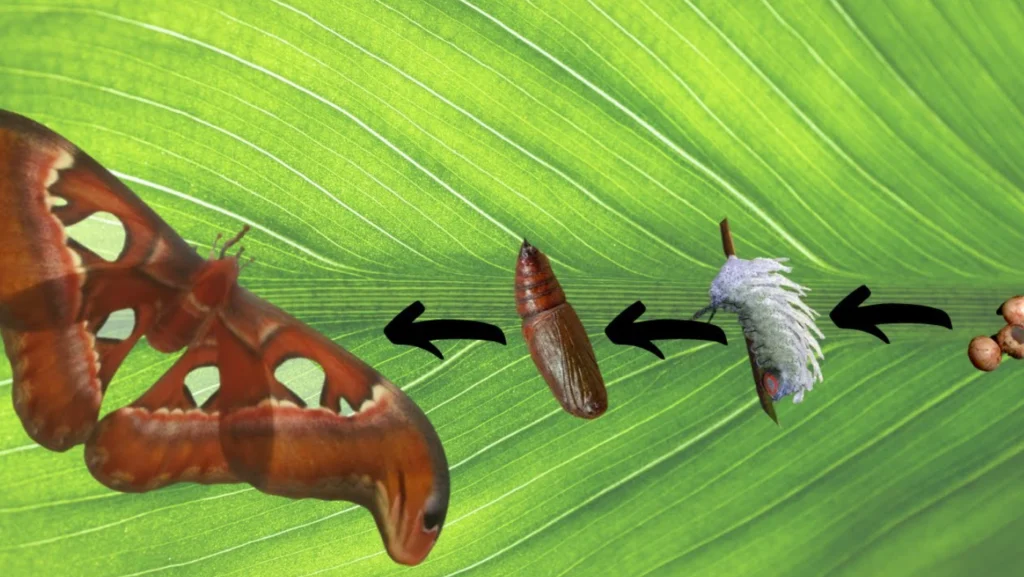
The moth’s life cycle is one of the most interesting examples of complete metamorphosis in nature. Like butterflies, moths pass through four main stages: egg, larva, pupa, and adult moth. Each stage has a different body form, different needs, and a different role in survival. The hungry larva, commonly called a caterpillar, does most of the feeding, while the adult moth mainly focuses on mating, laying eggs, and continuing the next generation.
Moths are part of the insect order Lepidoptera, a group known for wings covered with tiny scales. Many moths are active at night, but not all of them are dull or hidden. Some are cute moths, some are pretty moths, and famous species such as luna moths are loved for their soft green wings and graceful appearance.
At the same time, some moths, such as pantry moths, can become household pests because their larvae feed on stored dry foods like flour, grains, nuts, dried fruit, pet food, and cereals. Understanding their life cycle helps people protect food, support useful moth species, and manage unwanted infestations safely.
Q: How many stages are in the moth’s life cycle?
A: Moths have four life cycle stages: egg, larva, pupa, and adult moth.
Q: Which stage of moths causes the most feeding damage?
A: The larval stage causes the most feeding damage because caterpillars eat leaves, grains, fabrics, or stored food, depending on the species.
Q: How long do moths live?
A: It depends on the species and environment. Some fast-developing moths complete development in only a few weeks, while others may take months or even years.
Quick Life Cycle Table
| Stage | What Happens | Usual Role |
| Egg | A female moth lays eggs on or near food plants, stored food, fabric, or other safe surfaces. | Starts the next generation. |
| Larva | The egg hatches into a caterpillar. This stage eats and grows quickly. | Main feeding and growth stage. |
| Pupa | The larva forms a cocoon or a hidden pupa. The body changes inside. | Transformation stage. |
| Adult Moth | The adult emerges with wings, finds a mate, and lays eggs. | Reproduction and dispersal stage. |
This simple table shows why the moth’s life cycle is important for both nature and home pest control. If you only remove adult moths, eggs and larvae may still survive. That is why pantry moth control must focus on stored food, larvae, cocoons, and hidden eggs, not only flying adults.
The History of Their Scientific Naming
The scientific group name for moths and butterflies is Lepidoptera. This name comes from Greek words meaning “scaly winged”, because moth and butterfly wings are covered with tiny dust-like scales. These scales help create wing colors, patterns, camouflage, and sometimes warning designs.
Important points about their naming:
- Moths are not one single scientific family. They are spread across many families within Lepidoptera.
- The word moth is a common name used for many mostly night-flying members of this order.
- Butterflies, skippers, and moths are closely related, but moths are generally more diverse and abundant than butterflies.
- Scientific names help researchers identify exact species, such as Plodia interpunctella, the common Indianmeal moth or pantry moth.
This naming system is useful because there are thousands of moth species. Common names can vary by country, but scientific names help avoid confusion.
Their Evolution And Their Origin
The origin of moths dates back to the early stages of insect evolution. Moths belong to Lepidoptera, one of the major insect orders. Their early relatives were likely small, winged insects with scales and chewing mouthparts. Over time, they developed many different lifestyles, wing shapes, feeding habits, and survival methods.
Moths are usually considered older and more diverse than butterflies. Many evolutionary studies suggest that moth-like lineages appeared before modern butterflies. One major reason moths became successful is their ability to use many food sources during the larval stage. Some larvae feed on leaves, while others feed on stems, flowers, fruits, roots, stored grains, or animal-based materials, such as wool in the case of clothes moths.
Their evolution is also connected with plants. As flowering plants spread across the world, many moths adapted to feed on nectar as adults and plant tissues as larvae. This relationship helped create a wide variety of moth shapes and behaviors. Some developed long mouthparts to reach nectar, while others developed camouflage to hide from predators.
Another key evolutionary feature is complete metamorphosis. By having a feeding larva and a flying adult, moths reduce competition between the early and adult stages. The caterpillar focuses on eating and storing energy. The adult focuses on movement, mating, and egg laying. This separation made moths highly adaptable.
Today, moths live in forests, grasslands, deserts, farms, wetlands, cities, gardens, kitchens, and stored-food spaces. Their wide distribution demonstrates the success of their evolutionary journey.
Their main food and its collection process
The food of moths depends strongly on the species and life stage. In most moth species, the larva eats much more than the adult. This is why caterpillars are often seen as the main feeding stage.
Main food sources include:
- Leaves: Many moth caterpillars eat leaves from specific host plants. Some are general feeders, while others depend on one plant type.
- Flowers and nectar: Many adult moths drink nectar from flowers. This also helps pollination.
- Stored food: Pantry moths feed as larvae on dry goods such as cereal, flour, rice, nuts, dried fruit, spices, birdseed, chocolate, pet food, and grains.
- Seeds and dried plants: Some moth larvae develop in seeds, dried flowers, or decorative plant materials.
- Natural fibers: Some clothes moth larvae feed on wool, fur, feathers, silk, and other animal-based fibers.
The food collection process is simple but effective. Female moths lay eggs close to the food source. When the eggs hatch, larvae do not need to travel far. They begin feeding almost immediately.
For outdoor moths, this means eggs are often placed on host plant leaves. For pantry moths, eggs are laid on or near stored food. The larvae then chew, tunnel, or web through the food as they grow. Pantry moth larvae can even chew through thin plastic or cardboard packaging, which is why airtight glass or thick plastic containers are better for storage.
Adult moths that feed on nectar use a tube-like mouthpart called a proboscis. They extend it into flowers and drink liquid food. Some adult moths, however, do not feed at all and live only long enough to reproduce.
Important Things That You Need To Know
Many people search for ways to determine whether something is helpful, harmful, beautiful, or difficult to control. The answer depends on the type. There are many types of moths, and they do not all behave the same way. Some are important pollinators. Some are food for birds, bats, frogs, spiders, and other wildlife. Others become pests when they damage crops, clothes, or stored food.
One common question is what do moths eat? Most caterpillars eat plant material, while many adult moths drink nectar. However, pantry moths differ because their larvae feed on dry, stored foods. They are not dangerous like biting insects, but they contaminate food with webbing, waste, and shed skins.
Another popular question is how to get rid of moths. The safest method depends on the species. For pantry moths, remove infested food, vacuum cracks and crevices, wash shelves, freeze suspect items, and store food in airtight containers. Mothballs should not be used around food areas.
People also search for cute moths, pretty moths, and luna moths because not all moths are pests. Many species have soft colors, artistic wing patterns, and important roles in the Ecosystem. The luna moth, for example, is admired for its pale green wings and long tails. So, moths should be managed carefully, not unthinkingly destroyed everywhere.
Their life cycle and ability to survive in nature
Egg Stage
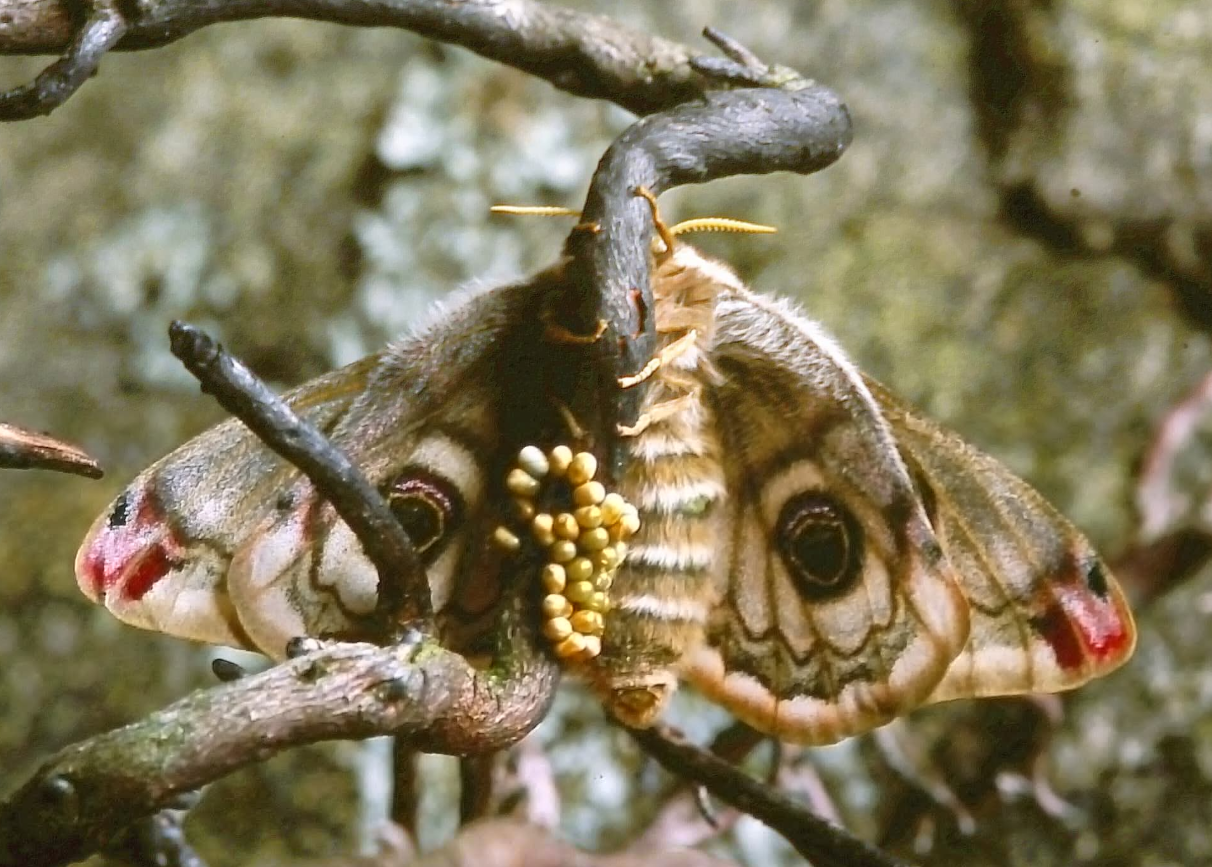
The egg stage begins after mating. Female moths lay eggs in places where the young larvae can find food quickly. Outdoor moths may lay eggs on leaves, stems, bark, or near host plants. Pantry moths lay eggs on or near dry stored food.
The eggs are usually tiny and difficult to see. Their survival depends on temperature, humidity, predators, and whether the chosen food source is suitable.
Larva Stage
The larva, or caterpillar, is the main growth stage. It eats, molts, grows, and stores energy. This stage helps moths survive because larvae can use a wide range of food sources, from fresh leaves to dried grains.
Some larvae hide under leaves, roll leaves, tunnel in stems, or spin silk webbing. Pantry moth larvae may hide in package corners or food clumps.
Pupa Stage
During the pupa stage, the larva changes into an adult moth. Many moths form a cocoon made of silk. Others pupate in soil, leaf litter, cracks, stored food areas, or protected spaces.
This stage protects the moth while its body reorganizes. It is one of the most important survival stages because the insect changes from a crawling caterpillar into a winged adult.
Adult Stage
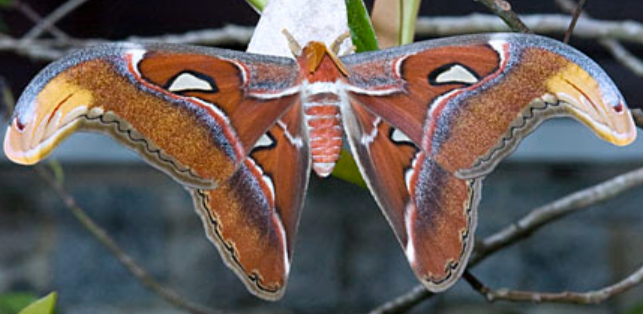
The adult moth emerges with wings. Its main goal is to find a mate and reproduce. Some adults feed on nectar, while others do not feed and survive only on energy stored during the larval stage.
Moths survive in nature through camouflage, night activity, quick reproduction, host plant selection, and the ability to hide eggs or pupae in safe places.
Their Reproductive Process and raising their children
The reproductive process of moths is simple but highly effective. Adult moths usually find mates through scent, movement, and sometimes light or environmental cues. Many female moths release chemical signals called pheromones to attract males.
Key points about moth reproduction:
- Mating: Male moths use their antennae to detect female pheromones. Some males can detect these signals from a long distance.
- Egg laying: After mating, the female lays eggs near a food source. This is important because moth larvae cannot survive without suitable food.
- High egg numbers: Some species lay dozens or hundreds of eggs. For example, Indianmeal moth females may lay hundreds of eggs directly on or near food sources.
- No parental care: Most moths do not care for their young as birds or mammals do. Instead, the female “prepares” for the young by choosing the right egg-laying site.
- Larval independence: Once eggs hatch, caterpillars feed and grow on their own.
- Protection through location: Eggs may be placed under leaves, in cracks, near food, or inside hidden spaces to improve survival.
Moths do not usually guard their eggs or feed their babies. Their survival strategy depends on laying eggs in the right place and producing enough offspring, so some survive predators, weather, disease, and food shortages.
In pantry moths, this reproductive strategy is why infestations can spread quickly. If dry food is available, several life stages may be present simultaneously, including eggs, larvae, pupae, and adults.
The importance of them in this Ecosystem
Moths as Pollinators
Many adult moths visit flowers for nectar. While doing this, they can move pollen from one flower to another. This makes them important nighttime pollinators, especially for plants that open or release scent at night.
Some moths are active when bees and butterflies are not. This means they support plant reproduction during evening and night hours.
Moths as Food for Wildlife
Moths are a major food source for many animals. Birds, bats, frogs, lizards, spiders, beetles, and other insects eat moths or their larvae. Caterpillars are especially important because they are soft, protein-rich food for young birds.
Without moths, many food chains would become weaker.
Moths as Plant Consumers
Moth caterpillars transform plant material into animal biomass. This means they help move energy from plants into the wider food web. Britannica notes that lepidopterans are ecologically important because they convert plant matter into animal matter, which is then food for many other groups.
Moths in Soil and Nutrient Cycling
When moths die, their bodies return nutrients to the soil. Their feeding also affects plant growth, leaf turnover, and natural balance. In healthy numbers, moths are part of normal ecosystem cycling.
Moths as Environmental Indicators
Moth populations can reflect environmental health. A rich moth community often suggests good plant diversity, low chemical pressure, and strong habitat structure. A sudden drop in moth numbers may indicate habitat loss, pollution, or excessive pesticide use.
What to do to protect them in nature and save the system for the future
To protect moths in nature, we need to support beneficial species while carefully managing harmful indoor pests. Not every moth should be killed. Many are valuable for pollination, biodiversity, and wildlife food.
- Plant native flowers: Native flowering plants provide nectar for adult moths and food for caterpillars.
- Keep host plants: Many moth larvae depend on specific plants. Removing all “wild” plants can reduce moth survival.
- Avoid unnecessary pesticides: Pesticides can kill beneficial insects such as moths and caterpillars.
- Reduce outdoor lighting: Many moths are attracted to artificial light. Too much light can disturb feeding, mating, and navigation.
- Leave some leaf litter: Some moths pupate in leaves or soil. Over-cleaning gardens can remove safe pupation places.
- Create a mixed garden: Use trees, shrubs, grasses, herbs, and flowers to support different life stages.
- Protect natural habitats: forests, wetlands, grasslands, and hedgerows provide moths with shelter and food.
- Use safe pantry control: For pantry moths, remove infested food and clean storage areas instead of spraying chemicals near food.
- Store food properly: Use airtight containers to prevent pantry moth larvae from spreading and reduce the need for chemical control.
- Teach children about moths: When people understand moths, they are more likely to protect the helpful ones.
Small actions in gardens, farms, balconies, and homes can help maintain a healthier balance between humans and moths.
Frequently Asked Questions (FAQs)
Q: What is the moth’s life cycle?
A: The moth’s life cycle has four stages: egg, larva, pupa, and adult moth. This is called complete metamorphosis.
Q: How long do moths live?
A: It depends on the species. Some moths complete development in a few weeks, while others may take many months. Pantry moth development can vary widely depending on temperature and food availability.
Q: What do moths eat?
A: Most moth larvae eat leaves or plant parts. Many adult moths drink nectar. Pantry moths feed as larvae on dry-stored foods such as flour, cereal, grains, nuts, dried fruit, and pet food.
Q: Are moths harmful to humans?
A: Most moths do not harm humans. Pantry moths do not bite, but they can contaminate stored food. Clothes moth larvae can damage natural fabrics.
Q: How do I get rid of pantry moths?
A: Remove infested food, vacuum pantry cracks, wash shelves, freeze suspicious items, and store dry foods in airtight glass or thick plastic containers. Avoid using mothballs around food.
Q: Are Luna moths dangerous?
A: No, luna moths are not dangerous to people. They are admired for their pale green wings and are part of the natural food web.
Q: Why do moths come near lights?
A: Many moths are attracted to artificial lights because light can interfere with their natural navigation. This behavior is one reason moths are often seen near porch lights.
Q: Are moths important for the Ecosystem?
A: Yes. Moths help with pollination, provide food for wildlife, and move energy from plants into the food chain.
Conclusion
The moth’s life cycle is a powerful example of nature’s design. From a tiny egg to a hungry larva, then a hidden pupa, and finally a winged adult moth, each stage has a clear purpose. The larva grows and stores energy. The pupa transforms. The adult reproduces and spreads the species.
Moths are not only household pests. Many are beautiful, useful, and important for the environment. Some, such as pantry moths, require careful control because they damage stored food. Others, like luna moths and many night-flying pollinators, deserve protection.
The best approach is balance. Manage moths safely indoors, but protect them in gardens, farms, forests, and other natural spaces. By understanding their life cycle, food habits, reproduction, and ecosystem value, we can reduce problems while supporting biodiversity for the future.
Also Read: mantis life cycle