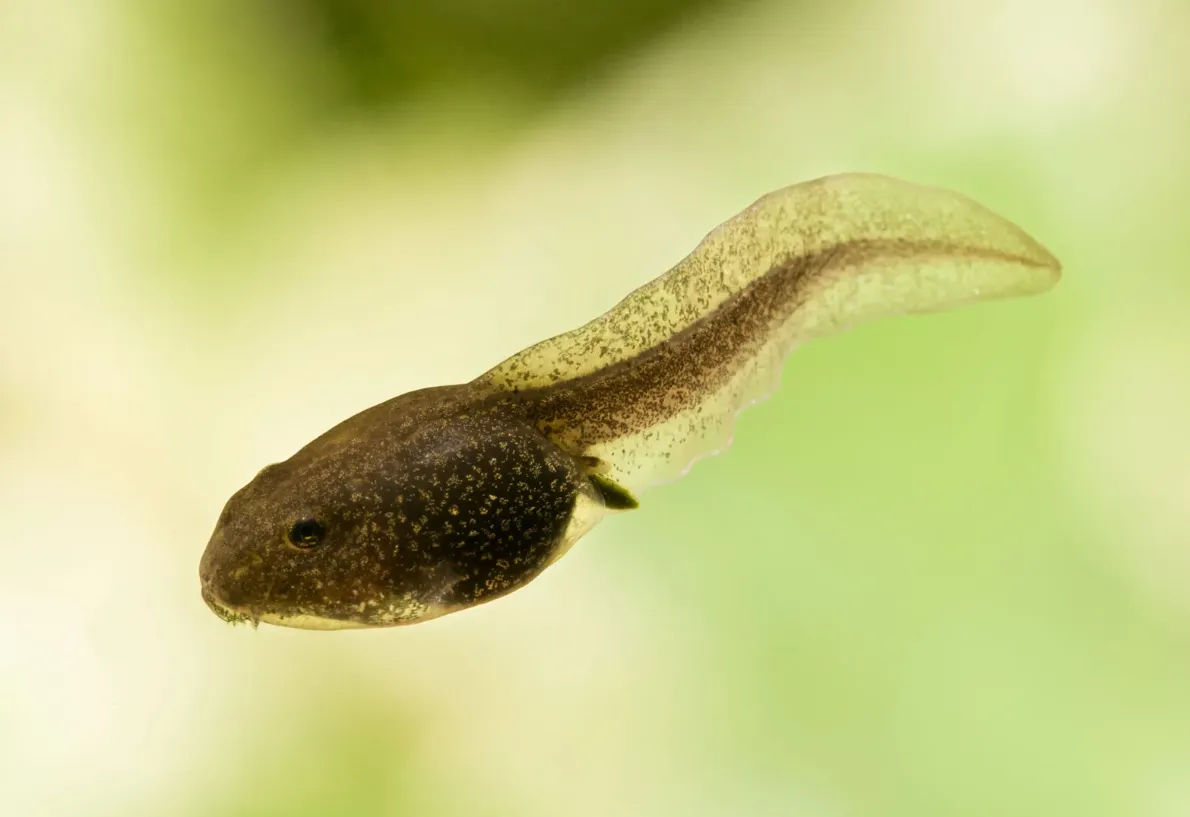
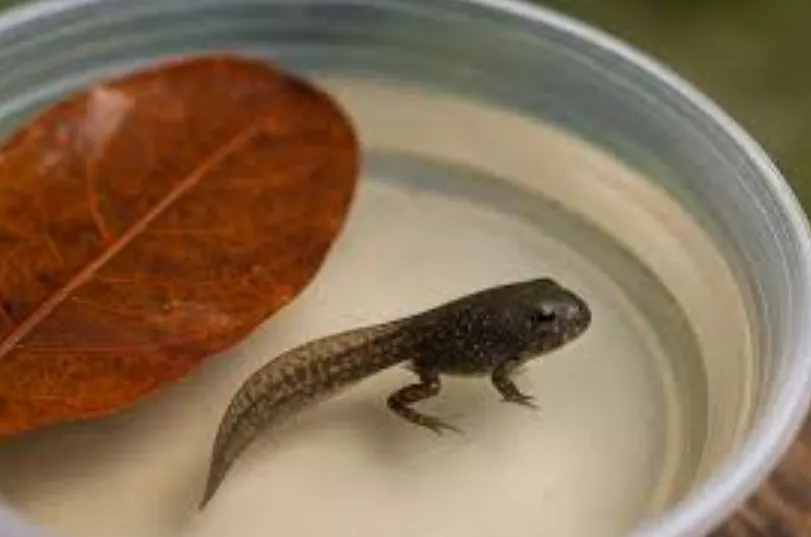
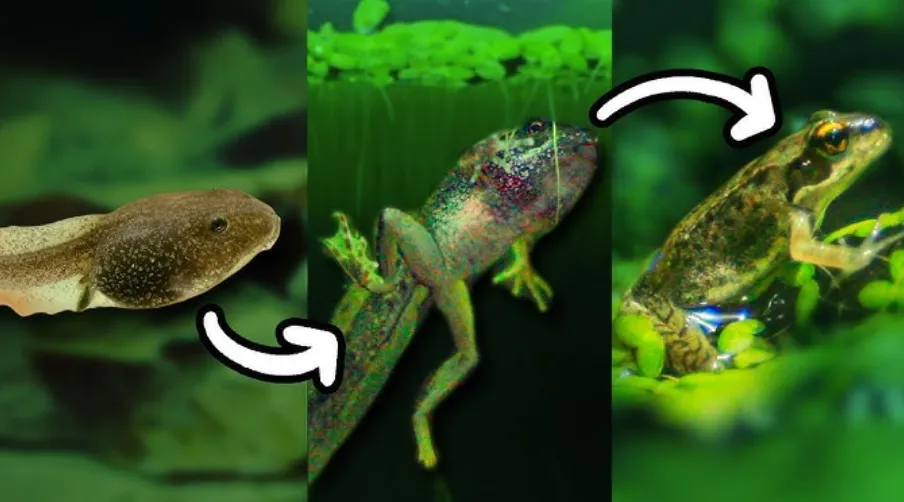
The tadpole life cycle is one of nature’s most fascinating transformations. A tadpole is the aquatic larval stage of frogs and toads. It begins life inside a soft, jelly-like egg in water, hatches as a tiny swimming larva, grows a tail and gills, develops legs, absorbs its tail, and finally becomes a young frog or toad. This dramatic body change is called metamorphosis. Britannica defines a tadpole as the aquatic larval stage of frogs and toads, usually with an oval body, broad tail, small mouth, and hidden internal gills.
Understanding the tadpole-to-frog journey is important because tadpoles are not just baby frogs. They are active parts of freshwater ecosystems. Many tadpoles feed on algae, detritus, and microorganisms, helping clean ponds, wetlands, ditches, rice fields, and slow-moving streams.
As amphibians, frogs and toads are also sensitive to pollution, climate change, habitat loss, and disease, so their life cycles tell us a lot about environmental health. Recent global amphibian assessments report that about 41% of amphibian species are threatened with extinction, making amphibian protection a serious conservation issue.
Q: What is a tadpole?
A: A tadpole is the larval stage of a frog or toad. It usually lives in water, breathes through gills in early life, swims with a tail, and later transforms into a froglet.
Q: How long does the tadpole’s life cycle take?
A: It depends on species, temperature, food, water quality, and predators. Many common frogs change from egg to froglet within several weeks to a few months, while some species take longer.
Q: What do tadpoles eat?
A: Most tadpoles eat algae, plant matter, bacteria-rich films, plankton, and organic debris. Some larger species, including some bullfrog tadpole stages, may also eat small aquatic animals or carrion when available.
Quick Life Cycle Table
| Stage | What Happens | Main Features | Survival Need |
| Eggs | Adult frogs lay eggs in water or moist places | Jelly-like clusters, embryos inside | Clean water, moisture, protection |
| Hatching Tadpole | Larva comes out of the egg | Tiny body, tail, gills | Oxygen-rich water, algae, shelter |
| Growing Tadpole | Tadpole feeds and increases in size | Strong tail, mouthparts, and internal gills | Food, safe plants, and low pollution |
| Leg Development | Hind legs appear first, then front legs | Body shape starts changing | Energy, stable habitat |
| Froglet | Tail shrinks, and lungs work better | Small frog with a short tail | Access to the water edge and land |
| Adult Frog | Frogs become mature over time | No tail, strong legs, air breathing | Wet habitat, insects, breeding sites |
The History of Their Scientific Naming
The word tadpole is not a formal scientific species name. It is a common English name for the larval stage of frogs and toads. According to Merriam-Webster, the word comes from Middle English taddepol, formed from older words meaning “toad” and “head.” This makes sense because a young tadpole often looks like a round head with a tail.
Another common name is polliwog or pollywog, which also refers to the same swimming larval stage. In science, frogs and toads belong to the order Anura. The name Anura comes from Greek roots meaning “without tail,” because adult frogs usually lose the tail that was useful during the tadpole stage. Animal Diversity Web also notes that Anura means “without tail,” a key feature of adult frogs.
So, the naming history shows two sides of the animal’s life. The common name tadpole describes its early “head-and-tail” look, while the scientific order Anura describes its adult “tailless” form.
Their Evolution And Their Origin
The origin of the tadpole life cycle dates back to deep in Earth’s history. Frogs and toads are amphibians, and their ancestors evolved from ancient vertebrates that lived in both water and on land. The tadpole stage is part of a biphasic life cycle, meaning the animal lives as a larva in water and as an adult frog or toad.
Modern research has made this story even more interesting. A 2024 Nature study reported a fossil tadpole of Notobatrachus degiustoi from Middle Jurassic rocks in Patagonia, dated to about 168–161 million years ago. The study described it as the oldest-known tadpole fossil and evidence that the frog life cycle has been stable for a very long time.
Frog relatives are even older. The U.S. National Park Service notes that earlier frog fossils are known from Lower Triassic rocks around 250 million years old, from areas that are now Madagascar and Poland.
This means the basic tadpole-to-frog pattern is not a recent invention. It is an ancient survival strategy. The water-living tadpole can feed and grow in ponds, while the adult frog can move on land, hunt insects, and reproduce. This separation reduces some competition between young and adults and helps frogs use both aquatic and terrestrial habitats.
Their main food and its collection process
Tadpoles collect food mainly by grazing, scraping, filtering, and nibbling. Most species do not hunt like adult frogs. Instead, they use small mouthparts to feed from underwater surfaces.
Young tadpoles often eat soft algae, microscopic organisms, bacteria-rich biofilm, and decaying plant material. Research on tadpole diets has found food items such as algae, cyanobacteria, detritus, fungi, insects, pollen, protozoans, and rotifers in tadpole gut contents.
Important feeding points:
- Algae scraping: Many tadpoles scrape algae from rocks, leaves, mud, and submerged stems.
- Detritus feeding: They consume broken-down organic matter, which helps recycle nutrients in water.
- Biofilm grazing: A thin layer of bacteria, algae, and tiny organisms grows on underwater surfaces, and tadpoles feed on it.
- Filter feeding: Some tadpoles take in tiny suspended food particles from water.
- Opportunistic feeding: Larger tadpoles may eat insect larvae, carrion, or weaker tadpoles when food is limited.
The feeding habit changes as the tadpole grows. Early stages are usually more plant-based, while some later stages may become more flexible. A bullfrog tadpole, for example, can be larger and may stay in water longer than many small frog tadpoles, giving it more time to feed and grow.
This food collection process makes tadpoles useful in ponds because they help control algal growth and move nutrients through the freshwater food web.
Important Things That You Need To Know
The phrase tadpole life cycle mainly refers to the biological transformation from egg to tadpole, froglet, and adult frog. But online searches can mix scientific terms with unrelated meanings, so it is useful to understand the difference.
First, tadpole is the correct biology term for the larval stage of frogs and toads. It should be used in educational content, science blogs, school lessons, and nature guides.
Second, “tadpole eggs” is a common search term, but technically, adult frogs lay the eggs. Tadpoles hatch from those eggs. So, a better scientific phrase is frog eggs or frogspawn, followed by the tadpole stage.
Third, the tadpole-to-frog transition describes metamorphosis. This is the most important educational angle because it explains how gills, tail, mouthparts, legs, lungs, and body shape change over time.
Fourth, a bullfrog tadpole is the larval stage of a bullfrog. Bullfrog tadpoles are often larger and may remain in the aquatic stage longer than many smaller frog species.
Fifth, “tadpole galaxy” and “tadpole “Pokémon are not biological terms. A tadpole galaxy is an astronomy-related phrase, while tadpole Pokémon is entertainment-related. They may appear in search data, but they should not be confused with real amphibian development.
Finally, the phrase tadpole porn is unrelated to family-safe biology education. It should not be used as the main focus of a nature, school, or science article. For SEO quality and user trust, keep the article focused on real tadpole, tadpole to frog, tadpole eggs, and bullfrog tadpole information.
Their life cycle and ability to survive in nature
Egg Stage
The life cycle starts when adult frogs or toads lay eggs in water, wet vegetation, foam nests, or other moist habitats, depending on the species. The jelly-like egg covering helps protect embryos from drying out and minor physical damage.
Tadpole Stage
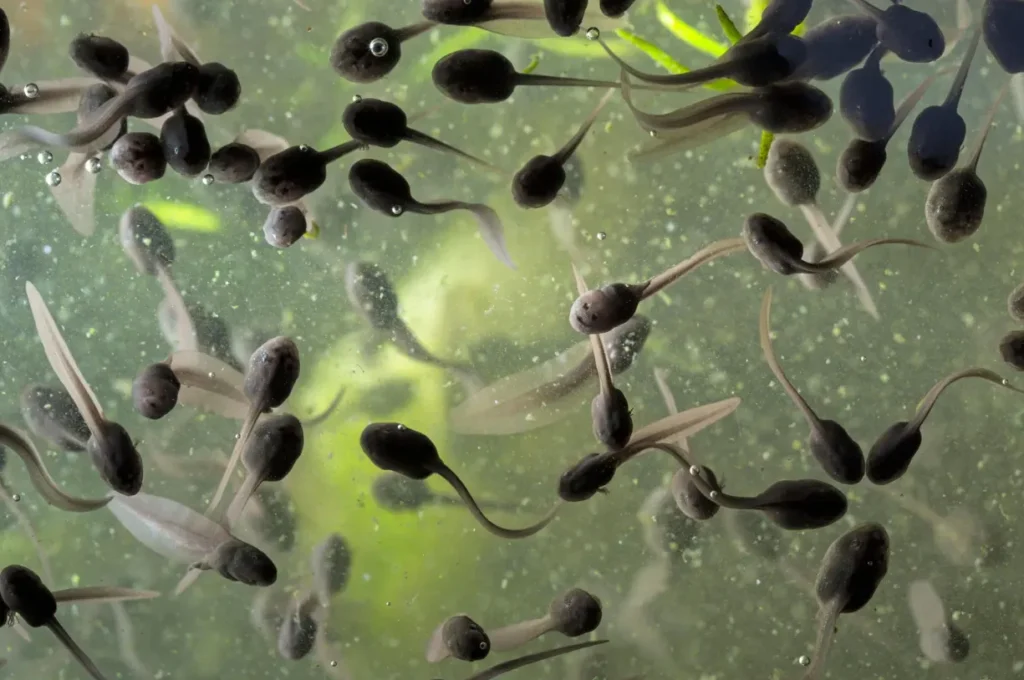
After hatching, the tadpole uses its tail to swim and its gills to breathe in water. Tadpoles are vulnerable at this stage because fish, dragonfly larvae, birds, snakes, and larger insects can eat them.
Metamorphosis Stage
During metamorphosis, the tadpole’s body undergoes significant changes. Hind legs appear, front legs develop, lungs become more important, the mouth changes, and the tail is gradually absorbed. Amphibian metamorphosis is closely linked to thyroid hormone activity, which triggers major developmental changes.
Froglet and Adult Survival
The froglet slowly leaves the water’s edge and begins adapting to life on land. It must avoid predators, stay moist, and find small insects or other suitable food. Adult frogs survive best in areas with clean water, safe shelter, vegetation, and seasonal breeding habitat.
In nature, survival depends on water quality, temperature, food, predator pressure, and habitat stability. If ponds dry too early or become polluted, tadpoles may fail to complete metamorphosis.
Their Reproductive Process and raising their children
Frogs and toads reproduce in different ways, but many species follow a basic pattern: adults gather near water, males call to attract females, mating occurs, eggs are fertilized, and tadpoles develop in water.
Key points of reproduction and parental care:
- Calling behavior: Male frogs often call during the breeding season to attract females.
- Amplexus: In many species, the male grips the female during egg-laying. This position helps fertilization happen as eggs are released.
- External fertilization: Many frogs fertilize eggs outside the female’s body, usually in water.
- Egg placement: Eggs may be laid in clusters, strings, foam nests, leaf surfaces, tree holes, or temporary pools, depending on species.
- High egg number: Many frogs lay many eggs because not all eggs and tadpoles survive.
- Limited parental care: In many species, adults leave after laying eggs.
- Advanced care in some species: Some frogs guard eggs, carry tadpoles, place young in safe water pockets, or keep eggs moist.
- Independent tadpoles: Most tadpoles feed and grow on their own after hatching.
The phrase raising their children is slightly different for frogs than for birds or mammals. Most frogs do not feed their young directly. Instead, they improve survival by choosing suitable egg-laying places, producing many eggs, or using special parental care strategies.
This reproductive system helps frogs maintain populations even though eggs and tadpoles face many natural dangers.
The importance of them in this Ecosystem
Natural Algae Control
Tadpoles are important because many species graze on algae and organic films. This feeding helps reduce excess algal buildup in ponds and wetlands. Conservation groups also note that tadpoles help keep waterways clean by feeding on algae.
Nutrient Cycling
Tadpoles break down plant material, detritus, and microorganisms. By eating, digesting, and producing waste, they move nutrients through aquatic systems. This supports bacteria, plants, insects, and other small water organisms.
Food for Other Wildlife
Tadpoles are food for many animals, including fish, birds, insects, turtles, snakes, and larger amphibians. Without tadpoles, many pond predators would lose an important seasonal food source.
Link Between Water and Land
Frogs connect aquatic and land ecosystems. Tadpoles grow in water, while adult frogs often feed on land. Studies on stream tadpoles describe frogs and tadpoles as contributors to ecosystem functioning and links between aquatic and terrestrial habitats.
Environmental Indicator
Because amphibians have sensitive skin and depend on clean water, their decline can signal pollution, habitat damage, climate stress, and disease. When tadpoles disappear from a pond, it may suggest that the Ecosystem is under pressure.
What to do to protect them in nature and save the system for the future
Protecting tadpoles means protecting both water and land. Since frogs need safe breeding places and healthy adult habitats, conservation must focus on the full life cycle.
- Protect natural ponds and wetlands because they are key breeding sites for frogs and toads.
- Avoid chemical pollution from pesticides, herbicides, detergents, oil, and household waste.
- Keep shallow-water zones with plants, as tadpoles need shelter from predators and strong sunlight.
- Do not remove frog eggs or tadpoles unnecessarily from natural habitats.
- Create wildlife-friendly ponds with native plants, gentle slopes, and no harmful chemicals.
- Avoid introducing predatory fish into small frog-breeding ponds where they do not naturally belong.
- Reduce plastic waste because freshwater systems can carry microplastics and fibers into amphibian habitats.
- Protect the surrounding land vegetation because adult frogs need moist shelter after leaving water.
- Support local wetland restoration through community cleanups and conservation programs.
- Teach children about frog life cycles so they learn to respect eggs, tadpoles, froglets, and adult frogs.
- Report unusual frog deaths to local wildlife or environmental authorities where such systems exist.
- Avoid collecting wild tadpoles for pets unless local rules allow it and you can care for them responsibly.
The future of the tadpole life cycle depends on clean water, protected breeding habitats, and reduced pressure from pollution and habitat loss.
Frequently Asked Questions (FAQs)
Q: What is the tadpole life cycle?
A: The tadpole life cycle is the development process from frog eggs to tadpole, then froglet, and finally adult frog. It includes major body changes called metamorphosis.
Q: What is the difference between a tadpole and a froglet?
A: A tadpole is mostly aquatic, has a tail, and breathes through gills in early life. A froglet has legs, developing lungs, a shrinking tail, and starts living more like an adult frog.
Q: Do tadpoles come from tadpole eggs?
A: People often search for tadpole eggs, but scientifically, adult frogs lay the eggs. Tadpoles hatch from those frog eggs.
Q: How long does it take for a tadpole to become a frog?
A: Many species take several weeks to a few months. The time depends on the species, water temperature, food availability, oxygen levels, pond depth, and predator pressure.
Q: What do tadpoles eat in ponds?
A: Most tadpoles eat algae, biofilm, decaying plant matter, plankton, and tiny organic particles. Some species may also eat small aquatic animals or carrion.
Q: Can tadpoles survive outside water?
A: Most tadpoles cannot survive long outside water because they are aquatic larvae. They need water for breathing, feeding, movement, and protection until they become froglets.
Q: Are bullfrog tadpoles different from normal tadpoles?
A: A bullfrog tadpole is usually larger and may spend more time in water than many smaller frog species. Its exact development time depends on climate and habitat.
Q: Why are tadpoles important in nature?
A: Tadpoles help control algae, recycle nutrients, feed many predators, and support freshwater food webs. Their presence can also indicate healthier wetland conditions.
Conclusion
The tadpole life cycle is a powerful example of natural transformation. From jelly-like eggs to swimming tadpoles, from leg-growing larvae to young froglets, every stage has a purpose. Tadpoles help clean water by feeding on algae and organic matter, while adult frogs help control insects and support food webs. This makes them valuable for both aquatic and land ecosystems.
Their journey also teaches us about environmental balance. Tadpoles need clean water, safe plants, enough oxygen, and protection from harmful pollution. When wetlands disappear or water becomes contaminated, frogs and tadpoles suffer first. Recent data on amphibian decline show why this matters globally: amphibians are among the most threatened vertebrates on Earth.
Protecting tadpoles is not only about saving baby frogs. It is about protecting ponds, wetlands, biodiversity, and the natural systems that support life.
Also Read: painted lady butterfly life cycle