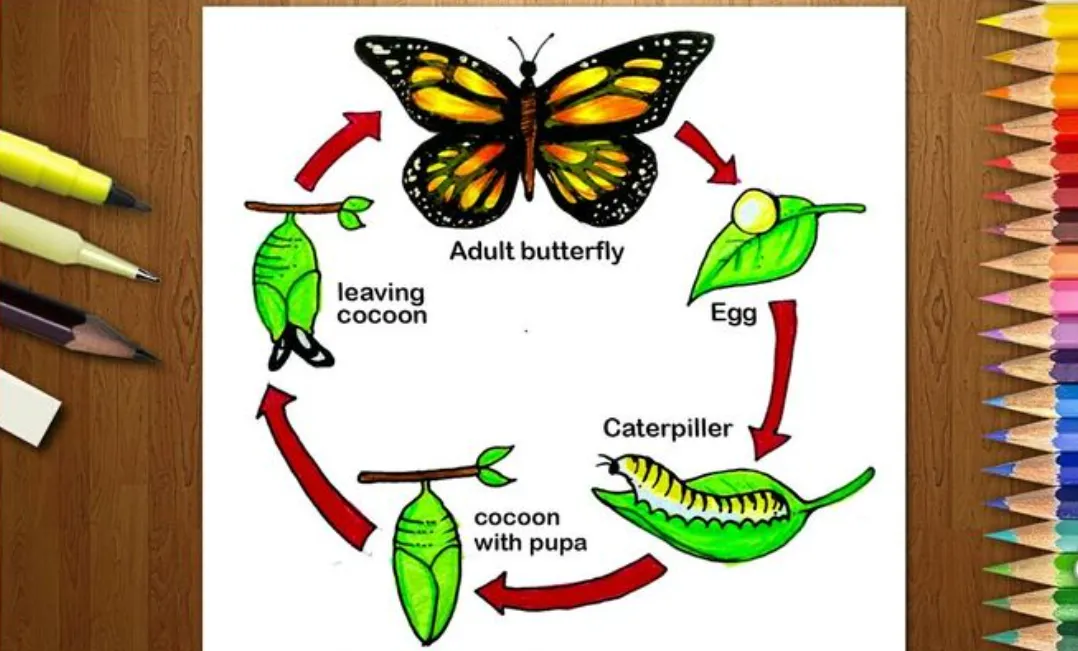
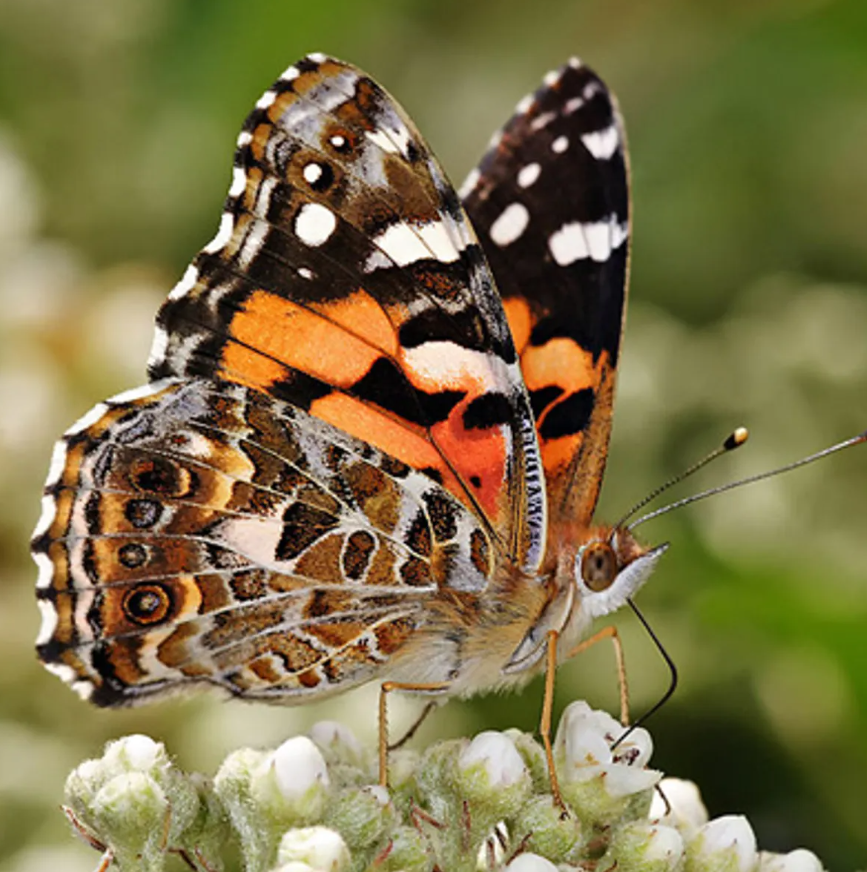
The painted lady butterfly’s life cycle is one of the most beautiful examples of complete metamorphosis in nature. The painted lady butterfly, scientifically known as Vanessa cardui, changes through four main stages: egg, caterpillar, chrysalis, and adult butterfly. Each stage has a special role in helping this butterfly grow, survive, migrate, and reproduce.
This butterfly is famous because it is among the most widespread in the world. It lives across many regions, including Europe, Asia, Africa, North America, and Central America, and it is known for long-distance migration. Some studies have even documented long-distance migrations across continents, showing how strong and adaptable this small insect can be.
The painted lady butterfly eggs are tiny and pale green. After hatching, the caterpillar feeds heavily on host plants such as thistles, mallows, asters, and legumes. Then it forms a chrysalis, where its body changes completely before becoming an adult butterfly.
Q: How many stages are in the painted lady butterfly life cycle?
A: There are four stages: egg, larva/caterpillar, pupa/chrysalis, and adult butterfly.
Q: How long does a painted lady butterfly live?
A: The full life cycle often takes around one month or more, depending on temperature and food. The adult butterfly usually lives for about two weeks, mainly feeding on nectar.
Q: What do painted lady caterpillars eat?
A: They eat the leaves of host plants, especially plants from the Asteraceae/Compositae family, including thistles, asters, and many other leafy plants.
Quick Life Cycle Table
| Stage | What Happens | Time Needed | Main Need |
| Egg | Females lay tiny, pale green eggs on host plant leaves | 3–5 days | Safe leaf surface |
| Caterpillar | Larva hatches and eats leaves quickly | Several days to weeks | Fresh host plants |
| Chrysalis | A caterpillar hangs and changes into a butterfly | 7–10 days | Safe hidden place |
| Adult Butterfly | Adult flies mate and lay eggs | About 2 weeks | Nectar and warm weather |
The History of Their Scientific Naming
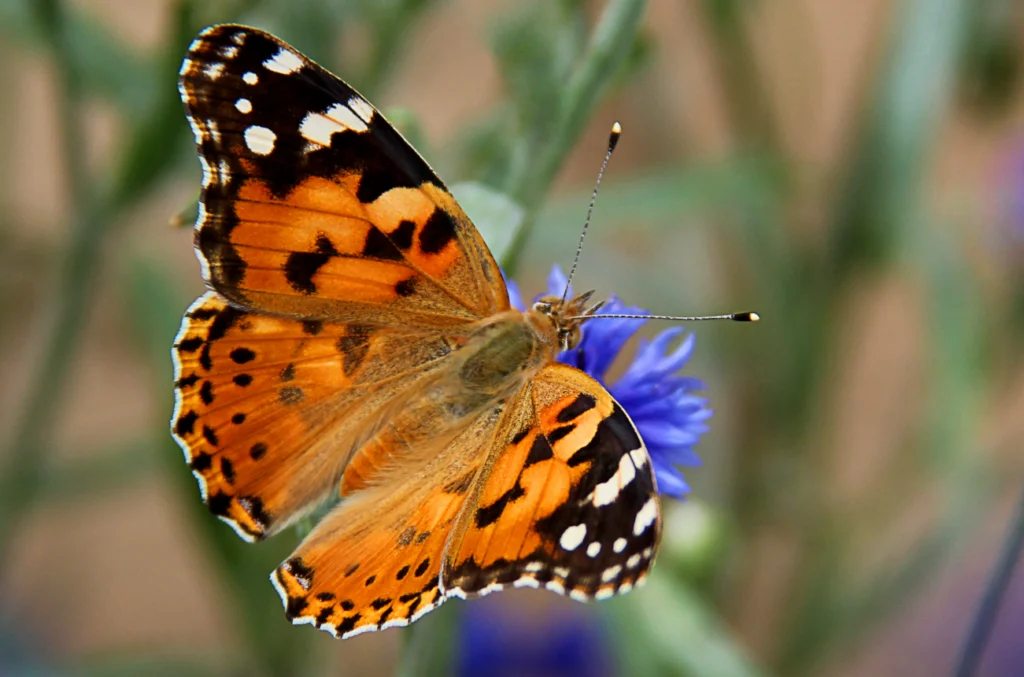
The painted lady butterfly is scientifically named Vanessa cardui. This name is important because it helps scientists identify the exact species without confusion. Common names can vary from country to country, but the scientific name tends to be more stable.
Key points about the naming history:
- Vanessa cardui was first formally described by Carl Linnaeus in 1758, one of the most important names in biological classification.
- The word Vanessa is the genus name. It groups the painted lady with closely related butterflies.
- The word cardui is connected with thistles, which are important host plants for its caterpillars.
- This butterfly belongs to the family Nymphalidae, also called the brush-footed butterflies.
- In North America, people sometimes compare it to the American painted lady butterfly, but that is a different species, Vanessa virginiensis.
So, the scientific name Vanessa cardui tells us both its biological identity and part of its natural relationship with host plants.
Their Evolution And Their Origin
The painted lady butterfly has evolved as a highly adaptable and mobile insect. Its origin is linked to the wider evolution of butterflies in the order Lepidoptera, which includes both butterflies and moths. Like other butterflies, it undergoes complete metamorphosis, meaning each life stage has a different job.
This separation of stages is a major survival advantage. The caterpillar focuses on eating and growing. The chrysalis stage rebuilds the body. The adult butterfly focuses on flying, feeding, mating, and finding new areas for eggs.
The painted lady butterfly is especially successful because it can use many different host plants. More than 100 plant species have been recorded as food plants for their larvae, and adults visit many nectar flowers. This flexible feeding habit helps the species survive in fields, gardens, meadows, deserts, farmland, and even suburban areas.
Its origin is also connected with migration. The butterfly does not depend on only one small habitat. Instead, it can move across large regions when weather and food conditions change. In Europe and Africa, painted ladies are known for long multi-generational journeys, with populations moving north in warmer seasons and south again later.
A recent 2024 Nature Communications study reported evidence of Vanessa cardui crossing at least 4,200 km over the Atlantic from West Africa to South America, likely helped by trade winds. This shows how powerful its migration ability can be.
Their main food and its collection process
The painted lady butterfly has different food needs at different life stages. The caterpillar eats leaves, while the adult butterfly drinks nectar.
Important food sources include:
- Host plant leaves: Caterpillars eat leaves of plants such as thistles, mallows, asters, hollyhocks, milkweed, and some legumes. These leaves give them energy to grow quickly.
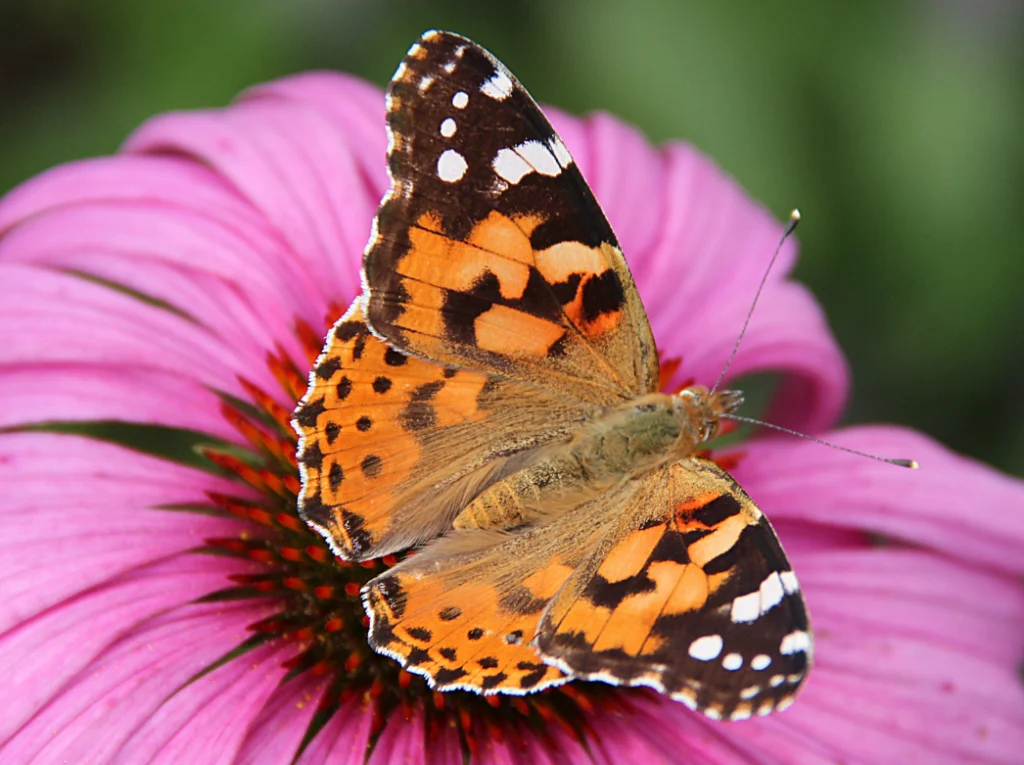
- Nectar flowers: Adult painted ladies visit zinnias, asters, cosmos, purple coneflower, milkweed, and red clover.
- Aphid honeydew: Adults may also feed on honeydew, a sweet liquid produced by aphids.
The food collection process is simple but smart. The female butterfly first searches for a suitable host plant. She uses her senses to check whether the plant is safe and useful for her future caterpillars.
After the eggs hatch, the tiny caterpillars do not need parents to feed them. They begin eating the leaf where they were born. As they grow, they may make small silken shelters on the plant. These shelters give them some protection while they feed.
Adult butterflies collect food differently. They use a long, tube-like mouthpart called a proboscis. It works like a straw. The butterfly unrolls it, reaches into flowers, and drinks nectar. This nectar gives the adult energy for flying, mating, and migration.
Important Things That You Need To Know
The painted lady butterfly is not just a pretty garden visitor. It is a strong, adaptable, and scientifically interesting species. Many people search for painted lady butterfly facts because this insect is easy to observe and often used in classrooms to teach metamorphosis.
The painted lady butterfly eggs are very small, usually pale green, and laid singly on host plant leaves. This is important because each caterpillar needs enough leaf food after hatching.
The painted lady butterfly’s lifespan depends on climate, food availability, and its stage of development. In warm conditions, the full life cycle can be completed more quickly. In cooler climates, development can take longer. Adult butterflies often live for about 2 weeks, but their species survives through repeated generations.
The American painted lady butterfly is often confused with Vanessa cardui. The American painted lady is Vanessa virginiensis, a related but separate species. Both look similar, but they have different markings and distribution patterns.
Another key fact is migration. The painted lady is one of the strongest migrant butterflies. It can appear suddenly in large numbers when the weather, wind, and plant growth become favorable. This makes it a symbol of movement, survival, and natural timing.
Their life cycle and ability to survive in nature
Egg Stage
The life cycle begins when the female lays tiny painted lady butterfly eggs on the leaves of host plants. These eggs are usually laid one at a time, not in large clusters.
This helps reduce competition between newly hatched caterpillars. The eggs usually hatch within a few days when the temperature and humidity are suitable.
Caterpillar Stage
The caterpillar is the main feeding stage. After hatching, it eats leaves and grows quickly. It molts several times because its skin cannot stretch enough for its growing body.
Painted lady caterpillars are often spiny and may build small silk shelters on leaves. This gives them some safety from predators and the weather.
Chrysalis Stage
When the caterpillar is ready, it hangs upside down and forms a chrysalis. Inside this protective case, the body undergoes a complete transformation.
This stage is one of the most amazing parts of the painted lady butterfly life cycle because the crawling larva becomes a flying adult.
Adult Stage
The adult butterfly emerges with soft wings. After the wings dry and harden, it can fly, drink nectar, find mates, and lay eggs.
Its survival ability comes from fast development, flexible feeding, camouflage, quick flight, and migration.
Their Reproductive Process and raising their children
The painted lady butterfly reproductive process is simple but effective. Adult butterflies do not raise their young as birds or mammals do. Instead, the female gives her offspring the best chance by choosing the right host plant.
Key points:
- Mating: Male painted ladies often perch or patrol open areas to find females. They may mate with more than one female during the breeding season.
- Egg laying: After mating, the female lays eggs singly on host plant leaves. This gives each caterpillar nearby food after hatching.
- No parental care: Once the eggs are laid, the parents do not feed or protect the young. The caterpillars must survive independently.
- Fast growth: The caterpillar begins eating soon after hatching. Its main job is to collect enough energy for metamorphosis.
- Multiple generations: In warm climates, painted ladies can produce several generations in a year. In some laboratory settings, up to 8 generations per year have been observed.
The “raising” process in painted ladies, therefore, depends on proper egg placement. The female’s choice of plant is very important. If she lays eggs on a poor plant, the caterpillars may not survive well.
This strategy works because butterflies produce many eggs. Even though predators eat many eggs and caterpillars, enough survive to keep the species going.
The importance of them in this Ecosystem
They Help in Pollination
Adult painted lady butterflies visit many flowers for nectar. As they move from flower to flower, pollen can stick to their bodies and transfer between plants.
This helps some plants reproduce. Although bees are usually stronger pollinators, butterflies still play an important role in flower-rich habitats.
They Are Food for Other Animals
Painted ladies are part of the food chain. Birds, spiders, wasps, ants, bats, and other predators may feed on their eggs, larvae, pupae, or adults.
This may sound bad for the butterfly, but it is important for ecosystem balance. Many animals depend on insects as a food source.
They Support Plant Diversity
Because painted lady caterpillars use many host plants and adults visit many nectar flowers, they are connected with different plant communities.
Their presence can show that an area has useful wildflowers, open spaces, and healthy seasonal plant growth.
They Help Scientists Study Migration
The painted lady is important for migration research. Its long-distance movements help scientists understand wind patterns, climate effects, insect migration, and seasonal changes.
The 2024 transatlantic migration evidence made this species even more important in global insect movement studies.
They Make Gardens More Alive
In gardens, painted ladies add beauty and movement. Their presence encourages people to plant nectar flowers and protect pollinator-friendly spaces.
What to do to protect them in nature and save the system for the future
- Plant native nectar flowers: Grow flowers such as asters, zinnias, milkweed, coneflowers, and thistles where suitable. These plants provide food for adults and caterpillars.
- Keep host plants: Do not remove every wild plant from gardens or field edges. Some “weeds” are useful host plants for butterfly larvae.
- Avoid harmful pesticides: Chemical sprays can kill eggs, caterpillars, and adult butterflies. Use natural pest control whenever possible.
- Create butterfly corners: A small sunny area with flowers, leaves, and shelter can support butterflies in home gardens.
- Protect open habitats: Meadows, fields, roadsides, and wildflower areas are important for painted ladies and many other insects.
- Provide continuous flowers: Plant varieties that bloom year-round so butterflies can find nectar year-round.
- Teach children about metamorphosis: The painted lady butterfly life cycle is a good way to teach respect for nature.
- Support climate-friendly actions: Migration and breeding depend on temperature, rainfall, wind, and plant growth. Protecting the climate balance also helps butterfly populations.
- Do not collect wild butterflies unnecessarily: Observing them is better than disturbing them.
- Leave some natural spaces: A perfect, clean garden may look nice, but butterflies need leaves, flowers, and hiding places.
Frequently Asked Questions (FAQs)
Q1: What is the painted lady butterfly’s life cycle?
A: The painted lady butterfly life cycle has four stages: egg, caterpillar, chrysalis, and adult butterfly. This process is called complete metamorphosis.
Q2: How long does it take for painted lady butterfly eggs to hatch?
A: The eggs usually hatch in about 3 to 5 days, depending on temperature and environmental conditions.
Q3: What do painted lady caterpillars eat?
A: Painted lady caterpillars eat leaves from host plants, including thistles, asters, mallows, hollyhocks, milkweed, and other plants.
Q4: What is the painted lady butterfly’s life span?
A: The adult butterfly usually lives about two weeks, but the full life cycle can take longer depending on climate and food availability.
Q5: Are painted lady butterflies good for gardens?
A: Yes. They help pollination, add beauty, and support the food chain. A garden with nectar flowers and host plants can attract them.
Q6: Is the American painted lady butterfly the same species?
A: No. The common painted lady is Vanessa cardui, while the American painted lady butterfly is Vanessa virginiensis. They are related but different species.
Q7: Why are painted lady butterflies famous?
A: They are famous for their wide distribution, beautiful wing patterns, fast life cycle, and long-distance migration.
Q8: Can painted lady butterflies migrate across oceans?
A: Yes, recent research reported a verified journey of at least 4,200 km across the Atlantic from West Africa to South America, helped by wind conditions.
Conclusion
The painted lady butterfly life cycle shows how powerful and beautiful nature can be. From tiny painted lady butterfly eggs to hungry caterpillars, hidden chrysalises, and colorful flying adults, every stage has a clear purpose.
The painted lady butterfly is more than a garden insect. It is a pollinator, a food source for other animals, a strong migrant, and an important part of healthy ecosystems. Its ability to use many host plants and travel long distances makes it one of the most successful butterflies in the world.
To protect this species, people should plant nectar flowers, keep host plants, avoid harmful pesticides, and protect natural habitats. Small actions in gardens, schools, farms, and communities can help butterflies survive.
Understanding the life of Vanessa cardui helps us understand the larger system of nature. When butterflies survive, ecosystems become richer, healthier, and more balanced.
Also Read: luna moth life cycle