The lion’s life cycle is one of the most fascinating journeys in the animal kingdom. From a helpless newborn cub hidden in thick grass to a powerful adult predator leading or defending a pride, every stage of a lion’s life shows strength, struggle, learning, and survival. Lions are often called the king of the animals, but their life in the wild is not easy. They face hunger, injury, rival lions, habitat loss, and increasing pressure from humans.
A lion is a large carnivorous mammal belonging to the cat family. Its scientific name is Panthera leo. Lions are famous for their social lifestyle because they live in groups called prides. This makes them different from most other big cats, which usually live alone.
Today, lions are mainly found in parts of sub-Saharan Africa, while a smaller population of Asiatic lions lives in Gujarat, India. The species is listed as Vulnerable globally, and African lion numbers have declined seriously over recent decades due to habitat loss, prey decline, and human-wildlife conflict. Current conservation data estimates about 23,000 adult and subadult lions in Africa, while India’s Asiatic lion population increased from 674 in 2020 to 891 in 2025.
Q: What are the main stages of the lion’s life cycle?
A: The main stages are cub, juvenile, sub-adult, adult, and old age.
Q: How long do lions live?
A: Lions usually live 10 to 18 years in the wild, but they may live longer in captivity.
Q: When do lion cubs start hunting?
A: Cubs begin learning hunting skills from a young age, but they usually become more active hunters as juveniles and sub-adults.
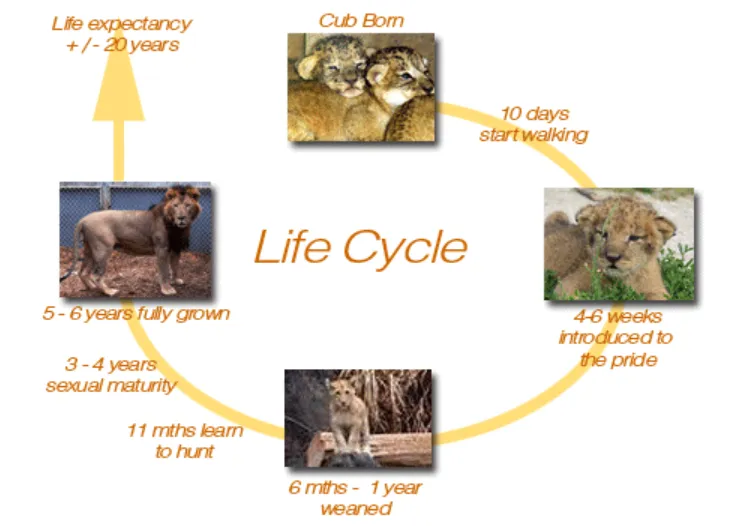
Quick Life Cycle Table
| Life Cycle Stage | Approximate Age | Key Features | Survival Challenge |
| Newborn Cub | 0–3 months | Blind at birth, fully dependent on mother | Predators, starvation, rival males |
| Young Cub | 3–6 months | Starts walking, playing, and eating meat | Needs protection from pride |
| Juvenile Lion | 6 months–2 years | Learns hunting, social behavior, and pride rules | Food competition and injury |
| Sub-adult Lion | 2–4 years | Males may leave the pride; females may stay | Finding territory or social position |
| Adult Lion | 4–10 years | Hunts, mates, defends territory, raises cubs | Conflict, disease, human pressure |
| Old Lion | 10+ years | Weaker body, less hunting power | Loss of pride rank and survival difficulty |
The History Of Their Scientific Naming
The scientific name of the lion is Panthera leo. This name helps scientists identify lions clearly worldwide, regardless of language.
Here are some important points about the naming history:
- Panthera is the genus name. It includes roaring big cats such as the lion, tiger, leopard, jaguar, and snow leopard.
- Leo is the species name. It comes from Latin and means lion.
- The full scientific name Panthera leo refers to the modern lion species.
- Lions were once spread across Africa, Europe, the Middle East, and parts of Asia. Over time, their range became much smaller.
- Scientists now commonly recognize major lion lineages, including African lion populations and the Asiatic lion population in India.
- The Barbary lion, once found in North Africa, is now considered extinct in the wild. It remains one of the most famous historical lion populations.
Scientific naming is important because common names can be confusing. For example, a sea lion is not a true lion; it is a marine mammal. But Panthera leo always refers to the real big cat, the lion.
Their Evolution And Their Origin
The origin of lions goes back millions of years. Lions belong to the family Felidae, which includes all cats. Their ancestors evolved into powerful predators with sharp teeth, strong jaws, flexible bodies, and excellent hunting senses.
Modern lions belong to the genus Panthera, the group of large cats that can roar. This roaring ability is linked to special structures in the throat. It helps lions communicate across long distances, especially in open grasslands.
Ancient lions once lived across a much wider area than they do today. Fossil evidence shows that lion-like cats existed in parts of Africa, Europe, Asia, and even North America. During the Ice Age, large lion relatives such as the cave lion lived in cold regions. These ancient lions differed from today’s lions, but they shared many of the same predatory traits.
The modern African lion has become well adapted to savannas, open woodlands, and grasslands. These habitats allowed lions to hunt large hoofed animals such as zebra, buffalo, antelope, and wildebeest. Their social structure also became an evolutionary advantage. By living in prides, lions could defend territory, protect cubs, and hunt larger prey.
The Asiatic lion has a separate historical range. It once lived across parts of the Middle East and South Asia. Today, wild Asiatic lions are restricted to Gujarat, India, where conservation efforts have helped their population increase.
Evolution made lions strong, social, and highly skilled predators. However, their future now depends not only on natural survival but also on human conservation decisions.
Their Main Food and Its Collection Process
Lions are carnivores, meaning they eat meat. Their diet mainly consists of medium- and large-sized herbivores. In Africa, lions commonly hunt animals such as zebra, wildebeest, buffalo, antelope, gazelle, and sometimes young giraffes.
Their food collection process depends on teamwork, timing, and strength.
- Searching for prey: Lions usually rest during the hot daytime and become more active in the evening, at night, or early morning. They use sight, smell, and hearing to locate prey.
- Group hunting: Lionesses often do most of the hunting. They may work together by surrounding prey from different sides. One lioness may chase while others wait to attack.
- Stalking silently: Lions are powerful but not long-distance runners. They must move quietly and get close before launching a short, fast attack.
- Targeting weak animals: Lions often choose young, old, injured, or separated prey. This saves energy and increases hunting success.
- Using strength: Once close enough, lions use their strong forelimbs, claws, and jaws to bring prey down.
- Feeding order: Adult males often feed first, followed by females and cubs. Cubs may get less food when prey is scarce.
- Scavenging: Lions do not only hunt. They may also take food from hyenas, leopards, or wild dogs when possible.
Food availability is directly connected to lion survival. When prey populations decline due to overhunting, bushmeat trade, or habitat damage, lion numbers also suffer. WWF notes that prey loss and bushmeat-related snaring are serious threats to lions.
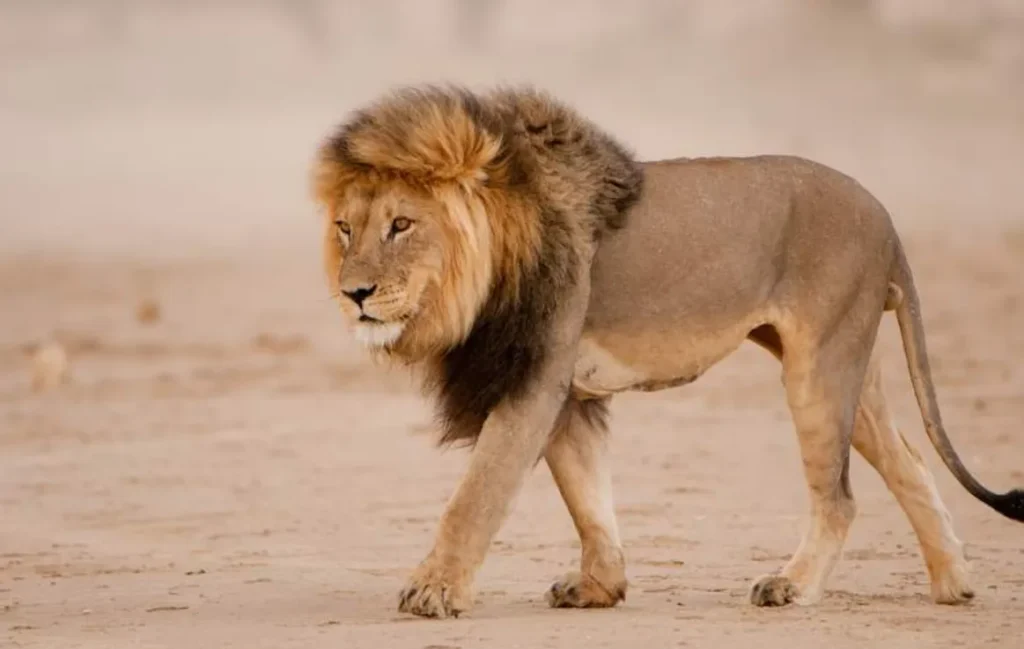
Their Life Cycle and Ability to Survive in Nature
Cub Stage
A lion’s life begins as a small cub. Lion cubs are born blind and helpless. The mother usually hides them in thick grass, bushes, or rocky areas for protection. At this stage, cubs depend completely on their mother’s milk, warmth, and defense.
Cubs face many dangers. Hyenas, leopards, snakes, eagles, starvation, and rival male lions can kill them. Survival during the first year is difficult.
Juvenile Stage
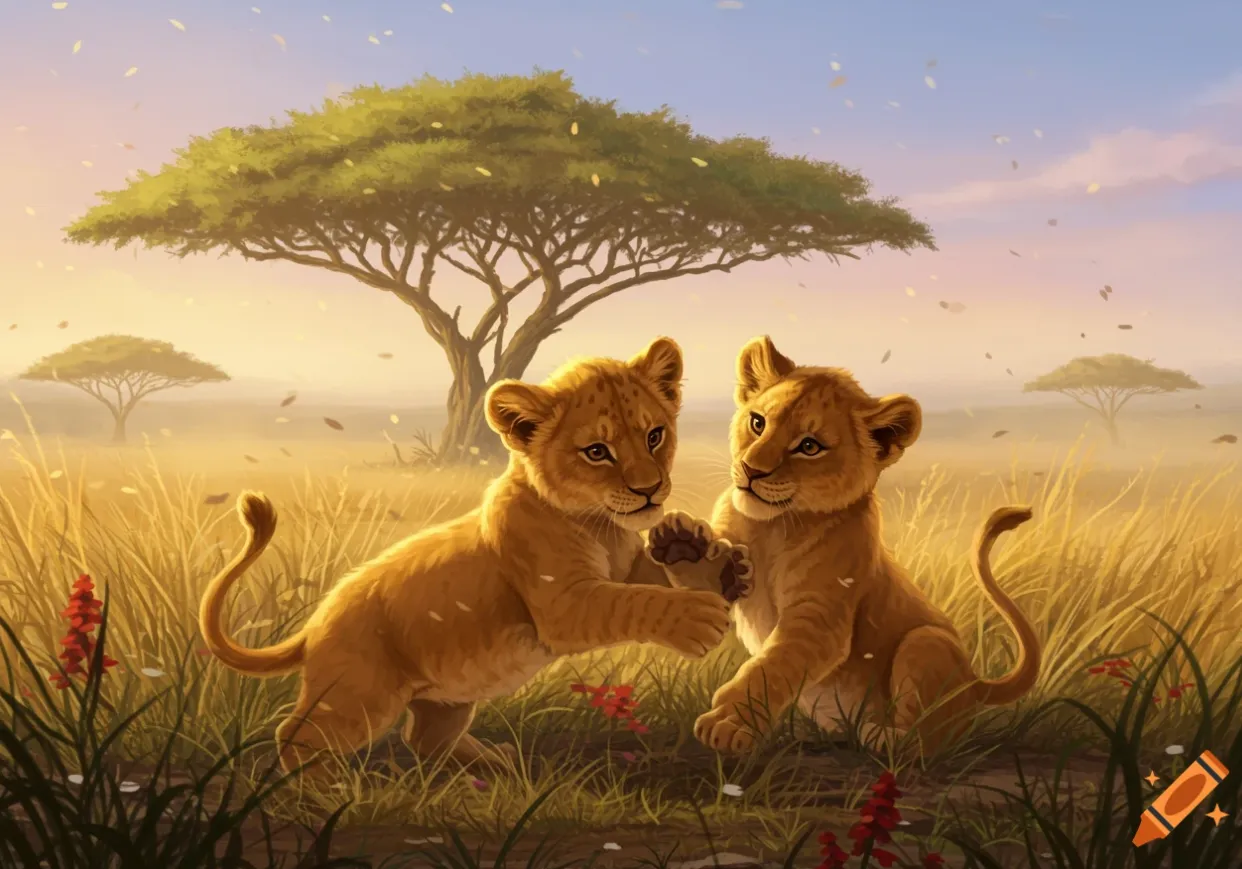
After a few months, cubs begin following their mother and meeting the rest of the pride. They play with siblings, chase tails, bite ears, and practice pouncing. This play is not only fun; it builds hunting and fighting skills.
Young lions slowly start eating meat, although they still need care. They learn pride behavior, feeding rules, and how to recognize danger.
Sub-adult Stage
At around two years old, lions become stronger and more independent. Female lions often remain in their birth pride. Male lions are usually pushed out and must live alone or form coalitions with brothers or other males.
This is one of the hardest stages. Young males must avoid stronger adult males while searching for territory.
Adult Stage
Adult lions are fully developed. Females become skilled hunters and mothers. Males defend territory and protect pride access from rivals. A strong male coalition may control a pride for several years, but competition is constant.
Old Age
As lions age, they lose strength. Younger males may defeat older males. Old females may struggle to hunt. In the wild, weakness often means reduced survival.
The lion’s life cycle is shaped by strength, cooperation, learning, and competition.
Their Reproductive Process and Raising Their Children
Lion reproduction is closely connected to the pride’s life. Lions can breed year-round, though cub survival depends heavily on food availability and pride stability.
- Mating behavior: A male and female may stay close together for several days during mating. This helps increase the chance of pregnancy.
- Gestation period: A lioness is pregnant for about 108–109 days.
- Litter size: A lioness usually gives birth to two to four cubs, although litters may range from one to six cubs.
- Hidden birthplace: The mother gives birth away from the pride in a safe, hidden place.
- Early care: For the first weeks, cubs drink only milk. The mother moves them if she senses danger.
- Joining the pride: After several weeks, cubs are introduced to the pride. Other lionesses may help protect and nurse them.
- Shared motherhood: In many prides, lionesses give birth around the same time. This allows cubs to grow together and receive care from multiple females.
- Learning by watching: Cubs learn hunting, communication, feeding behavior, and social ranking by observing adults.
- Male cub future: Male cubs usually leave the pride when they become sub-adults. They may form coalitions and later challenge other males.
- Female cub future: Female cubs often remain in the pride and become part of the hunting and breeding group.
Raising cubs is a major part of the lion’s life cycle. Without strong mothers, a safe habitat, and enough prey, cub survival becomes very low.
Importance of Them in This Ecosystem
Apex Predators
Lions are apex predators, meaning they sit near the top of the food chain. They help control populations of herbivores such as zebras, antelopes, buffalo, and wildebeests. Without lions, some prey populations may grow too large and overgraze grasslands.
Maintaining Natural Balance
By hunting weak, sick, old, or injured animals, lions help improve the overall health of prey populations. This natural selection process reduces disease spread and keeps ecosystems balanced.
Supporting Scavengers
After lions finish feeding, many animals benefit from the leftovers. Hyenas, jackals, vultures, insects, and bacteria all use lion kills. In this way, lions help transfer energy through the ecosystem.
Protecting Grassland Health
Healthy lion populations often indicate a healthy landscape. If lions are present, it usually means there is enough prey, space, water, and habitat connectivity. When lions disappear, it may show deeper environmental problems.
Cultural and Economic Value
Lions also have strong cultural importance. They appear in stories, symbols, flags, films, and traditional beliefs. Wildlife tourism based on lions also supports jobs, conservation funding, and local economies in many African countries.
However, lions must be protected responsibly. Conservation should benefit both wildlife and local communities. When people living near lions receive support, compensation, education, and safety tools, coexistence becomes more possible.
Important Things That You Need To Know
The word lion appears in many search topics, but not all of them are about the real animal. For example, The Lion King is one of the most famous animated films inspired by lion pride behavior, family bonds, leadership, and survival. Many people also search for the Lion King 1994 cast because the movie remains popular across generations. However, the real lion life cycle is much more complex and challenging than a movie story.
Another related search term is Barbary lion. This was a North African lion population famous for its large body and thick mane. The Barbary lion is now extinct in the wild, which makes it an important warning about habitat loss and overhunting.
The term sea lion can also confuse readers. A sea lion is not a true lion. It is a marine mammal that lives near oceans and belongs to a completely different animal group. The name comes from its loud call and, in males, its mane-like neck.
Some people search for the Food Lion weekly ad, but this refers to a supermarket brand, not the animal. This shows why search intent matters. A person searching for “lion” may want wildlife facts, a movie cast, a store advertisement, or information about extinct lion populations.
This article focuses on the real animal: Panthera leo, its life cycle, survival, reproduction, ecosystem role, and conservation needs.
What to Do to Protect Them in Nature and Save the System for the Future
Protecting lions means protecting entire ecosystems. Since lions need large territories, sufficient prey, and safe movement routes, conservation must be carefully planned.
- Protect lion habitats: Grasslands, savannas, woodlands, and wildlife corridors must be conserved from uncontrolled farming, mining, roads, and settlement expansion.
- Reduce human-wildlife conflict: Communities need robust livestock enclosures, early warning systems, compensation programs, and support when lions attack livestock.
- Stop illegal hunting and snaring: Many lions die in snares set for bushmeat animals. Removing snares and controlling illegal wildlife trade can save lions and their prey.
- Restore prey populations: Lions cannot survive without enough natural prey. Protecting antelope, zebra, buffalo, and other herbivores is essential.
- Support local communities: People living near lions should benefit from conservation through tourism jobs, education, healthcare, and fair wildlife programs.
- Improve disease monitoring: Lions can be affected by diseases such as canine distemper and other infections. Veterinary monitoring helps reduce major outbreaks.
- Create safe wildlife corridors: Corridors allow lions to move between habitats, find mates, and maintain genetic diversity.
- Promote responsible tourism: Tourists should choose ethical wildlife experiences that do not disturb lions or damage habitats.
- Strengthen law enforcement: Protected areas need trained rangers, appropriate equipment, and robust legal frameworks to combat poaching.
- Educate future generations: Children and students should learn that lions are not merely symbols of power but also living animals that need protection.
WWF reports that African lion numbers have sharply declined, with major threats including human-wildlife conflict, prey decline, habitat loss, climate change, and wildlife trade.
Frequently Asked Questions FAQs
Q1: What is the lion’s life cycle?
A: The lion life cycle is the complete growth journey of a lion from newborn cub to juvenile, sub-adult, adult, and old age.
Q2: How long is a lion pregnant?
A: A lioness is usually pregnant for about 108 to 109 days before giving birth.
Q3: How many cubs does a lioness have?
A: A lioness commonly gives birth to two to four cubs, though litter size can vary.
Q4: What do lion cubs eat?
A: Newborn cubs drink their mother’s milk. Later, they begin eating meat from prey brought or shared by the pride.
Q5: When do male lions leave the pride?
A: Male lions usually leave or are forced out when they become sub-adults, often around two to three years old.
Q6: What is the lifespan of a lion?
A: Lions usually live 10 to 18 years in the wild and may live longer in captivity.
Q7: Why are lions important in the ecosystem?
A: Lions control herbivore populations, remove weak animals, support scavengers, and help maintain grassland balance.
Q8: Are lions endangered?
A: Lions are globally listed as Vulnerable, but some populations face a higher risk. The Panthera leo leo lineage is considered more threatened than some other lion populations.
Conclusion
The lion’s life cycle is a powerful story of birth, learning, survival, reproduction, and leadership in the wild. A lion begins life as a helpless cub and slowly grows into a skilled predator shaped by pride life, hunting practice, social rules, and natural competition. Every stage matters because cub survival, adult strength, prey availability, and safe habitat all decide the future of the species.
Lions are more than famous animals. They are essential apex predators that help maintain ecosystem health. Their presence supports natural balance, controls herbivore populations, and benefits many other species. Yet lions are under serious pressure from habitat loss, prey decline, conflict with people, disease, and illegal hunting.
Saving lions means saving the landscapes they depend on. With strong conservation, community support, responsible tourism, and habitat protection, future generations can still see real lions living freely in nature.
Also Read: life cycle of the panda