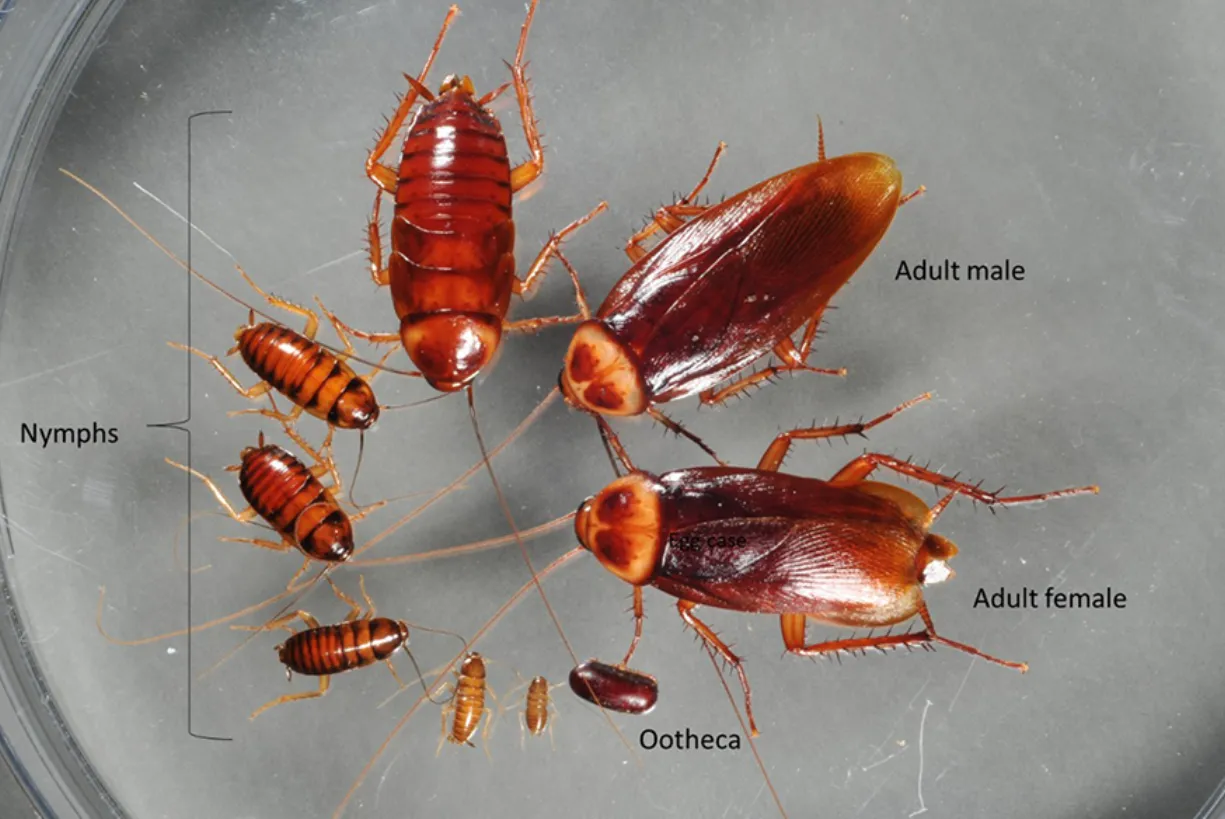
The life cycle of a cockroach is a fascinating example of incomplete metamorphosis, meaning cockroaches do not pass through a pupal stage like butterflies or flies. Instead, they develop through three main biological stages: egg, nymph, and adult. For easier understanding, many people also separate the process into four practical phases: ootheca formation, egg development, nymph growth, and adult reproduction.
A female cockroach lays eggs inside a protective case called an ootheca. This capsule may contain many eggs, depending on the species. For example, a German cockroach can produce oothecae with dozens of eggs, which is one reason it spreads quickly indoors. After hatching, the young cockroach, called a nymph, looks like a smaller version of the adult but usually lacks wings.
Cockroaches are highly adaptable insects. Species such as the American cockroach, German cockroach, and oriental cockroach can live in homes, restaurants, drains, gardens, and warm, hidden spaces. Their ability to eat a wide range of organic matter helps them survive in difficult environments.
Q: How many stages are in the cockroach life cycle?
A: A cockroach has three main biological stages: egg, nymph, and adult. However, the process can be explained in four practical phases: ootheca, egg development, nymph, and adult.
Q: What is a baby cockroach called?
A: A baby cockroach is called a nymph. It looks like a smaller adult but usually has no fully developed wings.
Q: How fast do cockroaches reproduce?
A: Some species, especially the German cockroach, reproduce very quickly. A single female can produce multiple egg cases during her lifetime.
Quick Life Cycle Table
| Life Stage | What Happens | Time Range | Key Details |
| Ootheca | A female produces an egg case | A few hours to days | The protective capsule holds many eggs |
| Egg Development | Eggs grow inside the ootheca | About 2–8 weeks | Time depends on species, warmth, and humidity |
| Nymph | Young cockroach hatches and molts | Weeks to months | Looks like a small adult without full wings |
| Adult | A mature cockroach reproduces | Months to over 1 year | Can mate, lay egg cases, and expand population |
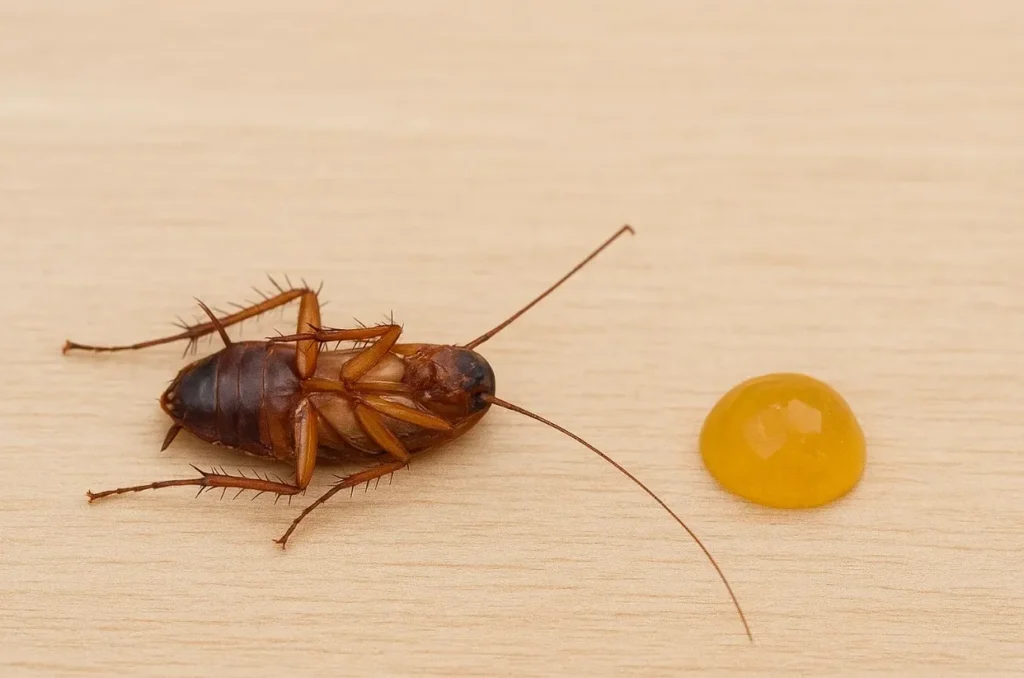
The History Of Their Scientific Naming, Evolution, and Their Origin
Scientific Naming of Cockroaches
Cockroaches belong to the order Blattodea. This order also includes termites, which are closely related to cockroaches from an evolutionary standpoint. The word “cockroach” is commonly linked to older Spanish and English naming traditions, while scientific names are based on Latinized classification.
For example, the German cockroach is scientifically known as Blattella germanica, the American cockroach as Periplaneta americana, and the oriental cockroach as Blatta orientalis. These names help scientists identify species accurately across countries and languages.
Evolutionary Background
Cockroaches are among the oldest groups of insects on Earth. Their ancestors appeared hundreds of millions of years ago, long before humans. Their body structure has remained successful because it supports survival: a flattened body, fast movement, a flexible diet, and strong reproductive ability.
Origin and Adaptation
Cockroaches likely evolved in warm, moist natural habitats such as forest floors, leaf litter, and decaying organic environments. Over time, some species adapted to human settlements, where they found food, warmth, water, and shelter. This is why certain cockroach species are now common indoor pests, while many wild species remain important parts of natural ecosystems.
Their Reproductive Process, Giving Birth And Rising Their Children
Mating Process
The reproductive process begins when an adult male and female cockroach mate. Males usually detect females through chemical signals called pheromones. After mating, the female stores sperm and can use it to fertilize eggs.
This ability helps cockroaches reproduce efficiently. In some species, one successful mating can support more than one egg case.
Egg Case Formation
Cockroaches do not give birth to live young in the same way mammals do. Most species lay eggs inside a protective capsule called an ootheca. The ootheca protects the eggs from drying out, injury, and some environmental threats.
A female may carry the ootheca for some time or deposit it in a safe, hidden place. The number of eggs inside depends on the species.
Hatching of Baby Cockroaches
When the eggs are ready, small nymphs hatch from the ootheca. These baby cockroaches are soft, pale, and vulnerable at first. Their bodies darken and harden shortly after hatching.
The nymphs immediately begin searching for food, moisture, and shelter.
Do Cockroaches Raise Their Children?
Most cockroach species do not raise their young like birds or mammals. However, some species show limited care by carrying or protecting the egg case until hatching. In indoor pest species, survival depends more on hiding places, food availability, and fast reproduction than on parental care.
Stages of the Life Cycle of a Cockroach
Stage 1: Ootheca Formation
The first practical stage in the life cycle of a cockroach begins when the female produces an ootheca. This egg case is one of the most important parts of cockroach reproduction. It protects the eggs and allows the next generation to develop safely.
Different species produce different types of oothecae. A German cockroach often carries the egg case until close to hatching, which increases the survival rate of the young. An American cockroach usually deposits the ootheca in a warm, hidden place.
Stage 2: Egg Development
Inside the ootheca, eggs develop until they are ready to hatch. Warm temperature, moisture, and food availability can speed up this process. Cold or dry conditions may slow development.
This is why cockroaches are more active and reproduce faster in warm, humid environments such as kitchens, bathrooms, drains, basements, and food storage areas.
Stage 3: Nymph Growth
After hatching, the young baby cockroach enters the nymph stage. Nymphs look like small adults but lack fully developed wings or reproductive organs.
As they grow, nymphs shed their outer skin several times. This process is called molting. Each molt allows the cockroach to grow larger and approach adulthood.
Stage 4: Adult Cockroach
The final stage is the adult cockroach. Adults usually have a harder body, mature reproductive organs, and, in many species, wings. However, not all cockroaches are strong flyers.
Adult cockroaches focus on survival and reproduction. Once mature, females can produce egg cases, continuing the cycle. In favorable conditions, this cycle can repeat quickly, especially in indoor infestations.
Important Things That You Need To Know
Understanding the life cycle of a cockroach is useful for both learning insect biology and improving cockroach control. Different species behave differently, so identifying the type of cockroach is very important.
The German cockroach is one of the most common indoor pests. It is small, light brown, and reproduces very fast. Because it carries the egg case until near hatching, its population can grow rapidly in kitchens, restaurants, and apartments.
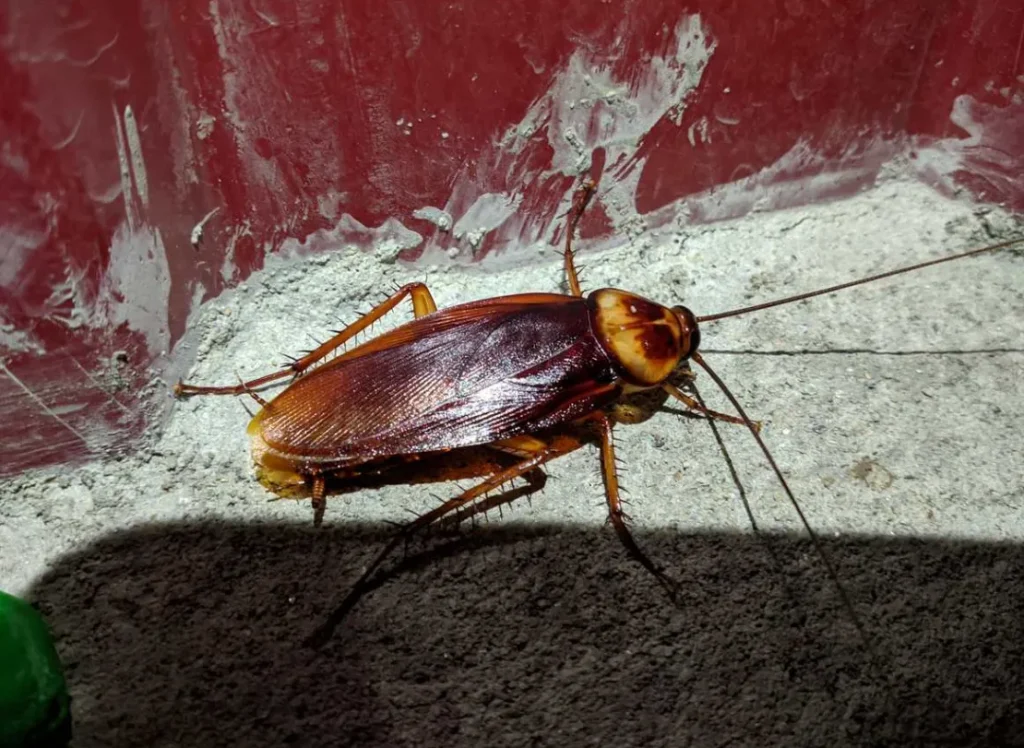
The American cockroach is larger and reddish-brown. It is often found in drains, basements, sewers, and warm commercial buildings. Although it can enter homes, it is more commonly found in damp, hidden areas.
The oriental cockroach is darker and often called a “water bug” in some places. It prefers cool, moist spaces such as drains, crawl spaces, and damp basements.
A baby cockroach can be a warning sign of an active infestation. Seeing nymphs usually means cockroaches are breeding nearby. Another sign is cockroach poop, which may look like black pepper, coffee grounds, dark smears, or small droppings, depending on the species.
Effective cockroach control depends on breaking the life cycle. Cleaning food waste, sealing cracks, removing water sources, using traps, and targeting egg-laying areas are more effective than only killing visible adults.
Their Main Diet, Food Sources, and Collection Process Explained
Cockroaches are omnivores and scavengers, meaning they eat both plant-based and animal-based materials. Their flexible diet is one of the biggest reasons they survive in many environments.
Main Diet of Cockroaches
Cockroaches commonly eat:
- Food crumbs
- Grease and oil
- Starchy foods
- Sugary materials
- Meat scraps
- Dead insects
- Decaying organic matter
- Paper, glue, and cardboard
- Pet food
- Garbage waste
In nature, many cockroaches feed on dead leaves, rotting wood, fungi, and organic debris. This helps recycle nutrients back into the soil.
Food Sources Indoors
Inside homes, cockroaches are attracted to kitchens, pantries, bathrooms, garbage bins, drains, and food storage spaces. Even small crumbs behind appliances can support them.
They also need moisture. Leaky pipes, wet sinks, damp floors, and condensation can help them survive.
Food Collection Process
Cockroaches usually search for food at night. Their long antennae help them detect smells, moisture, and movement. They hide during the day and come out when it is dark and quiet.
Because they travel through dirty places, they may contaminate food surfaces. This is why indoor cockroach infestations should be handled carefully and quickly.
How long does the life cycle of a cockroach last
The lifespan of a cockroach depends on species, temperature, humidity, food availability, and predators. Some cockroaches live only a few months, while others may survive for more than a year.
- German cockroach lifespan: The German cockroach usually lives for several months. It develops quickly and reproduces rapidly, making it one of the most difficult indoor cockroaches to manage.
- American cockroach lifespan: The American cockroach can live longer than many smaller household species. Under favorable conditions, it may live for up to 1 year.
- Oriental cockroach lifespan: The oriental cockroach generally develops more slowly and prefers cooler, damp environments. Its lifespan can also extend for many months.
- Egg stage duration: The egg stage may last from a few weeks to about two months, depending on species and environmental conditions.
- Nymph stage duration: The nymph stage can last from weeks to several months. Nymphs molt multiple times before becoming adults.
- Adult stage duration: Once mature, adults may live for several months. During this period, females can produce egg cases and expand the population.
- Temperature effect: Warm conditions usually speed up growth and reproduction. Cold conditions slow the life cycle and reduce activity.
- Food and water effects: Cockroaches can survive on limited food, but they need water. Dry conditions make survival harder.
- Infestation meaning: If you see both adults and baby cockroaches, it often means the life cycle is active in that area.
- Control importance: Long survival and fast reproduction make early action important. Removing food, water, and hiding places can shorten survival and reduce breeding.
Life Cycle of a Cockroach Lifespan in the Wild vs. in Captivity
Lifespan in the Wild
In the wild, cockroaches face many natural challenges. Birds, reptiles, amphibians, spiders, ants, and small mammals may eat them. Weather changes, food shortages, flooding, and drought can also reduce survival.
Wild cockroaches often live in leaf litter, soil, rotting logs, caves, and damp natural shelters. Their lifespan may be shorter because predators and environmental stress are common.
Lifespan Indoors or in Captivity
In protected indoor spaces or controlled environments, cockroaches may live longer. They have access to warmth, moisture, food waste, and hiding places. This allows them to reproduce more successfully.
A home, restaurant, warehouse, or laboratory can provide stable conditions. That is why indoor cockroach populations can grow quickly if not controlled.
Key Difference
The main difference is survival pressure. In nature, cockroaches are part of the food chain and face predators. Indoors, they often face fewer predators and more consistent food sources. This makes indoor infestations harder to manage.
Importance of the Life Cycle of a Cockroach in this Ecosystem
Natural Decomposition
In natural ecosystems, many cockroach species help break down dead leaves, rotting wood, and organic waste. This supports decomposition, which returns nutrients to the soil.
Without decomposers, dead plant and animal material would build up more slowly. Cockroaches are part of this recycling system.
Food for Other Animals
Cockroaches are also food for many animals. Birds, frogs, lizards, spiders, beetles, fish, and small mammals may feed on them. This makes them part of the natural food web.
Their presence supports predators and helps maintain ecological balance.
Soil Health
By feeding on decaying organic matter, wild cockroaches help improve soil structure and nutrient movement. Some species also mix organic material into the soil as they move and feed.
This benefits plants and microorganisms.
Difference Between Wild and Pest Species
Not all cockroaches are household pests. Many species live outdoors and never infest homes. The problem mainly comes from pest species such as the German cockroach, American cockroach, and oriental cockroach when they enter human spaces.
What to do to protect them in nature and save the system for the future
Protect Natural Habitats
- Avoid destroying leaf litter, rotting logs, and natural soil layers unnecessarily.
- These spaces support wild cockroaches, beetles, fungi, worms, and other decomposers.
- Healthy decomposition zones help forests and gardens remain fertile.
Use Responsible Pest Control
- Use cockroach control only where cockroaches pose a health or hygiene risk.
- Avoid spraying chemicals widely in natural areas.
- Target indoor infestations with sanitation, sealing, traps, and careful treatment.
Reduce Pollution
- Chemical pollution can harm beneficial insects, soil organisms, and water systems.
- Choose safer cleaning and pest-control methods when possible.
- Keep pesticides away from drains, ponds, and gardens.
Maintain Biodiversity
- Support birds, frogs, lizards, spiders, and other natural predators.
- A balanced ecosystem keeps insect populations under natural control.
- Biodiversity reduces the need for aggressive chemical treatment.
Separate Pests from Wild Species
- Do not treat every cockroach as harmful.
- Many wild cockroaches are not dangerous and do not live in homes.
- Focus control efforts on indoor pest species while protecting the outdoor ecological balance.
Fun & Interesting Facts About the Life Cycle of a Cockroach
- Cockroaches are ancient insects that have existed for hundreds of millions of years.
- A baby cockroach is called a nymph, and it looks like a tiny adult.
- Cockroaches do not have a butterfly-like pupal stage because they develop through incomplete metamorphosis.
- The egg case of a cockroach is called an ootheca.
- A German cockroach can reproduce rapidly, making it a serious indoor pest.
- Some cockroaches can survive for weeks without food, but they need water more urgently.
- Cockroach poop can help identify an infestation. It may appear as dark specks, stains, or small droppings.
- The American cockroach is one of the largest common household cockroach species.
- The oriental cockroach prefers damp, cooler places compared with other species.
- Cockroaches use their long antennae to sense food, danger, moisture, and movement.
- Many cockroaches are nocturnal, meaning they are most active at night.
- Not all cockroaches are pests. Many wild species help recycle nutrients in nature.
Frequently Asked Questions (FAQs)
Q: What is the life cycle of a cockroach?
A: The life cycle of a cockroach includes egg, nymph, and adult stages. The eggs develop inside an ootheca, and the nymphs hatch, then molt several times before becoming adults.
Q: How long does it take for cockroach eggs to hatch?
A: Cockroach eggs usually hatch in a few weeks, but the exact time depends on the species, temperature, and humidity. Warm and moist conditions can speed up hatching.
Q: What does a baby cockroach look like?
A: A baby cockroach, or nymph, looks like a smaller adult cockroach. It is often lighter in color when newly hatched and usually has no developed wings.
Q: Why are German cockroaches hard to control?
A: The German cockroach reproduces quickly, hides in small cracks, and often carries its egg case until close to hatching. This causes its population to grow rapidly indoors.
Q: What is cockroach poop like?
A: Cockroach poop may look like black pepper, coffee grounds, dark stains, or small cylindrical droppings. Its appearance depends on the cockroach species and size.
Conclusion
The life cycle of a cockroach shows how a small insect can survive, reproduce, and adapt in many environments. From the protective ootheca to the active nymph stage and finally the reproductive adult cockroach, each phase supports survival and population growth.
Cockroaches such as the German cockroach, American cockroach, and oriental cockroach are important to understand because they can become serious indoor pests. At the same time, many wild cockroach species play a useful role in nature by helping decompose organic matter, recycle nutrients, and maintain the balance of the food web.
The best approach is balanced awareness. Indoor infestations should be controlled through hygiene, sealing, moisture reduction, and safe treatment. But in natural ecosystems, cockroaches and other decomposers deserve protection because they help maintain healthy soil and habitats for the future.
Also Read: life cycle of a spider