The luna moth life cycle is one of the most beautiful examples of complete metamorphosis in nature. This pale green moth, scientifically known as Actias luna, begins life as a tiny egg, grows into a hungry luna moth caterpillar, hides inside a thin luna moth cocoon, and finally appears as a large winged adult with long sweeping tails.
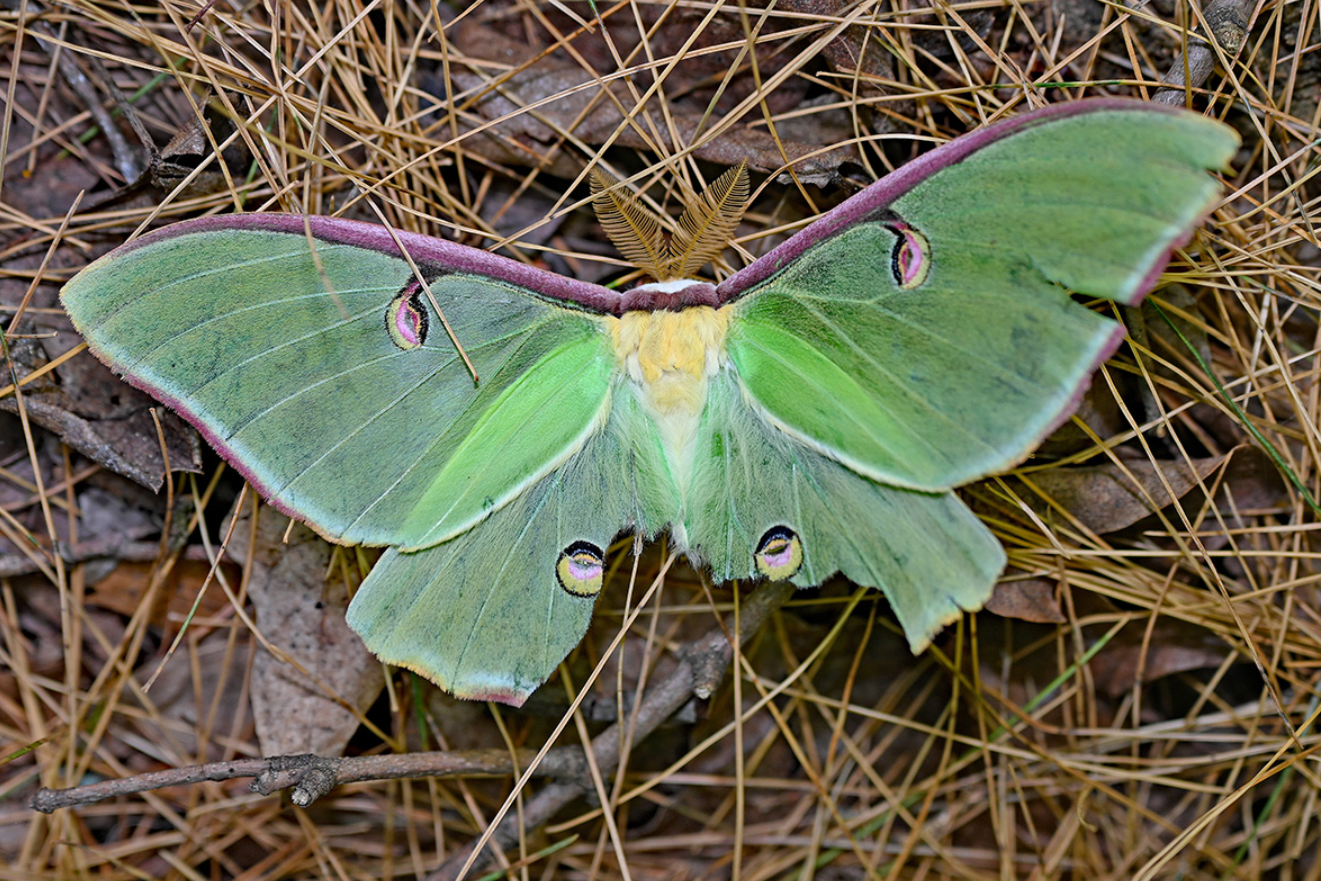
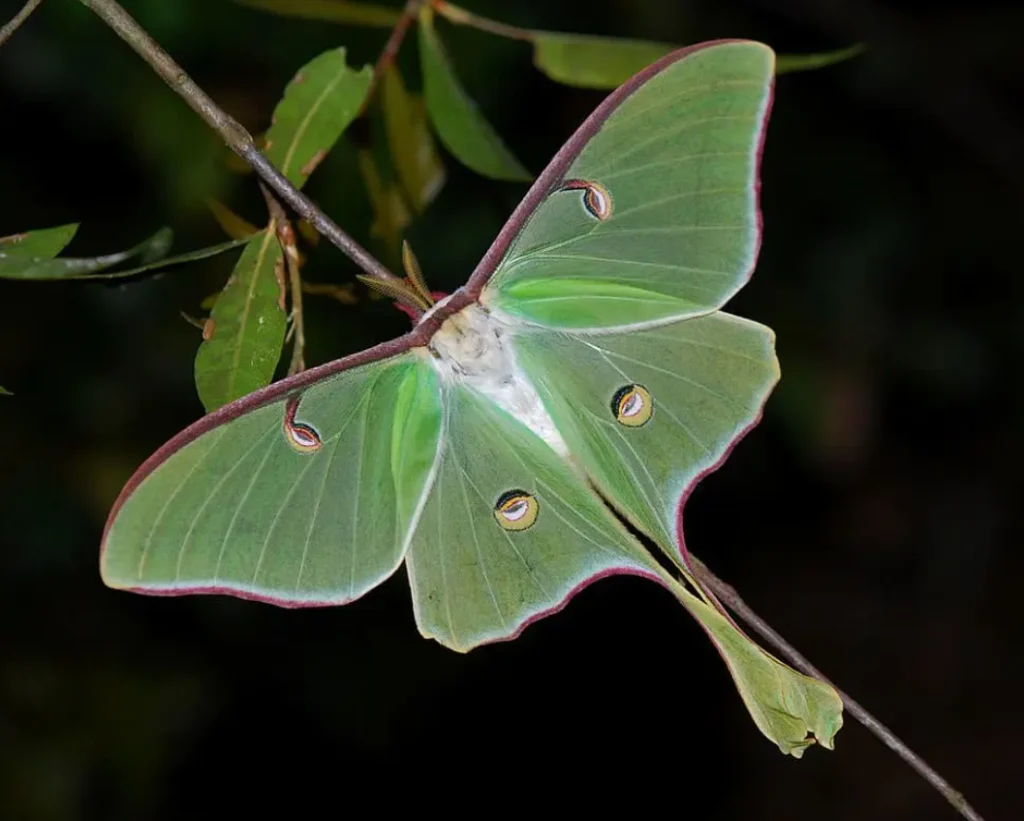
The adult luna moth is famous for its soft green wings, eye-like wing spots, white body, and moon-like beauty. It belongs to the Saturniidae family, often called the giant silkworm or royal moths. Adult luna moths do not eat because their mouthparts are reduced, so their adult life is very short, usually about one week. Their main job as adults is to find a mate and lay eggs for the next generation.
These moths are mostly found around deciduous woodlands, where caterpillars can feed on trees such as walnut, hickory, sweetgum, persimmon, birch, and sumac. They are nocturnal, so people often miss them during the day, even though they may be resting quietly on tree bark or leaves.
Q: How long is the luna moth life cycle?
A: The full cycle can take several weeks to many months, depending on the climate. Eggs hatch in about 8–13 days, caterpillars feed for several weeks, and pupae may emerge in a few weeks or overwinter until spring.
Q: What does a luna moth eat?
A: The luna moth caterpillar eats leaves from host trees. Adult luna moths do not eat at all because they have non-working mouthparts.
Q: Why do adult luna moths live such a short time?
A: Adults survive only on energy stored from the caterpillar stage. Since they do not feed as adults, their lifespan is typically about 1 week.
Quick Life Cycle Table
| Stage | What Happens | Simple Time Range |
| Egg | Females lay eggs on host plant leaves | About 8–13 days |
| Larva / Caterpillar | Luna moth caterpillar eats leaves and grows through molts | Around 3–7 weeks |
| Cocoon / Pupa | Caterpillar spins a thin silk luna moth cocoon with leaf pieces | Around 2–3 weeks, or overwinter |
| Adult Moth | Winged adult emerges, mates, and lays eggs | About 1 week |
| New Generation | Eggs begin the cycle again | 1–3 broods yearly by region |
In colder northern areas, luna moths often have one generation per year. In warmer southern areas, they may have two or three generations per year.
The History of Their Scientific Naming
The scientific name of the luna moth is Actias luna. The word luna comes from Luna, the Roman moon goddess, which fits this moth well because it flies at night and has a soft, moon-like look. The moth is also called the American moon moth.
Important naming facts:
- Scientific name: Actias luna
- Family: Saturniidae
- Common name: Luna moth
- Other common name: American moon moth
- Order: Lepidoptera, the group that includes moths and butterflies
- Original naming authority: Linnaeus, 1758
The moth was once placed under older naming systems before modern classification settled on Actias luna. Its name is tied to both science and culture. The pale green wings, night activity, and long tails helped people connect it with the moon.
The family name Saturniidae includes many large, showy moths. These moths are often known for large wings, reduced adult feeding, and caterpillars that depend strongly on specific host plants. For this reason, the name Actias luna does more than label an insect. It points to its nightlife, beauty, ancestry, and its place among the giant silk moths.
Their Evolution And Their Origin
The luna moth belongs to the insect order Lepidoptera, which includes moths, butterflies, and skippers. Lepidoptera are known for wings covered in tiny scales, complete metamorphosis, and a close relationship with plants. Caterpillars usually feed on leaves, while many adult species drink nectar. Luna moths are different because the adults do not feed.
Moths are older than butterflies in evolutionary history. The early ancestors of moths were likely small, plant-associated insects that slowly evolved specialized wing shapes, camouflage, silk-spinning behavior, and strong chemical communication. The luna moth carries many of these old moth traits.
Its origin is tied to North American deciduous forests. The species is native to eastern North America and lives where suitable host trees grow. In places with hickory, walnut, sweetgum, birch, and persimmon, the caterpillars can survive and complete their growth.
The long tails on adult luna moth wings are not just for beauty. Research-based field guides explain that these tails help confuse bats that hunt with echolocation. A bat may strike at the tail instead of the moth’s body, giving the moth a better chance to escape.
Over time, the luna moth’s life cycle became highly focused. The caterpillar eats heavily and stores energy. The adult does not waste time feeding. It uses its short life to mate, lay eggs, and continue the next generation.
Their main food and its collection process
The adult does not eat the main food source of a luna moth. It is eaten during the caterpillar stage. The luna moth caterpillar is a leaf-eating herbivore that feeds on several deciduous trees. Adult luna moths do not eat because their mouthparts are reduced and not useful for feeding.
Main food plants include:
- Walnut
- Hickory
- Sweetgum
- Persimmon
- Birch
- Pecan
- Sumac
- Willow
- Beech
- Red maple
- White oak
- Wild cherry
- Hazelnut
The food collection process is simple but important:
- The female moth lays eggs on or near suitable host leaves.
- Tiny caterpillars hatch and begin feeding almost immediately.
- They chew leaf tissue with strong mouthparts.
- As they grow, they molt several times.
- A mature caterpillar stores enough energy for the adult stage.
- When fully grown, it stops feeding and prepares to spin a cocoon.
The caterpillar stage is the real feeding stage of the luna moth life cycle. This is why host trees matter so much. A healthy forest gives young caterpillars the food they need.
Even though the caterpillar can eat a lot, it usually does not cause serious damage to trees. Texas A&M Forest Service notes that luna moth caterpillars feed on different trees but are not considered major tree pests.
Important Things That You Need To Know
The luna moth is often sought out because people are curious about its beauty, meaning, and its short adult life. But there are a few important things to understand before mixing facts with myths.
First, the luna moth’s lifespan in the adult stage is very short. Many people think the moth dies quickly because it is weak. That is not true. Its body plan is built for one clear purpose after emergence: reproduction. The moth had already collected energy as a caterpillar.
Second, the luna moth caterpillar is not a dangerous garden pest. It can look large and bright green, but it is harmless to people and usually does not cause significant damage to trees. It is part of a normal woodland food web.
Third, the luna moth cocoon is thin, papery, and often hidden in leaf litter. Because of this, people may accidentally destroy cocoons when cleaning yards too aggressively in the fall or winter.
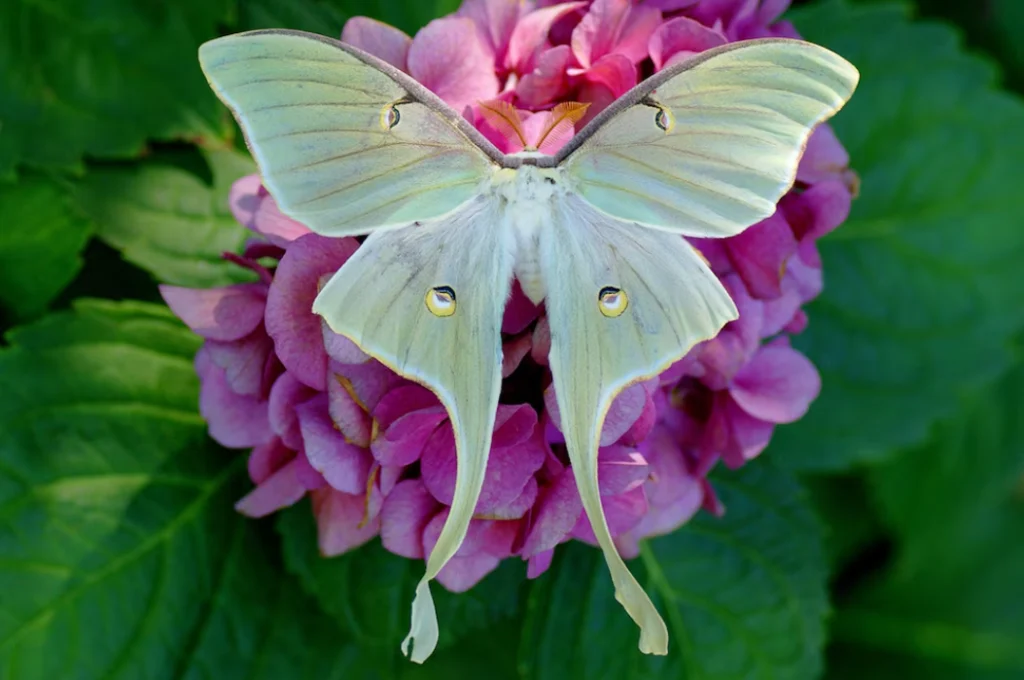
Fourth, the phrase “purple luna moth” is usually not a distinct true species. Real luna moths are mostly pale green or yellow-green, but they may have reddish-purple or brownish-purple wing edges. Purple versions seen in art, edits, or fantasy designs are usually creative interpretations.
Fifth, a luna moth tattoo often represents transformation, short life, beauty, rebirth, night, mystery, or personal growth. That meaning comes from the moth’s dramatic change from caterpillar to winged adult.
Their life cycle and ability to survive in nature
Egg Stage
The luna moth life cycle begins when a female lays eggs on the underside of host plant leaves. A female may lay eggs singly or in small groups. These eggs hatch in about a week to almost two weeks, depending on weather and location.
Caterpillar Stage
After hatching, the young luna moth caterpillar starts feeding on leaves. It grows through several molts, called instars. The final caterpillar can reach around 3 to 3½ inches long. It is bright green, with yellow lines and reddish spots.
Cocoon and Pupa Stage
When fully grown, the caterpillar spins a thin silk luna moth cocoon. It often uses dead leaves or leaf pieces to hide the cocoon. In many areas, the pupa stays protected in leaf litter and may overwinter before emerging as an adult.
Adult Stage and Survival
The adult moth emerges with its wings soft and folded. It pumps fluid into the wings, waits for them to dry, and then flies at night. Its pale color, eye spots, and long tails help protect it from predators such as birds and bats.
Their Reproductive Process and raising their children
The reproductive process of the luna moth is short, quiet, and mostly happens at night. Adult moths do not raise their young as birds or mammals do. Instead, the female gives the next generation a good start by laying eggs on suitable host plants.
Key steps in reproduction:
- Female emergence: A female comes out of her cocoon with eggs already developing inside her body.
- Pheromone release: At night, she releases chemical signals called pheromones.
- Male attraction: A male uses his large, feather-like antennae to detect the female’s scent.
- Mating time: Mating often occurs at night, often after midnight.
- Egg laying: After mating, the female lays eggs on the leaves of host trees.
- No parental care: Once eggs are laid, the parents do not feed or protect the larvae.
- Independent young: The tiny caterpillars hatch and begin feeding on their own.
- Energy transfer: The caterpillar must gather all the food energy needed for growth, pupation, and adult reproduction.
Animal Diversity Web describes the luna moth’s reproduction as a pheromone-based mating system in which males follow a female’s scent trail. After mating, the female seeks host plants to lay eggs.
This may seem harsh, but it works. The species depends on laying many eggs and placing them near the right food plants. The forest itself really does the “raising” of the luna moth young self. Leaves feed the caterpillars. Leaf litter hides the cocoons. Night protects the adults.
The importance of them in this Ecosystem
Food for Other Animals
The luna moth plays a real role in the food web. Eggs, caterpillars, pupae, and adults can become food for birds, bats, beetles, wasps, and other predators. Clemson Extension lists owls, bats, hornets, parasitic wasps, and ground beetles as predators of luna moths.
This may sound bad for the moth, but it is part of the natural balance. One insect species supports many other lives.
A Sign of Woodland Health
Luna moths need host trees, leaf litter, and dark nighttime conditions. When a place has fewer native trees, too much pesticide use, or too much bright light at night, moth numbers may suffer. Their presence can suggest that the local habitat still has some natural strength.
Education and Scientific Value
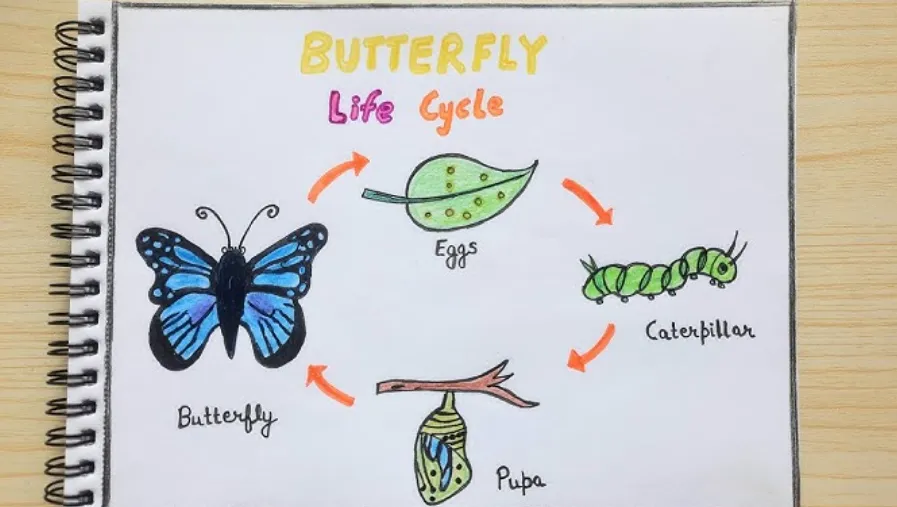
Luna moths are often used to teach complete metamorphosis because their stages are easy to understand: egg, caterpillar, cocoon, and adult moth. Animal Diversity Web also notes their value in ecology and evolutionary biology education.
Plant and Forest Connection
The luna moth caterpillar feeds on leaves, but it does not usually harm trees badly. Instead, it becomes part of the nutrient movement in woodland systems. Its body turns plant energy into insect energy, which then feeds other animals.
What to do to protect them in nature and save the system for the future
To protect the luna moth life cycle, people need to safeguard the habitats where eggs, caterpillars, cocoons, and adults live.
- Plant native host trees such as hickory, walnut, sweetgum, birch, persimmon, and sumac where suitable.
- Reduce pesticide use, especially broad-spectrum insecticides that can kill caterpillars, moths, and other beneficial insects.
- Leave some leaf litter in garden edges or woodland corners because the luna moth cocoon may be hidden there.
- Turn off unnecessary outdoor lights at night. Bright lights can confuse moths and may disturb mating behavior.
- Use warm, low-intensity lighting when outdoor lights are needed. Avoid strong blue-white lights near natural areas.
- Do not collect adult moths just because they are beautiful. Take a photo and let them live.
- Protect wooded areas, especially places with mixed deciduous trees.
- Avoid over-cleaning wild corners of the yard. A little natural mess can protect cocoons and other insects.
- Teach children about moths, not just butterflies. Moths are also important and often ignored.
- Support local habitat projects that restore native trees and reduce chemical-heavy landscaping.
Small actions matter because the luna moth depends on several fragile steps. One sprayed tree, one cleared leaf pile, or one overly bright yard light can interrupt a local generation.
Frequently Asked Questions (FAQs)
Q1: What is the luna moth life cycle?
A: The luna moth life cycle has four main stages: egg, caterpillar, cocoon/pupa, and adult moth. This is a complete metamorphosis.
Q2: How long does a luna moth live?
A: The adult luna moth lifespan is usually about one week. The full life cycle is much longer when the egg, caterpillar, and cocoon stages are included.
Q3: What does a luna moth caterpillar eat?
A: A luna moth caterpillar eats leaves from host trees such as walnut, hickory, sweetgum, persimmon, birch, sumac, and related trees.
Q4: Do adult luna moths eat?
A: No. Adult luna moths do not eat because their mouthparts are reduced. They live on stored energy from the caterpillar stage.
Q5: What does a luna moth cocoon look like?
A: A luna moth cocoon is thin, papery, and made from silk with leaf material. It is often hidden in leaf litter or among dry leaves.
Q6: Is a purple luna moth real?
A: A true luna moth is usually pale green or yellow-green. Some have purple-brown wing edges, but a fully purple luna moth is usually an artistic, fantasy, or tattoo design rather than a normal wild form.
Q7: What does a luna moth tattoo mean?
A: A luna moth tattoo often means transformation, rebirth, short but beautiful life, night energy, personal growth, or quiet strength.
Q8: Are Luna moths endangered?
A: Luna moths are not generally listed as endangered, but local sightings can decline because of habitat loss, light pollution, and pesticide use.
Conclusion
The luna moth life cycle is short in some moments and surprisingly complex in others. A tiny egg becomes a green luna moth caterpillar, the caterpillar stores energy through heavy feeding, then it hides inside a thin luna moth cocoon before emerging as one of the most beautiful moths in North America.
The adult luna moth may live only about a week, but that short life has a clear purpose. It finds a mate, lays eggs, and begins the cycle again. Its soft green wings, moon-linked name, long tails, and quiet night flight make it unforgettable.
Protecting luna moths means protecting native trees, leaf litter, nights, and healthy woodland spaces. When we protect these moths, we also protect birds, bats, trees, soil life, and the natural balance around them. The luna moth is short-lived, but large in meaning.
Also Read: lion life cycle