Ferns are among the most fascinating and ancient groups of plants on Earth. Unlike flowering plants, they do not produce seeds or petals, yet they thrive in a wide range of environments—from dense tropical forests to rocky mountain slopes. Understanding the life cycle in Ferns gives us a deeper appreciation of how these resilient plants reproduce and survive without flowers or seeds.
Ferns belong to a group known as pteridophytes, which reproduce through spores rather than seeds. This unique reproductive strategy has allowed them to exist for over 360 million years, making them one of the oldest plant lineages still living today. Their lush green fronds, intricate leaf patterns, and adaptability have made them popular both in natural ecosystems and as indoor decorative plants.
In recent years, interest in ferns has grown significantly due to their environmental benefits, low maintenance needs, and aesthetic appeal. Many plant enthusiasts now explore different types of ferns, including popular indoor varieties such as Boston ferns, known for their air-purifying qualities.
Despite their popularity, many people still misunderstand how ferns grow and reproduce. Questions such as whether ferns have flowers, how they reproduce without seeds, or even whether ferns are toxic to cats are common among plant lovers.
This comprehensive guide will walk you through everything you need to know about the life cycle of ferns, their evolution, reproduction, ecological importance, and how to protect them for future generations—all updated with insights relevant for 2026.
Their Evolution And Their Origin
Ferns have a long and remarkable evolutionary history that dates back to the Devonian period, approximately 360–400 million years ago. They were among the first vascular plants to develop specialized tissues for transporting water and nutrients, giving them a major advantage over earlier plant forms.
During the Carboniferous period, ferns and fern-like plants dominated the Earth’s landscape. Vast swamp forests filled with giant ferns contributed significantly to the formation of today’s coal deposits. These ancient ecosystems played a crucial role in shaping Earth’s atmosphere by increasing oxygen levels.
Unlike modern flowering plants, early ferns evolved without seeds. Instead, they developed a spore-based reproductive system, which remains their defining characteristic today. This adaptation allowed them to spread efficiently across moist environments.
Key evolutionary highlights:
- Development of vascular tissue: Ferns were among the first plants to transport water internally, allowing them to grow taller and survive in diverse habitats.
- Adaptation to land: Early ferns successfully transitioned from aquatic to terrestrial environments.
- Spore reproduction: This primitive yet effective system enabled widespread colonization.
- Diversity over time: Today, there are over 10,000 known fern species worldwide.
Ferns have also shown incredible adaptability. They can grow in tropical rainforests, deserts, wetlands, and even as epiphytes (plants growing on other plants). This versatility has helped them survive major extinction events that wiped out many other species.
Modern research in 2026 continues to explore fern genetics and evolution, revealing how these plants have maintained their structure while adapting to changing climates. Their ability to thrive in shaded and humid environments makes them essential components of forest ecosystems.
The History of Their Scientific Naming
The scientific classification of ferns has evolved over centuries as botanists gained a better understanding of plant biology. Below are key points highlighting the history of their naming:
- Early classification (Pre-1700s):
- Ferns were grouped with other non-flowering plants without clear distinctions.
- Carl Linnaeus (18th century):
- The father of modern taxonomy classified ferns under “Cryptogamia,” meaning hidden reproduction, because they lack visible flowers or seeds.
- Introduction of Pteridophyta:
- Scientists later categorized ferns into the division Pteridophyta, distinguishing them from mosses and flowering plants.
- Modern classification systems:
- With advancements in DNA analysis, ferns are now classified into more refined groups based on genetic relationships.
- Scientific naming structure:
- Each fern species follows the binomial nomenclature system (Genus + Species), such as Nephrolepis exaltata for the Boston fern.
- Ongoing research (2026):
- Modern botanists continue to refine fern classification using molecular phylogenetics, improving our understanding of their evolutionary relationships.
This evolving naming system reflects the complexity and diversity of ferns, making them an important subject of botanical study.
Their life cycle and ability to survive in nature
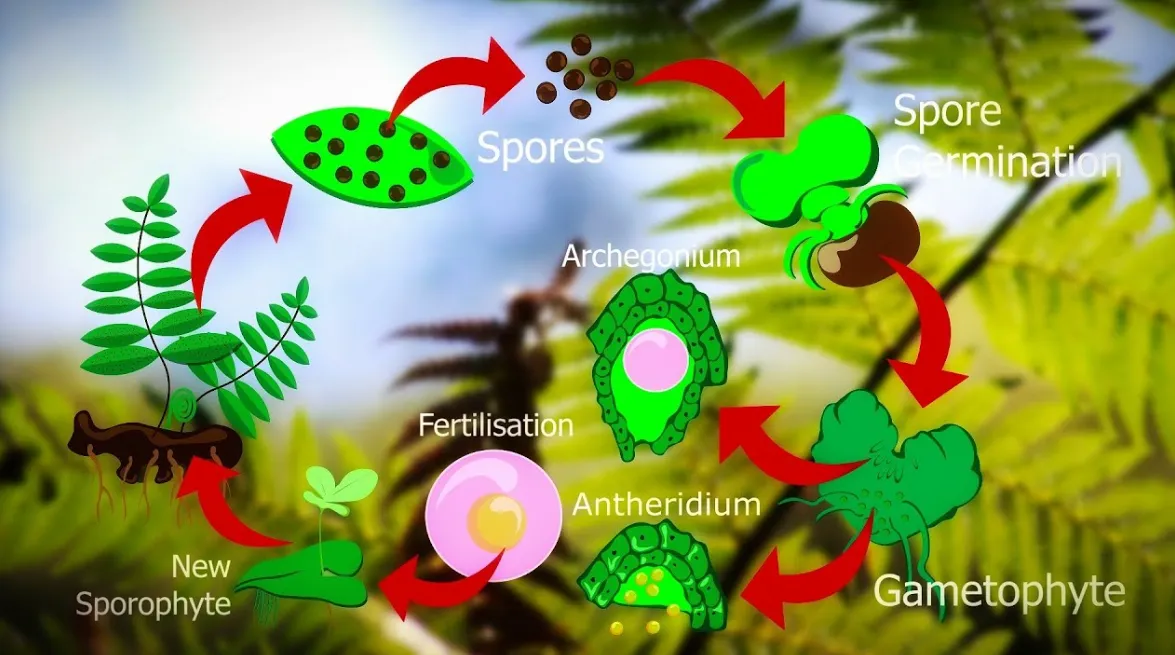
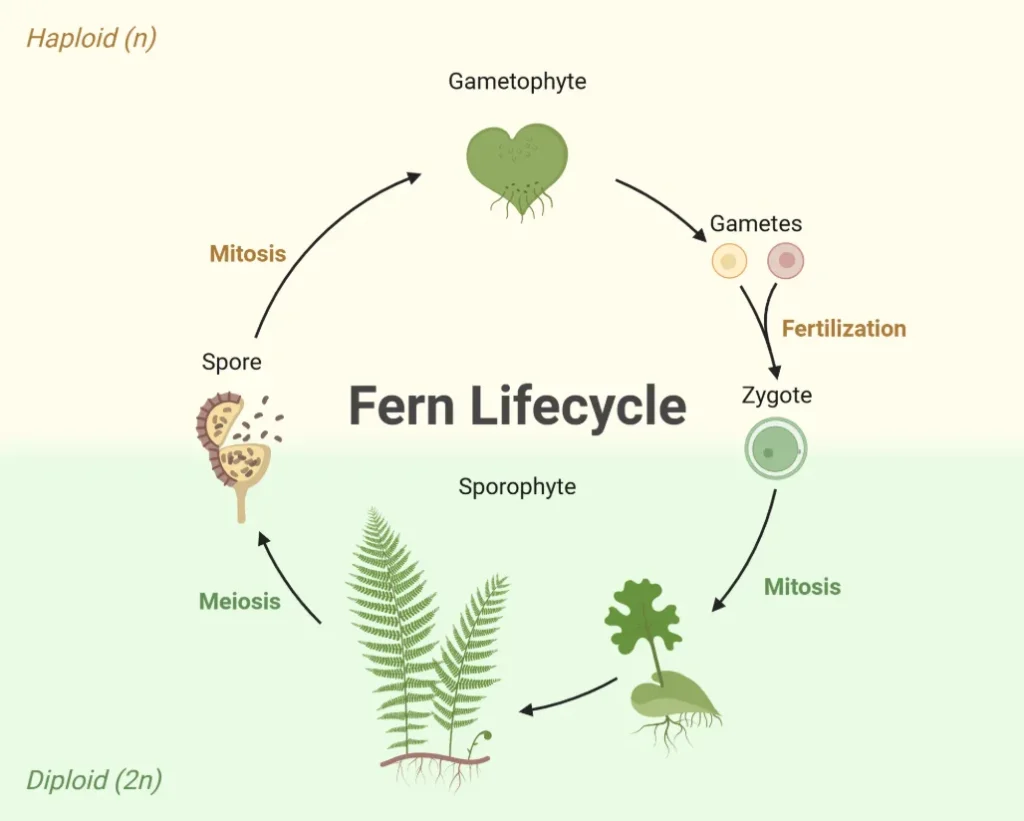
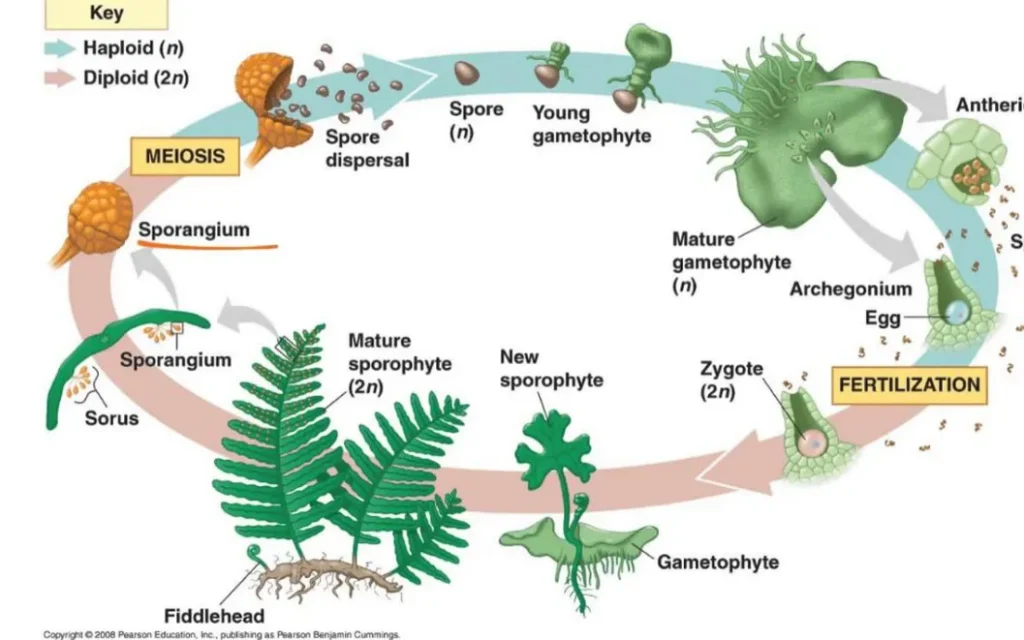
The life cycle in ferns is unique because it involves two distinct stages: the sporophyte and the gametophyte. This process is known as alternation of generations.
Key stages of the fern life cycle:
- Sporophyte stage:
- This is the visible fern plant with green fronds. It produces spores on the underside of its leaves.
- Spore release:
- Spores are released into the environment and carried by the wind.
- Germination:
- When spores land in a moist environment, they grow into a small heart-shaped structure called a gametophyte.
- Gametophyte stage:
- This tiny plant produces both male and female reproductive cells.
- Fertilization:
- Water is required for sperm to reach the egg, making moisture essential for fern reproduction.
- New sporophyte growth:
- After fertilization, a new fern plant begins to grow, completing the cycle.
Survival strategies:
- Ability to grow in low-light conditions
- High tolerance for humidity
- Efficient spore dispersal
- Adaptability to different environments
These traits allow ferns to survive in diverse ecosystems and remain resilient even under environmental stress.
Their Reproductive Process and raising their children
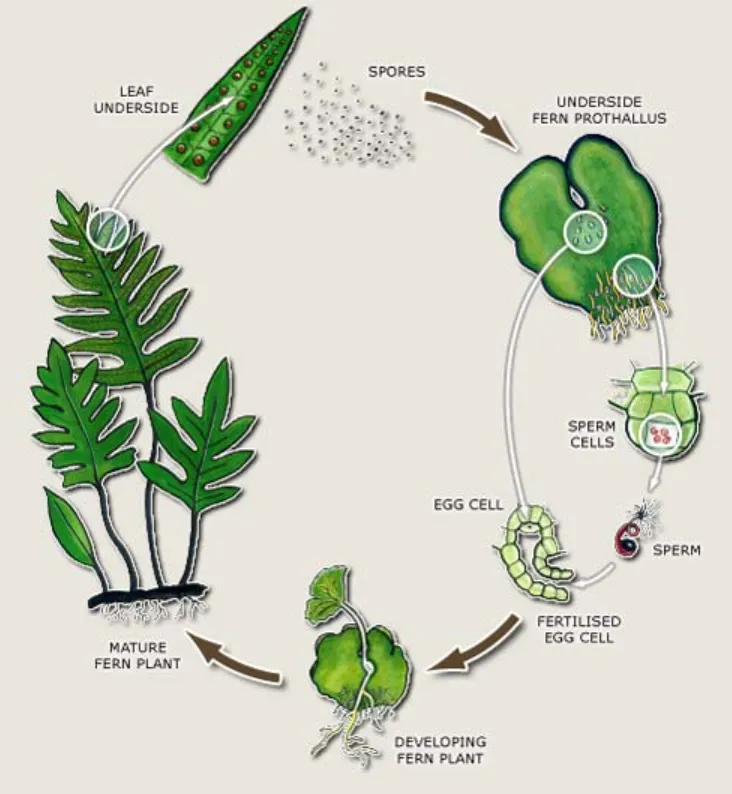
Ferns reproduce differently from flowering plants, and their process is both fascinating and efficient.
Key aspects of reproduction:
- No flowers or seeds:
- Unlike flowering plants, ferns do not produce petals or seeds.
- Spore production:
- Spores are formed in structures called sporangia, located under the fronds.
- Gametophyte development:
- Spores grow into independent organisms that produce reproductive cells.
- Water-dependent fertilization:
- Sperm must swim to reach the egg, requiring a moist environment.
- Growth of new plants:
- After fertilization, a young fern begins to develop from the gametophyte.
Raising “offspring”:
- Ferns rely on environmental conditions rather than parental care
- Moisture and shade are critical for young plant survival
- Natural selection ensures only strong plants grow
This process ensures the continuation of fern species across generations.
The importance of them in the ecosystem
Ferns play a vital role in maintaining ecological balance. Their presence contributes significantly to biodiversity and environmental health.
Key ecological roles:
- Soil formation and protection:
- Ferns help prevent soil erosion and improve soil quality.
- Habitat creation:
- They provide shelter for insects, small animals, and microorganisms.
- Air purification:
- Many ferns absorb pollutants and improve air quality.
- Water cycle regulation:
- Ferns help retain moisture in forest ecosystems.
- Carbon storage:
- They contribute to carbon sequestration, helping combat climate change.
In 2026, environmental studies continue to highlight the importance of ferns in sustainable ecosystems and climate resilience.
Important Things That You Need To Know
Ferns are widely popular not only in nature but also as decorative plants. Here are some important insights based on commonly searched LSI keywords:
🌿 Key facts about ferns:
- Types of ferns:
- There are thousands of varieties, including maidenhair ferns, staghorn ferns, and tree ferns.
- Ferns plants:
- These plants thrive in indirect light and high humidity, making them ideal for indoor spaces.
- Boston ferns:
- One of the most popular indoor ferns, known for its lush foliage and air-purifying abilities.
- Are ferns toxic to cats?
- Most true ferns, including Boston ferns, are non-toxic to cats. However, some plants labeled as ferns may be harmful, so identification is important.
- Ferns for sale:
- Ferns are widely available in nurseries and online plant stores, making them accessible for plant lovers.
- Ferns and petals:
- Ferns do not have petals because they do not produce flowers.
These insights help beginners understand how to care for ferns and choose the right type for their environment.
What to do to protect them in nature and save the system for the future
Protecting ferns is essential for maintaining ecological balance. Here are practical steps:
- Preserve natural habitats
- Protect forests and wetlands where ferns naturally grow.
- Reduce deforestation
- Limit activities that destroy fern ecosystems.
- Promote sustainable gardening
- Grow ferns responsibly without harming wild populations.
- Avoid overharvesting
- Do not collect ferns from the wild unnecessarily.
- Support conservation programs
- Participate in environmental initiatives focused on plant protection.
- Control pollution
- Reduce chemical use that harms soil and plant life.
- Educate communities
- Spread awareness about the importance of ferns.
- Encourage biodiversity
- Plant native species to support local ecosystems.
Frequently Asked Questions (FAQs)
1. What is the life cycle in ferns?
It involves alternation between sporophyte and gametophyte stages.
2. Do ferns produce flowers?
No, ferns do not have flowers or petals.
3. How do ferns reproduce?
They reproduce through spores instead of seeds.
4. Are ferns toxic to cats?
Most true ferns are non-toxic, but always verify the species.
5. What are the most popular types of ferns?
Boston ferns, maidenhair ferns, and staghorn ferns.
6. Where can I buy ferns?
They are available in nurseries and online plant stores.
7. Do ferns need sunlight?
They prefer indirect light and high humidity.
8. Why are ferns important?
They support ecosystems, improve air quality, and prevent soil erosion.
Conclusion
Ferns are truly remarkable plants that have stood the test of time. Their unique reproductive system, which relies on spores instead of seeds, sets them apart from most other plant species. Understanding the life cycle of ferns reveals the complexity and beauty of their growth, from tiny spores to fully developed plants.
Their evolutionary journey, spanning hundreds of millions of years, highlights their resilience and adaptability. Even without flowers or seeds, ferns have successfully colonized diverse environments worldwide. Today, they continue to play a vital role in ecosystems by supporting biodiversity, improving air quality, and maintaining soil health.
In modern times, ferns have also become popular as indoor plants due to their aesthetic appeal and low maintenance requirements. Varieties like Boston ferns are especially valued for their ability to purify air and enhance indoor environments.
However, despite their resilience, ferns face threats from habitat destruction, climate change, and pollution. Protecting these plants is essential not only for preserving biodiversity but also for maintaining ecological balance.
By understanding their life cycle, ecological importance, and care requirements, we can appreciate ferns more deeply and contribute to their conservation. As we move forward, ensuring the survival of ferns will help sustain the natural world for generations to come.
Also Rerad About: life-cycle-of-a-butterfly