The life cycle of salmon is one of the most fascinating natural journeys in the animal kingdom. These incredible fish travel thousands of miles between freshwater rivers and the vast ocean, demonstrating resilience, adaptation, and survival. From the moment they hatch in freshwater streams to their dramatic return to spawn, salmon undergo several complex stages that define their life.
Salmon are not just important for ecosystems but also widely recognized for their role in human diets, including popular dishes like baked salmon and air fryer salmon. However, their biological journey is far more captivating than any recipe.
Quick Answers (Most Common Questions)
1. How many stages are in the salmon life cycle?
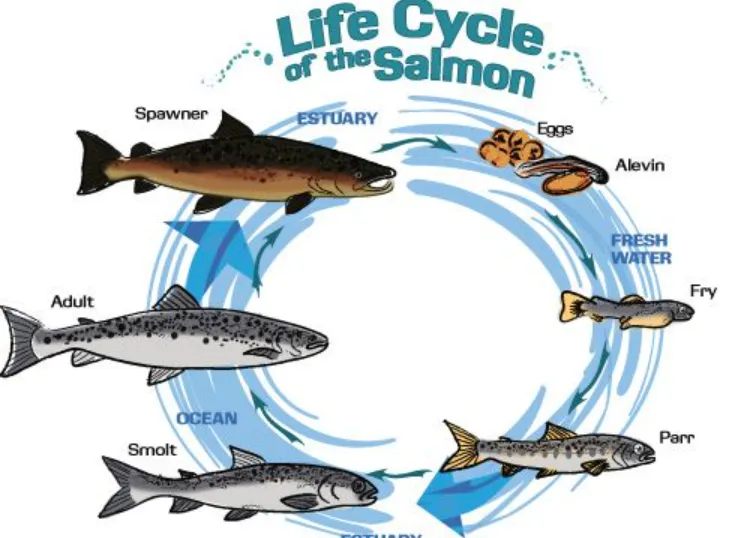
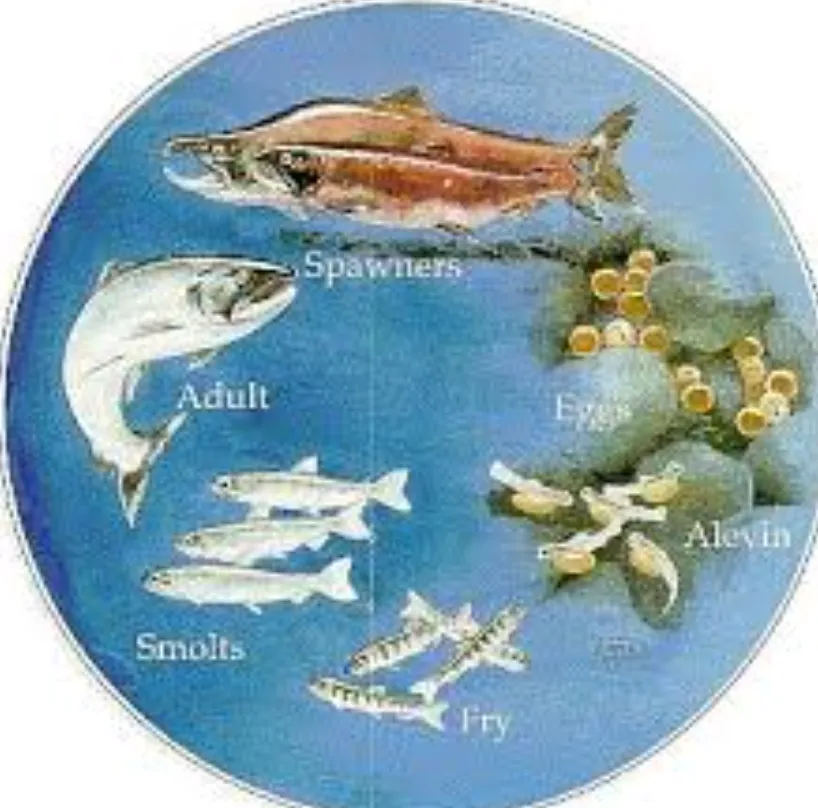
Salmon typically go through 6 main stages: egg, alevin, fry, parr, smolt, and adult.
2. Why do salmon return to freshwater?
Salmon return to their birthplace to reproduce, guided by their strong sense of smell.
3. How long does the salmon’s life cycle take?
It usually takes 2 to 7 years, depending on the species.
Quick Life Cycle Table
| Stage | Description | Duration |
| Egg | Laid in freshwater gravel nests (redds) | 2–3 months |
| Alevin | Hatchlings with a yolk sac for nutrition | Few weeks |
| Fry | Begin feeding independently | 2–3 months |
| Parr | Develop camouflage stripes | 1–3 years |
| Smolt | Adapt to a saltwater environment | Few weeks |
| Adult | Mature in the ocean and return to spawn | 2–5 years |
The History Of Their Scientific Naming
The scientific classification of salmon has evolved as scientists studied their unique migratory patterns and physical traits.
- Salmon belong to the family Salmonidae, which includes trout and char.
- The genus Oncorhynchus refers to Pacific salmon, while Salmo refers to Atlantic salmon.
- Early naturalists classified salmon based on physical characteristics, but modern taxonomy uses genetic analysis.
- The name “Oncorhynchus” means “hooked snout,” referring to the male salmon’s jaw during spawning.
- Linnaeus first categorized Atlantic salmon as Salmo salar in the 18th century.
Scientific naming helps researchers understand salmon species differences, migration behavior, and conservation needs. Over time, advancements in molecular biology have refined classification systems, making salmon one of the most studied fish groups in the world.
Their Evolution And Their Origin
Salmon have a long evolutionary history that dates back millions of years. Fossil evidence suggests that early salmon-like fish existed during the Eocene epoch, around 50 million years ago.
Originally, salmon ancestors lived entirely in freshwater. Over time, they evolved the ability to survive in both freshwater and saltwater environments, a trait known as anadromy. This adaptation gave them a survival advantage by allowing access to abundant ocean food resources while still returning to safer freshwater environments to reproduce.
Geological events such as glaciation played a major role in shaping salmon evolution. As ice sheets expanded and retreated, salmon populations became isolated, leading to the development of different species across the Northern Hemisphere.
Natural selection also influenced their physical traits. For example, streamlined bodies and strong muscles evolved to help them swim against powerful river currents. Their remarkable homing ability, guided by olfactory memory, is another evolutionary adaptation that ensures reproductive success.
Today, salmon species are found mainly in the North Atlantic and Pacific Oceans. Their evolutionary journey reflects resilience, adaptability, and a strong connection to changing environmental conditions.
Their Main Food and Its Collection Process
Salmon have different feeding habits depending on their life stage and environment.
Freshwater Feeding (Early Stages)
- Fry and parr feed on small aquatic insects and plankton.
- They rely on drifting food in streams.
- Their feeding behavior is cautious to avoid predators.
Ocean Feeding (Adult Stage)
- Adult salmon consume:
- Small fish
- Crustaceans
- Squid
- Their diet becomes protein-rich, supporting rapid growth.
Food Collection Process
- Salmon are active hunters in the ocean.
- They use their keen vision to locate prey.
- Their speed allows them to chase and capture fast-moving organisms.
Energy Storage
- Before migrating back to freshwater, salmon store fat reserves.
- During spawning, they stop eating and rely entirely on stored energy.
This feeding strategy ensures survival across different environments and prepares them for their demanding reproductive journey.
Their Life Cycle and Ability to Survive in Nature
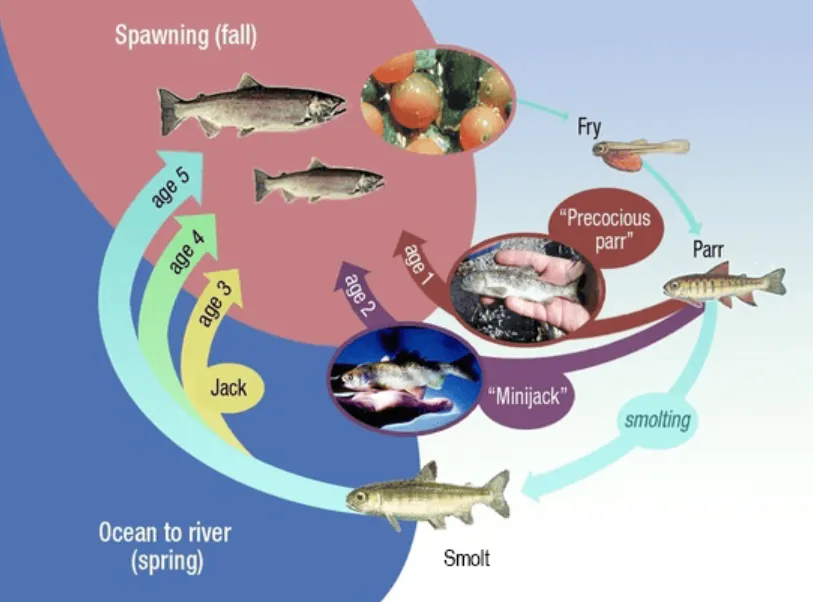
Egg Stage
Salmon eggs are laid in gravel nests. The gravel protects them from predators and strong currents.
Alevin Stage
After hatching, alevins remain hidden and survive on yolk sacs.
Fry Stage
Fry emerge and begin feeding, learning to avoid predators.
Parr Stage
Parr developed vertical stripes for camouflage, increasing survival chances.
Smolt Stage
Smolts undergo physiological changes to adapt to saltwater, including changes in gill function.
Adult Stage
Adult salmon migrate to the ocean, grow rapidly, and later return to freshwater to spawn.
Survival Strategies:
- Camouflage and schooling behavior
- Strong swimming ability
- Adaptation to both freshwater and saltwater
- Homing instinct for reproduction
These abilities make salmon one of the most resilient migratory species in nature.
Important Things That You Need To Know
Salmon are not only biologically fascinating but also highly relevant to human life, especially in food culture.
Salmon is one of the most nutritious fish consumed worldwide. Popular dishes include baked salmon recipe, air fryer salmon, and other healthy preparations.
Key Insights:
- The ideal salmon internal temp for safe consumption is 145°F (63°C).
- Salmon is rich in omega-3 fatty acids, promoting heart health.
- Cooking methods like grilling, baking, and air frying preserve nutrients.
- Wild salmon is generally considered more nutritious than farmed salmon.
- Sustainable fishing practices are crucial to maintain salmon populations.
Health Benefits
- Supports brain function
- Improves cardiovascular health
- Provides high-quality protein
Understanding these aspects helps connect the biological importance of salmon with their role in human diets and global food systems.
Their Reproductive Process and Raising Their Children
Salmon reproduction is a remarkable process driven by instinct and environmental cues.
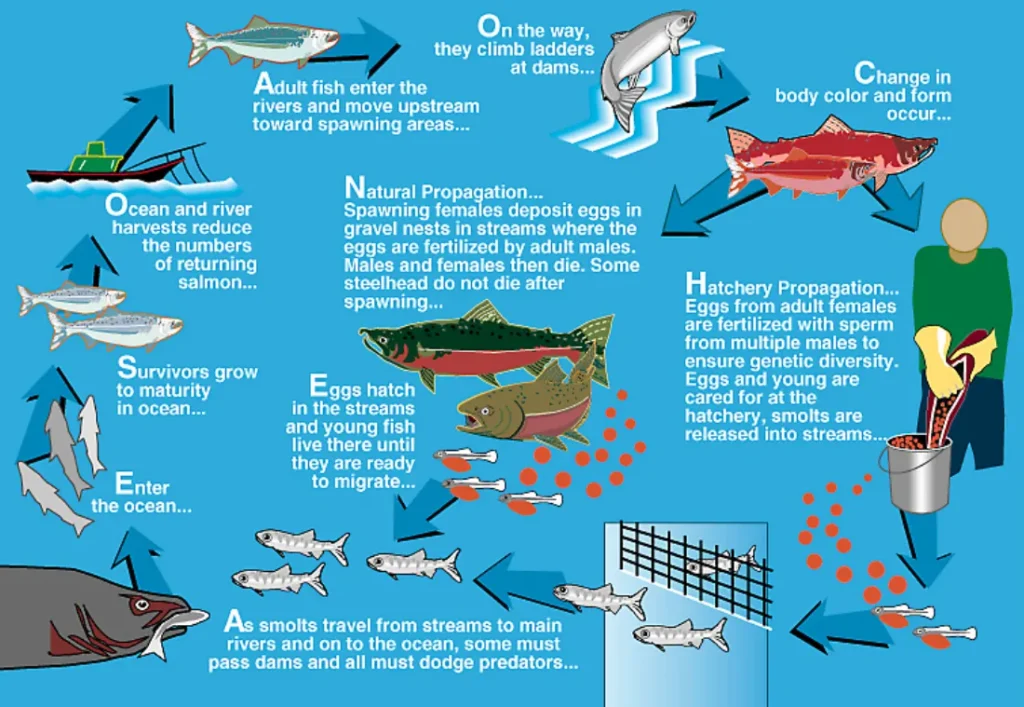
Spawning Migration
- Adult salmon return to their birthplace.
- They travel upstream against strong currents.
Nest Building
- Females create nests called redds in gravel beds.
- They lay thousands of eggs.
Fertilization
- Males release sperm to fertilize eggs externally.
Parental Role
- Salmon do not provide parental care after spawning.
- Most species die shortly after reproduction.
Egg Protection
- Gravel protects eggs from predators and environmental damage.
Despite the lack of parental care, the large number of eggs ensures the survival of future generations.
Importance of Them in this Ecosystem
Nutrient Cycling
Salmon transport nutrients from the ocean to freshwater ecosystems.
Food Source
- Bears, birds, and other animals depend on salmon.
- Even decomposing salmon enrich soil.
Ecosystem Balance
- Support aquatic biodiversity
- Maintain river health
Economic Importance
- Fishing industries depend on salmon
- Important for local communities and tourism
Salmon act as a bridge between marine and freshwater ecosystems, making them ecologically invaluable.
What to Do to Protect Them in Nature and Save the System for the Future
- Protect freshwater habitats and spawning grounds
- Reduce water pollution
- Support sustainable fishing practices
- Restore damaged river ecosystems
- Build fish ladders around dams
- Reduce climate change impacts
- Avoid overfishing
- Promote conservation awareness
These steps are essential to ensure the survival of salmon populations for future generations.
Frequently Asked Questions (FAQs)
1. What is the life cycle of salmon?
It includes egg, alevin, fry, parr, smolt, and adult stages.
2. How long do salmon live?
They live between 2 and 7 years, depending on the species.
3. Why do salmon migrate?
To find food in the ocean and reproduce in freshwater.
4. Do salmon die after spawning?
Most Pacific salmon die after spawning, while Atlantic salmon may survive.
5. What do salmon eat?
They eat insects in freshwater and fish or crustaceans in the ocean.
6. Where do salmon live?
They live in both freshwater rivers and oceans.
7. How do salmon find their birthplace?
They use their sense of smell to navigate.
8. Why are salmon important?
They support ecosystems, wildlife, and human economies.
Conclusion
The life cycle of salmon is a powerful example of nature’s complexity and resilience. From tiny eggs hidden in river gravel to powerful adults navigating vast oceans, salmon embody survival, adaptation, and determination.
Their journey is not just a biological process but a vital ecological function that supports countless species and ecosystems. Salmon connect freshwater and marine environments, making them essential for nutrient cycling and biodiversity.
However, their survival is increasingly threatened by environmental changes, pollution, and human activities. Protecting salmon means preserving entire ecosystems and ensuring sustainable resources for future generations.
Understanding their life cycle helps us appreciate their importance and encourages responsible actions to protect them. By supporting conservation efforts, we can ensure that this extraordinary natural journey continues for years to come.
Also Read: what do fleas look like