The life cycle of a honey bee is one of the most fascinating processes in the natural world. From a tiny egg to a fully developed worker, queen, or drone, honey bees undergo a complete transformation that plays a crucial role in ecosystems and agriculture worldwide. Understanding their life cycle not only helps us appreciate their complex social structure but also highlights why protecting them is essential for our survival.
Honey bees are not just honey producers; they are key pollinators responsible for fertilizing plants and crops. Their lifecycle directly influences food production and biodiversity. With growing concerns such as climate change and habitat loss, understanding their development stages becomes even more important.
✅ Quick Answers (Most Common Questions)
1. What are the stages in the life cycle of a honey bee?
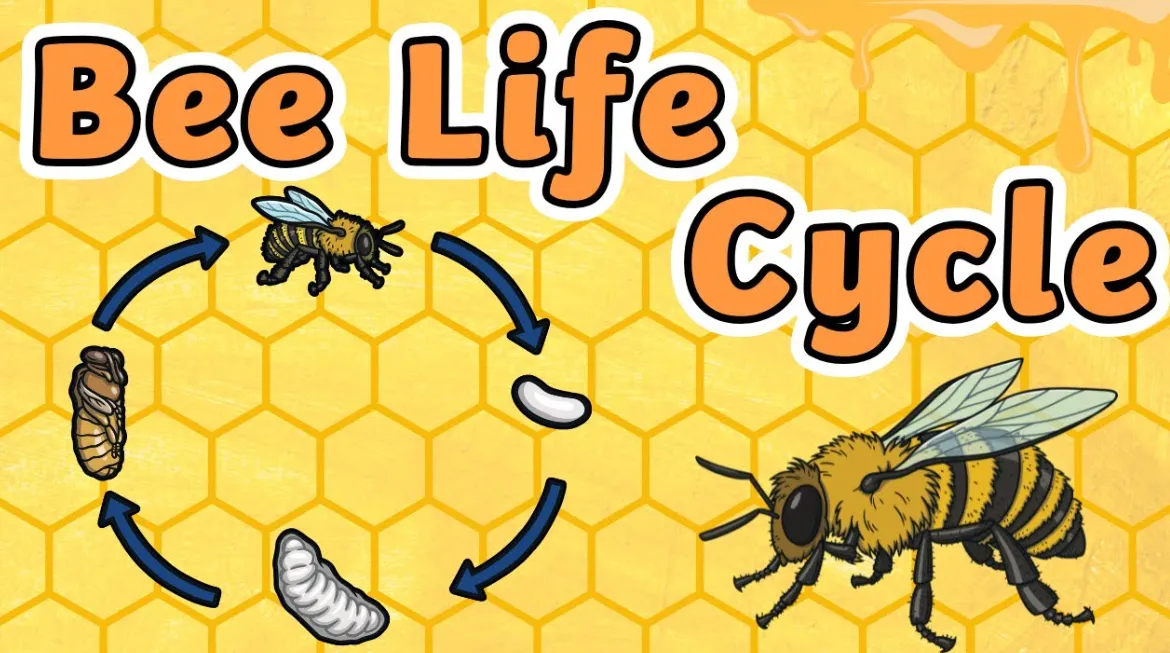
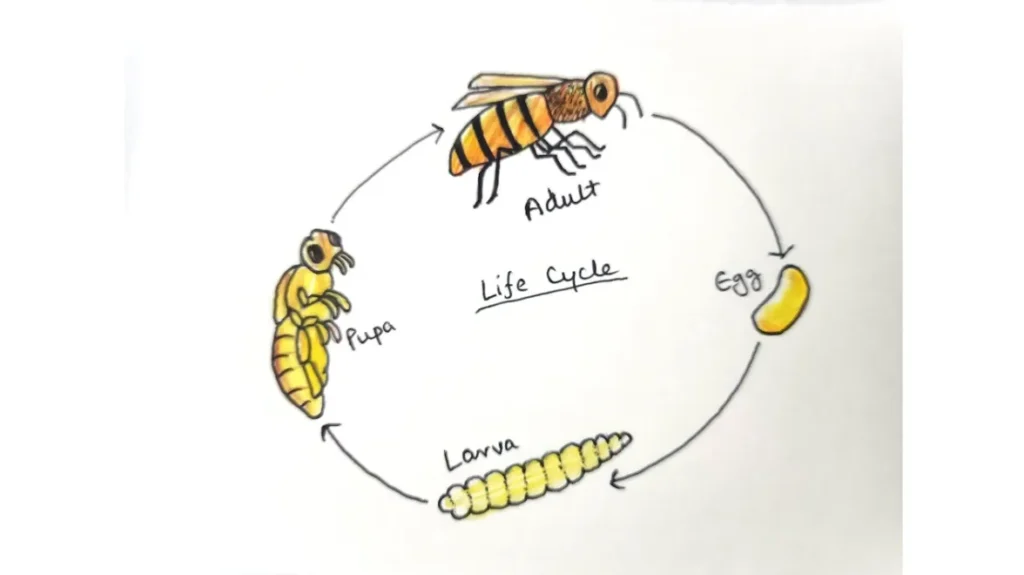
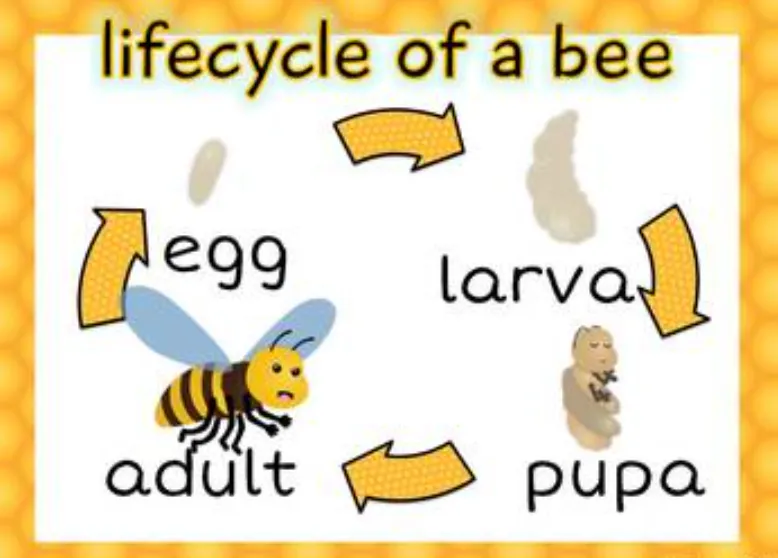
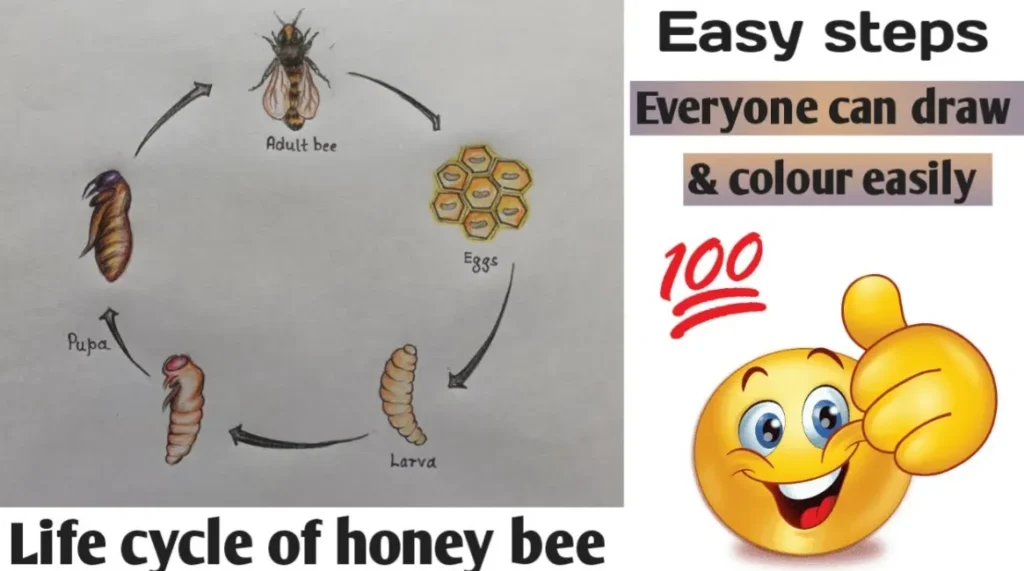
Egg → Larva → Pupa → Adult.
2. How long does a honey bee live?
Worker bees live 5–7 weeks, drones live around 8 weeks, and queens can live up to 3–5 years.
3. Why is the honey bee life cycle important?
It ensures colony survival, pollination, and ecological balance.
Quick Life Cycle Table
| Stage | Duration | Description |
| Egg | 3 days | Laid by the queen in hexagonal cells |
| Larva | 5–6 days | Fed royal jelly or pollen mix |
| Pupa | 7–14 days | Transformation stage inside a sealed cell |
| Adult | Varies | Becomes a worker, drone, or queen |
The History Of Their Scientific Naming
The scientific classification of honey bees has evolved over centuries as researchers studied their behavior and biology.
- The honey bee belongs to the genus Apis, derived from the Latin word for “bee.”
- The most common species is Apis mellifera, meaning “honey-bearing bee.”
- Carl Linnaeus, the father of modern taxonomy, first classified honey bees in the 18th century.
- Initially named Apis mellifica, it was later corrected to Apis mellifera for linguistic accuracy.
- Scientists classify honey bees under:
- Kingdom: Animalia
- Phylum: Arthropoda
- Class: Insecta
- Order: Hymenoptera
- Over time, different species, such as Apis cerana (Asian honey bee) and Apis dorsata (giant honey bee), were identified.
- Scientific naming helps distinguish honey bees from other species, such as bumble bees.
This classification system allows researchers worldwide to study and protect honey bees effectively.
Their Evolution And Their Origin
Honey bees have a long evolutionary history dating back millions of years. Fossil evidence suggests that bees evolved from wasp-like ancestors approximately 100 million years ago during the Cretaceous period.
Early bees began adapting to feed on pollen instead of insects. This shift played a major role in plant evolution, as flowering plants (angiosperms) also emerged during this time.
Over time, honey bees developed specialized features:
- Hairy bodies to collect pollen efficiently
- Proboscis (long tongue) to extract nectar
- Complex social structures
The genus Apis evolved around 35 million years ago. These early honey bees began forming colonies and producing honey as a food reserve.
Geographically, honey bees originated in Asia and later spread to Europe and Africa. Human activity helped expand their presence globally.
Evolution also shaped their behavior:
- Division of labor (queen, worker, drone)
- Advanced communication (waggle dance)
- Hive-building abilities
Today, honey bees are among the most efficient pollinators on Earth. Their evolution is closely tied to plant diversity, making them essential for ecological balance.
Important Things That You Need To Know
When discussing honey bees, several related topics often arise. Let’s explore some important concepts involving LSI keywords.
🐝 Honey Bee and Related Concepts
The honey bee is widely known for producing honey, but many people wonder, is honey bee vomit? Technically, honey is regurgitated nectar, but it is purified through enzymes and dehydration, making it safe and nutritious.
Another common comparison is between bumble bees and honey bees. Bumble bees are larger, fuzzy, and solitary in smaller colonies, while honey bees are smaller, live in large colonies, and produce honey.
You might also come across honey bee supplies, which include beekeeping tools like hives, smokers, protective suits, and feeders. These are essential for maintaining healthy colonies.
In creative fields, honey bee drawing is popular in art and education, helping children learn about bee anatomy and structure.
Lastly, honey bee stamps are collectible items featuring bee designs, often used to raise awareness about pollinators.
Understanding these related topics gives a broader perspective on honey bees and their role in culture, science, and everyday life.
Their Main Food and Its Collection Process
Honey bees primarily feed on nectar and pollen, both collected from flowers.
🌼 Main Food Sources
- Nectar – Main energy source, converted into honey
- Pollen – Protein source for growth
- Water – Maintains hive temperature
- Propolis – Used for hive protection
🐝 Collection Process
- Foraging
- Worker bees leave the hive to search for flowers rich in nectar.
- Nectar Extraction
- Using their proboscis, bees suck nectar and store it in a “honey stomach.”
- Pollen Collection
- Pollen sticks to their hairy bodies and is stored in leg baskets.
- Returning to Hive
- Bees transfer nectar to other workers through regurgitation.
- Honey Production
- Nectar is processed with enzymes and evaporated into honey.
- Communication
- Bees perform the “waggle dance” to inform others about food sources.
This efficient system ensures the colony has enough food year-round.
Their Life Cycle and Ability to Survive in Nature
🥚 Egg Stage
The queen lays eggs in hexagonal wax cells. Each egg hatches within 3 days.
🐛 Larva Stage
Larvae are fed royal jelly initially. Worker larvae later receive pollen and honey.
🧫 Pupa Stage
The cell is sealed, and the larva transforms into an adult bee.
🐝 Adult Stage
Bees emerge as workers, drones, or queens depending on diet and genetics.
🌿 Survival Abilities
- Temperature Control – Bees maintain hive temperature
- Defense Mechanisms – Sting to protect the colony
- Communication Skills – Waggle dance ensures food supply
- Adaptability – Survive in diverse climates
Their structured life cycle ensures colony continuity even in harsh environments.
Their Reproductive Process and Raising Their Children
Honey bee reproduction is centered around the queen.
🐝 Reproductive Process
- The queen mates with multiple drones during a mating flight
- Stores sperm for a lifetime of egg-laying
- Can lay up to 2,000 eggs per day
👶 Raising Their Young
- Worker bees clean and prepare cells
- Larvae are fed based on their role:
- Royal jelly → Queen
- Pollen + honey → Workers/Drones
- Cells are sealed during pupation
- New bees emerge fully formed
👑 Queen Development
- Only larvae fed exclusively on royal jelly become queens
- Queens develop faster than workers
This system ensures efficient colony growth and survival.
Importance of Them in This Ecosystem
🌼 Pollination Power
Honey bees pollinate about 75% of global crops, including fruits and vegetables.
🌍 Biodiversity Support
They help maintain plant diversity, which supports wildlife.
🍎 Food Production
Without bees, many crops would fail, affecting food supply.
🌱 Environmental Balance
Bees contribute to healthy ecosystems by aiding plant reproduction.
💰 Economic Impact
Pollination services are worth billions globally.
Honey bees are truly indispensable for ecological and human survival.
What to Do to Protect Them in Nature and Save the System for the Future
- 🌸 Plant bee-friendly flowers
- 🚫 Avoid harmful pesticides
- 🏡 Provide nesting habitats
- 💧 Keep water sources available
- 🌿 Support organic farming
- 🐝 Buy local honey to support beekeepers
- 🌎 Raise awareness about bee conservation
- 🌳 Protect natural habitats
- 📚 Educate others about their importance
Small actions can make a big difference in saving honey bees.
Frequently Asked Questions (FAQs)
1. How many stages are in the honey bee life cycle?
Four stages: egg, larva, pupa, adult.
2. What determines whether a bee becomes a queen or a worker?
Diet, specifically royal jelly.
3. Do all bees produce honey?
No, only honey bees produce honey.
4. How long does it take for a bee to develop?
About 16–24 days, depending on the type.
5. Why are honey bees important?
They pollinate crops and support ecosystems.
6. What is the difference between a drone and a worker bee?
Drones are males; workers are females who perform tasks.
7. Can honey bees survive without a queen?
No, the colony eventually collapses.
8. Is honey bee vomit?
Honey is regurgitated nectar that has been processed and is safe to eat.
Conclusion
The life cycle of a honey bee is a remarkable journey that reflects nature’s precision and balance. From egg to adult, each stage plays a vital role in sustaining the colony and supporting ecosystems worldwide. Honey bees are not just insects; they are essential contributors to global food production and biodiversity.
Their evolution, behavior, and social structure demonstrate how interconnected life on Earth truly is. However, threats like habitat destruction, pesticides, and climate change are putting these incredible creatures at risk.
By understanding their lifecycle and importance, we can take meaningful steps to protect them. Simple actions, such as planting flowers or reducing chemical use, can help ensure their survival.
Protecting honey bees means protecting our future.
Also Read About: life cycle in ferns