The life cycle of a dragonfly is one of the most fascinating transformations in the natural world. From aquatic beginnings to becoming powerful aerial predators, dragonflies undergo remarkable stages that highlight their resilience and adaptability. These ancient insects, often associated with beauty and transformation, have existed for over 300 million years and continue to play a crucial role in maintaining ecological balance.
Dragonflies begin their life in water, spending most of their existence as larvae before emerging as winged adults. Their lifecycle not only reflects biological complexity but also symbolizes change, making them significant in both science and culture.
Understanding the Dragonfly life cycle helps us appreciate their role in ecosystems, especially in controlling insect populations such as mosquitoes. It also reveals their sensitivity to environmental changes, making them indicators of ecosystem health.
Quick Answers (Most Common Questions)
1. How many stages are in the dragonfly life cycle?
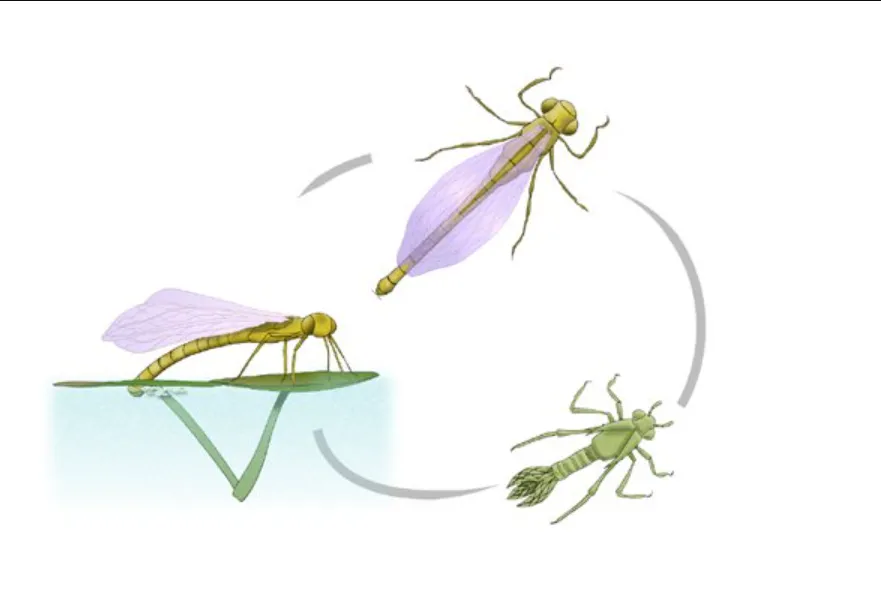
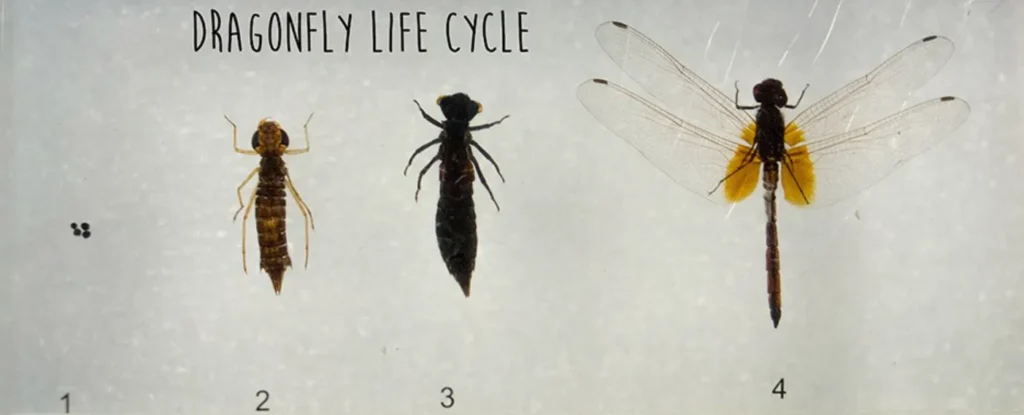
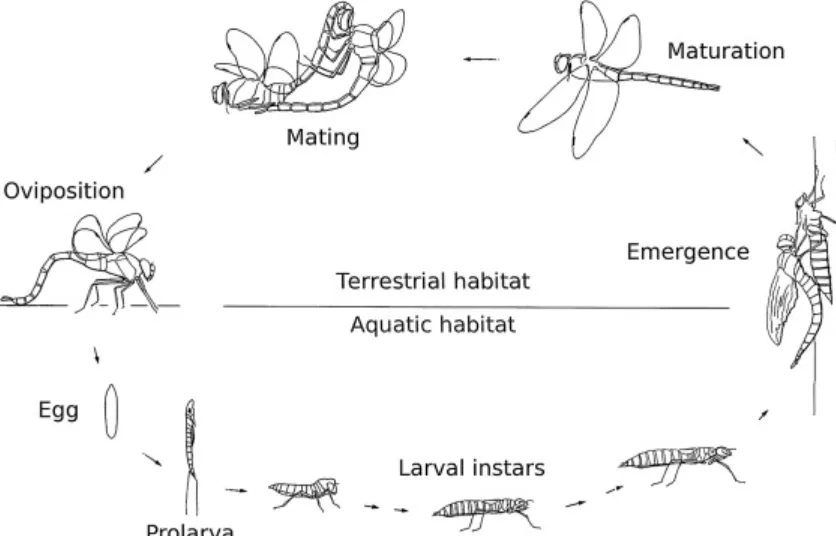
Dragonflies go through three main stages: egg, nymph (larva), and adult.
2. How long does a dragonfly live?
Most of their life (up to 2–5 years) is spent underwater as nymphs, while adults live only a few weeks to months.
3. Do dragonflies undergo complete metamorphosis?
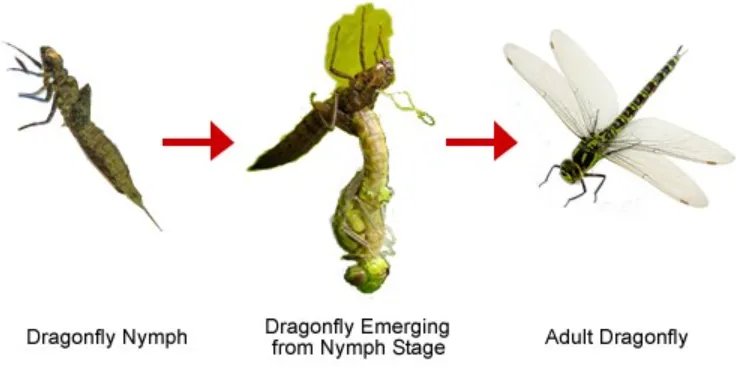
No, they undergo incomplete metamorphosis, meaning they lack a pupal stage.
Quick Life Cycle Table
| Stage | Duration | Habitat | Key Characteristics |
| Egg | 1–3 weeks | Water | Laid on/near water, hatch into nymphs |
| Nymph | 1–5 years | Freshwater | Aquatic predator, molts multiple times |
| Adult | 4–8 weeks (approx.) | Air & Land | Winged, mates, reproduces, and controls insects |
The History Of Their Scientific Naming
The scientific naming of dragonflies is rooted in classical taxonomy and Latin terminology.
- Dragonflies belong to the order Odonata, derived from the Greek word “odous,” meaning tooth, referring to their strong mandibles.
- This classification was first formalized by early entomologists studying insect morphology.
- Odonata is divided into two main suborders:
- Anisoptera (true dragonflies)
- Zygoptera (damselflies)
- Carl Linnaeus, the father of modern taxonomy, played a significant role in categorizing early insect species, including dragonflies.
- Scientific names often reflect physical traits, habitat, or discoverers.
- Over time, advancements in genetics have refined classifications, revealing evolutionary relationships.
Today, more than 5,000 species of dragonflies are identified globally, each with unique biological and ecological traits.
Their Evolution And Their Origin
Dragonflies are among the oldest flying insects on Earth, with origins dating back over 300 million years to the Carboniferous period. Fossil records show that ancient dragonflies, known as Meganeura, had wingspans reaching up to 70 cm, making them giants compared to modern species.
Their evolution is closely tied to atmospheric oxygen levels. Higher oxygen concentrations in prehistoric times allowed insects to grow larger. As oxygen levels declined, dragonflies evolved into smaller but more efficient predators.
Dragonflies belong to the order Odonata, which has remained relatively unchanged over millions of years. This evolutionary stability indicates their highly successful biological design. Their compound eyes, strong wings, and agile flight patterns have made them top aerial hunters.
Interestingly, dragonflies were among the first insects to develop powered flight. Their ability to hover, glide, and even fly backward gives them a unique advantage over prey.
Their aquatic larval stage also played a key role in survival. By occupying both aquatic and aerial environments, dragonflies adapted to multiple ecological niches, reducing competition and increasing their survival chances.
Today’s dragonflies are living fossils, offering a glimpse into ancient ecosystems while continuing to thrive in modern environments.
Their Main Food and Its Collection Process
Dragonflies are carnivorous predators, both in their larval and adult stages.
What They Eat
- Mosquitoes
- Flies
- Bees
- Ants
- Small insects
- Aquatic organisms (for nymphs)
How They Hunt and Collect Food
- Aerial Hunting:
- Adult dragonflies catch prey mid-air using their legs like a basket.
- Exceptional Vision:
- Their compound eyes provide nearly 360-degree vision, enabling them to detect movement instantly.
- Speed and Precision:
- Dragonflies can fly at speeds up to 30–35 mph, making them efficient hunters.
- Ambush Technique (Nymph Stage):
- Nymphs use a specialized, extendable jaw (labium) to grab prey underwater.
- Energy Efficiency:
- They consume prey while flying, reducing energy loss.
This efficient feeding behavior makes dragonflies natural pest controllers, especially in controlling mosquito populations.
Their Life Cycle and Ability to Survive in Nature
Egg Stage
Dragonflies lay eggs in or near water bodies such as ponds, lakes, and wetlands. This ensures a suitable environment for hatching.
Nymph Stage
This is the longest and most critical stage. Nymphs live underwater and undergo multiple molts.
They are:
- Highly adaptive
- Excellent predators
- Capable of surviving in various freshwater habitats
Adult Stage
Once fully developed, the nymph emerges from the water and transforms into an adult.
Key survival abilities include:
- Strong flight control
- Acute vision
- Rapid reflexes
Dragonflies survive through their dual habitat lifecycle, enabling them to escape threats and adapt to changing environments.
Their Reproductive Process and Raising Their Children
Dragonflies have a unique and fascinating reproductive system.
- Mating Wheel Formation:
- Males and females connect in a heart-shaped position during mating.
- Territorial Behavior:
- Males guard territories to attract females.
- Egg Laying:
- Females lay eggs in water or on aquatic plants.
- No Parental Care:
- Dragonflies do not raise their young; survival depends on instinct.
- High Egg Production:
- Females lay hundreds of eggs to increase survival chances.
- Selective Habitat Choice:
- Choosing clean water ensures better survival rates.
Despite the lack of parental care, their reproductive strategy ensures the species’ continuity.
Importance of Them in This Ecosystem
Natural Pest Control
Dragonflies significantly reduce mosquito populations, helping prevent diseases.
Indicator Species
Their presence indicates a healthy ecosystem, especially clean water bodies.
Food Chain Balance
They serve as both predator and prey, maintaining ecological balance.
Pollination Support
While not primary pollinators, they indirectly support plant health.
Biodiversity Contribution
Dragonflies enhance biodiversity and ecological stability.
Important Things That You Need To Know
Dragonflies are not just biological wonders—they also hold cultural, artistic, and symbolic significance.
The dragonfly’s meaning often represents transformation, adaptability, and self-realization. In many cultures, seeing a dragonfly is considered a sign of positive change.
The concept of dragonfly wellness is gaining popularity, symbolizing mental clarity, emotional balance, and mindfulness.
In art, a dragonfly tattoo represents freedom, strength, and rebirth. Similarly, a dragonfly drawing is widely used in design and education to illustrate beauty and symmetry.
Spiritually, the dragonfly symbolizes light, transformation, and a deeper understanding of life.
Understanding these aspects adds a deeper appreciation beyond biology.
What to Do to Protect Them in Nature and Save the System for the Future
- Protect wetlands and freshwater habitats
- Avoid using harmful pesticides
- Create dragonfly-friendly gardens
- Maintain clean water sources
- Support conservation programs
- Plant native vegetation near water bodies
- Reduce pollution and plastic waste
- Educate communities about their importance
These steps ensure dragonflies continue to thrive and support ecosystems.
Frequently Asked Questions (FAQs)
1. What is the life cycle of a dragonfly?
It includes egg, nymph, and adult stages.
2. Where do dragonflies lay eggs?
In or near freshwater bodies, such as ponds and lakes.
3. How long is the nymph stage?
It can last from 1 to 5 years.
4. What do dragonflies eat?
They eat insects like mosquitoes, flies, and small bugs.
5. Are dragonflies harmful to humans?
No, they are harmless and beneficial.
6. Why are dragonflies important?
They control pests and indicate environmental health.
7. Can dragonflies survive in polluted water?
No, they prefer clean water, making them bioindicators.
8. Do dragonflies migrate?
Yes, some species migrate long distances seasonally.
Conclusion
The life cycle of a dragonfly is a perfect example of nature’s brilliance and adaptability. From tiny eggs in water to agile aerial hunters, dragonflies showcase resilience, efficiency, and ecological importance.
Their role in controlling pests, maintaining ecosystem balance, and signaling environmental health makes them invaluable. Beyond science, their symbolic meanings in culture and spirituality add depth to their existence.
However, environmental threats such as pollution and habitat destruction pose risks to their survival. Protecting dragonflies means protecting entire ecosystems.
By understanding their life cycle and importance, we can take meaningful steps to conserve these incredible insects and ensure a healthier planet for future generations.
Also Read About: life cycle of a angiosperm